Foil Boats
Design and build a boat from tin foil that can hold as many pennies as possible before sinking.

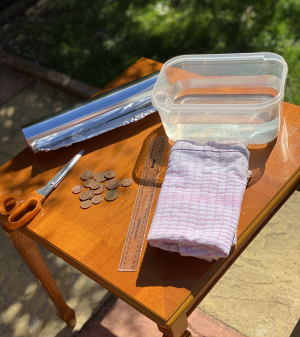
In this activity, you’ll build a simple boat using tin foil. Then you’ll test well it floats by adding pennies, or other small things. to see if it sinks.
All you need is tinfoil, some coins, and a container filled with water.
This page will print, but looks a little funky. Click the button for a PDF version which looks a bit better. This is a stop-gap while we work on a better solution!
30min to an hour
Age 3 and up.
You know your children better than anyone, and you should judge whether they’re ready for this activity. You might want to think in particular about:
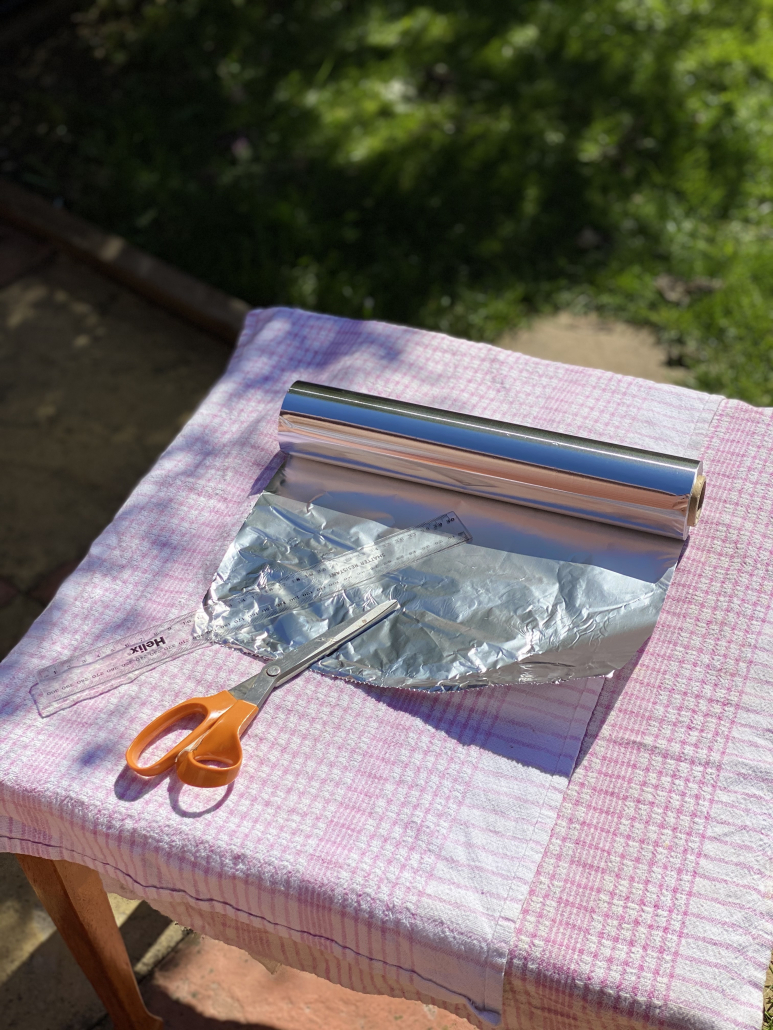
Use the scissors to cut the foil into a square. If you don’t have scissors, you can carefully tear it into a square. The foil squares can be any size you like, and you don’t need to be exact. Later, you might try making another bigger or smaller boat.
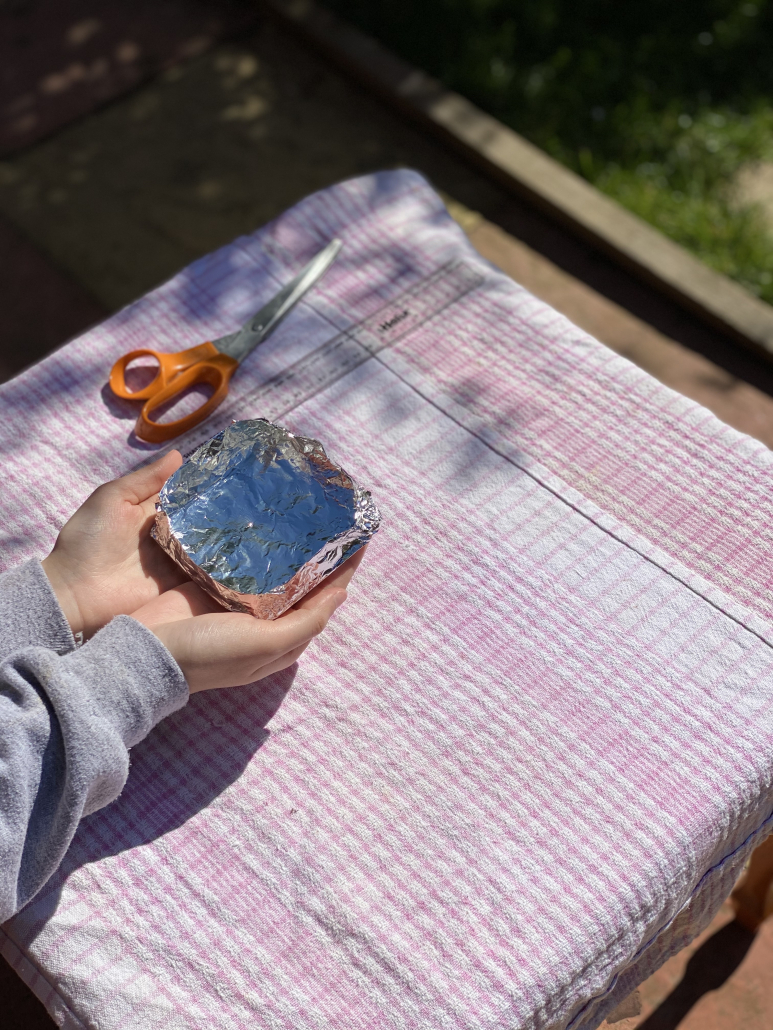
Fold the edges of the foil to form a boat shape. If you want to try out different shapes, you could use different types of boats. Or you could draw pictures of boats before you start building.
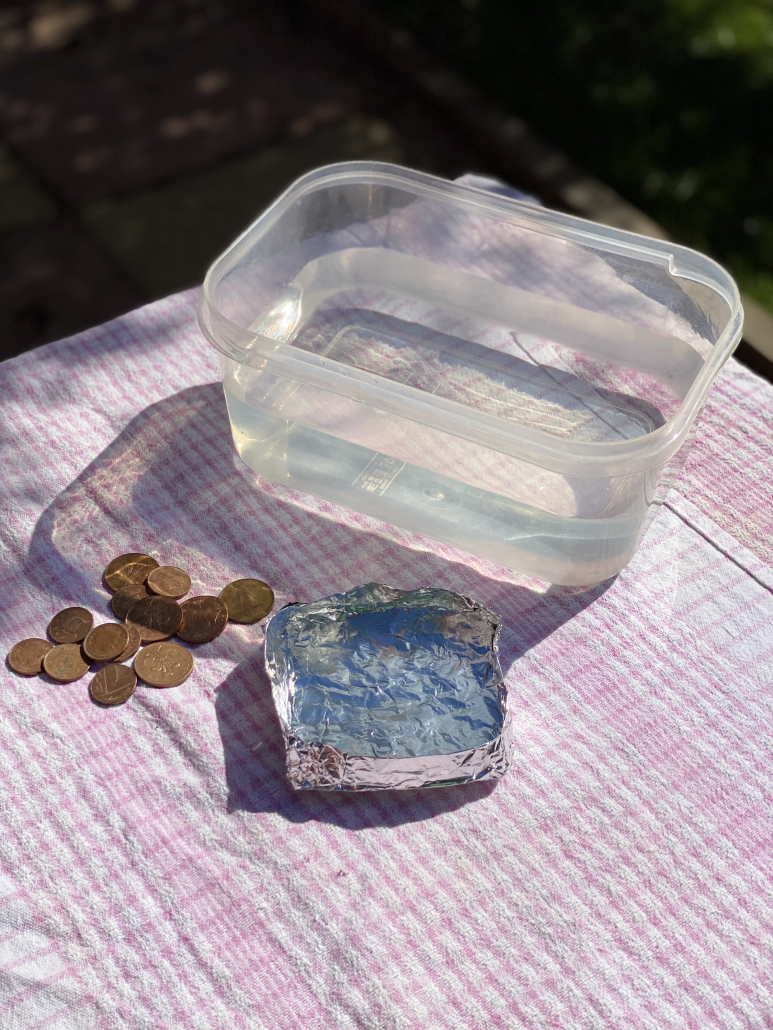
Carefully half-fill your container with water and put it on a towel to soak up any spillages. If you’re making a bigger boat you could float it in the sink or bath.
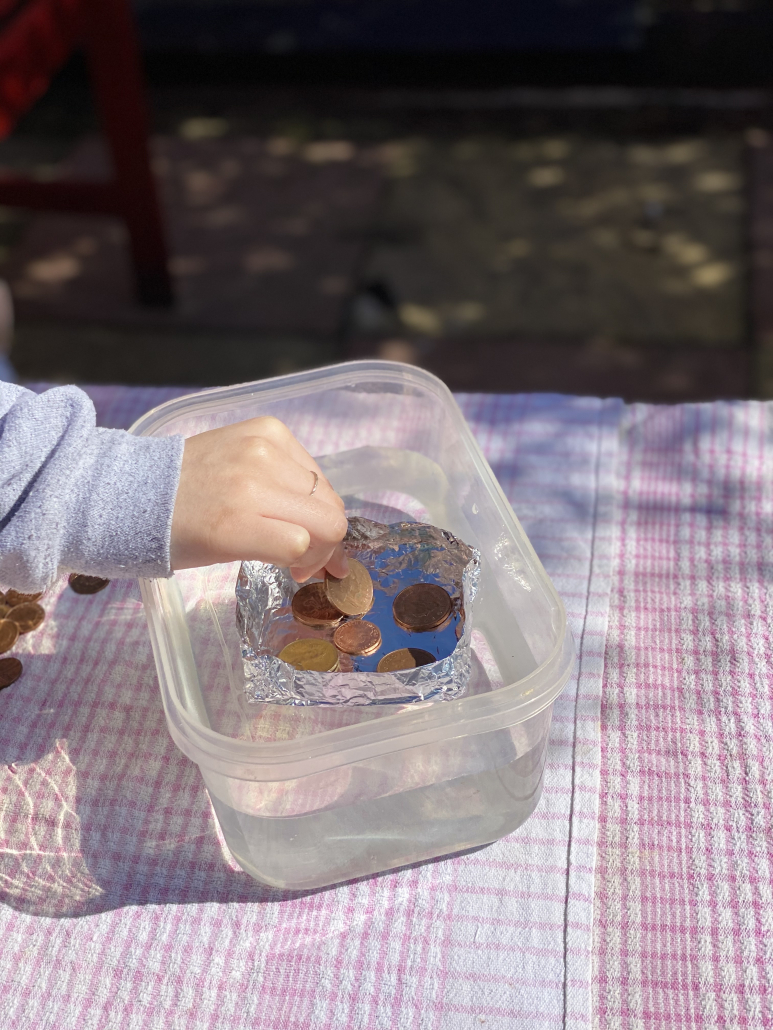
Gently, put your boat in the water. Well done if it floats!
Now add pennies (or other coins) one-by-one in the boat until it sinks! Make sure you count how many pennies it takes for the boat to sink, this will help you work out how good it is.
You could write down your results in a table like the one in the picture.

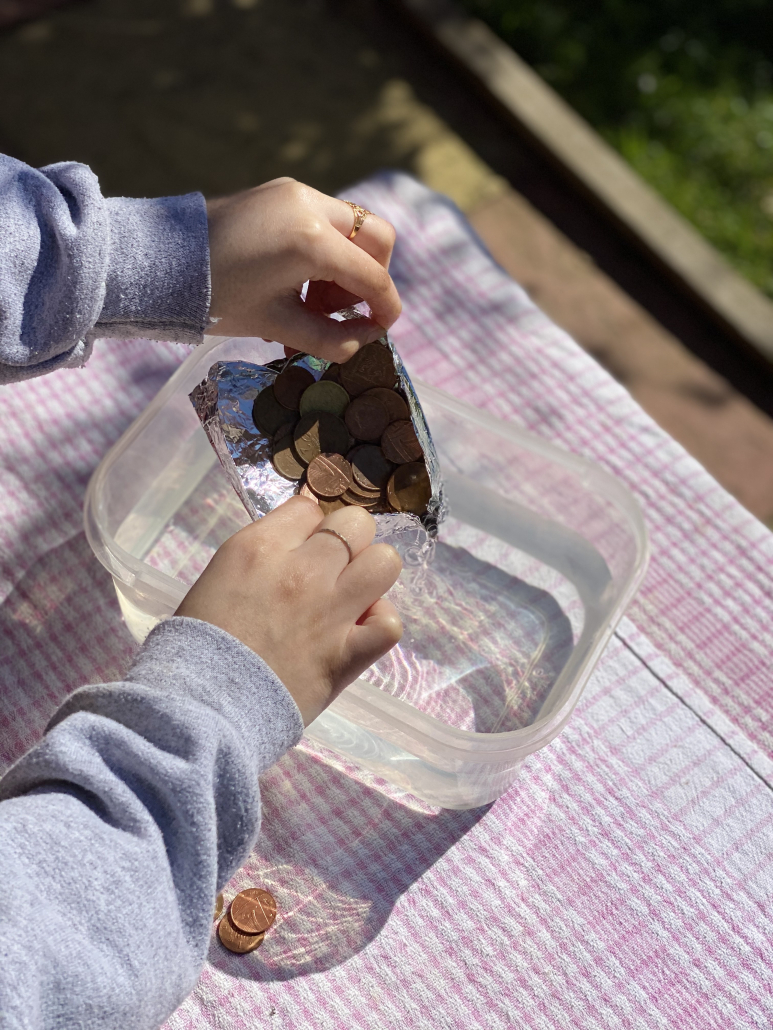
Completely sunk?!
Try again.
Can you hold more coins with a different boat design?
Keep a record of your results using your table.
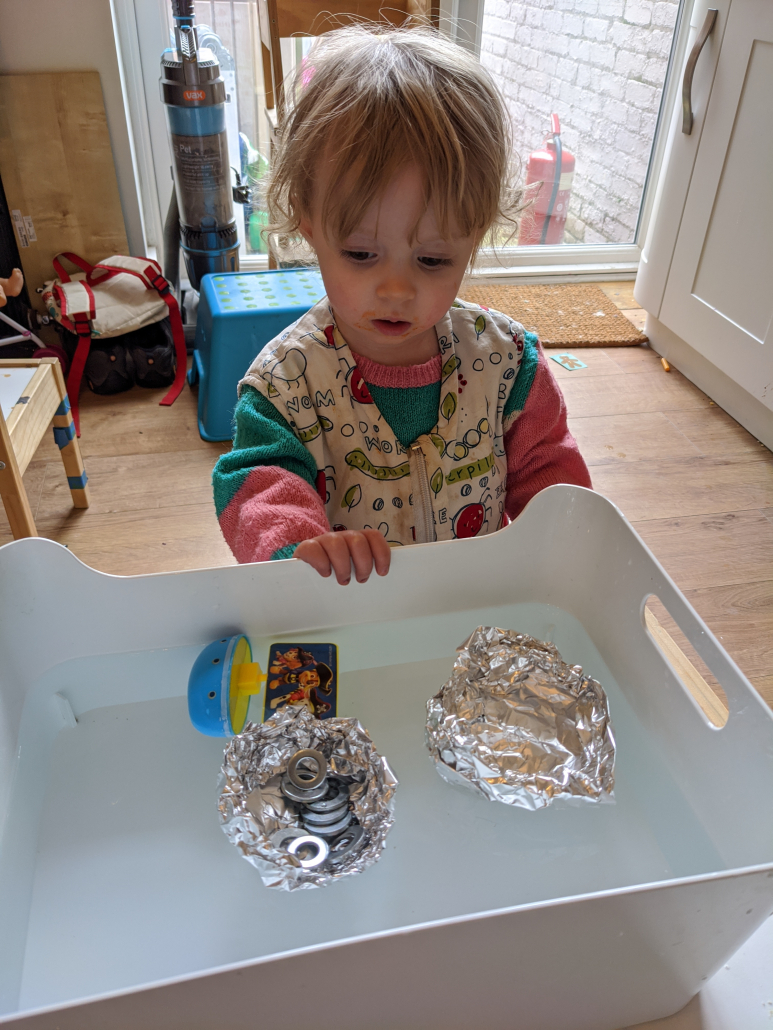
When your boat was floating on the water there was one force pulling it down due to gravity (the weight) and another pushing it up called buoyancy. To work out whether your boat floats we need to think about how heavy it is and its shape.
To start with your boat was light but it got heavier as you added pennies. So how could it hold so many pennies? The shape of the boat is important, a shape which contains lots of empty space (like a boat) will be good at floating because it’s able to push more water out of the way. This makes a bigger buoyancy force keeping the boat from sinking. But when more pennies are added, the weight of the boat becomes bigger than the buoyancy force and the boat sinks.
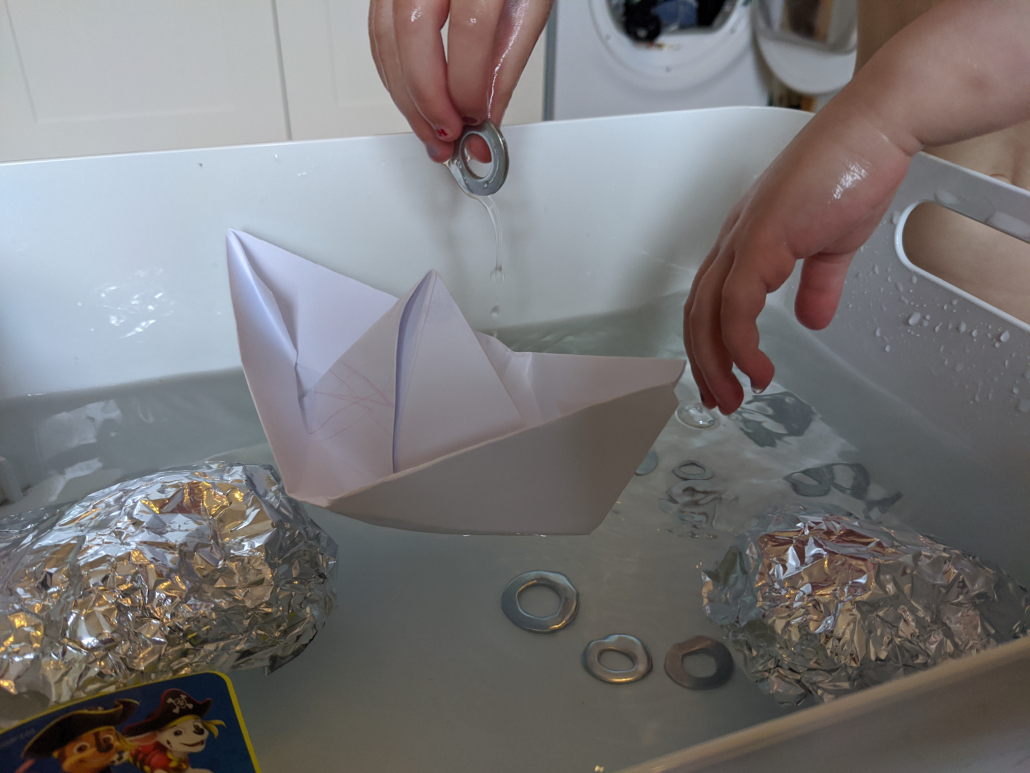
Ask questions to get your child thinking about why objects sink or float:

Your first boat was made of tin foil. Now try:
You can test these other boats in same way, by adding pennies or small objects. Record your results so you can work out which is the best boat.
30min to an hour
Age 3 and up.
You know your children better than anyone, and you should judge whether they’re ready for this activity. You might want to think in particular about:
Sit down and watch the story ‘Who sank the boat’. If you can, find somewhere comfortable and watch it together.
Naval architects design, engineer and manufacture boats, ships, oil rigs… they care very much about what sorts of things float. They also sometimes care about the sorts of things that sink – naval architects design submarines, too!
Attributes:
Naval architects are curious, organised and creative.


 Cardboard building shapes