NUSTEM Early Years & Primary Programme
Developing, embedding and sustaining a careers-led, attributes-focussed approach to science teaching in primary schools.

Before the age of 8 many children make decisions about what jobs they would and wouldn’t like to do when they’re older. Those decisions limit their future options, unnecessarily. There’s now extensive research on this, from the ASPIRES work at UCL and also by ourselves.
We want to support children to learn more about possible jobs, and to develop their language to support discussions about work, careers, and subject choices.
The interventions we’ve designed focus on science, technology, engineering and maths (STEM) contexts: there are particular challenges for children seeing STEM jobs as ‘not being done by people like me,’ which contrbutes to significant underrepresentation of some groups in the workforce.
Participating in the NUSTEM Early Years & Primary Programme supports children’s ‘careers literacy’ in general, and STEM aspirations in particular.
Sign up to the NUSTEM Primary Network here.
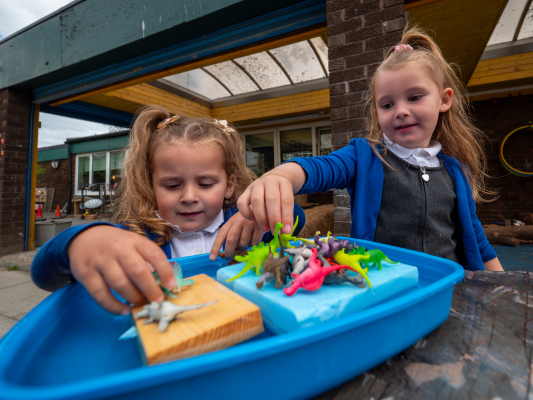

Schools can support children and families to recognise themselves as possible STEM workers by:
Established and ongoing research from ten years’ practice in the North East shows the impact and value of these combined and interlinked interventions.
The EYPP supports schools to experience and embed this approach and to enhance children’s learning and aspirations.
The NUSTEM group at Northumbria University has been exploring the challenges of diversity in STEM, and possible solutions, since 2014. We deliver around 15,000 engagements each year, working with primary and secondary schools, teachers, families, and partner organisations.
Our website is filled with examples of our activities, projects, and background resources. You’ll also find context and details of our research and publications.
The NUSTEM team have backgrounds in education and teaching, and have formed close partnerships with many primary schools across the North East. These partnerships allow us to understand the challenge and solutions in a nuanced way, and to collaborate with teachers to create strategies and resources that work.
The NUSTEM Early Years & Primary Programme builds partnerships with schools, supporting them to develop their approach to science learning from early years through to the end of First or Primary school.
We understand that schools are complex places with a range of pressures, both internal and external. We know that real change can’t be completed overnight, and that to effectively enhance schools’ practice involves trust, evidencing the rationale for the approach, and tailoring the programme to the individual school.
New partners will be seeking to develop their approach to science teaching, through the careers and attributes approach. This phase will last up to two years, and will include:
In this phase, schools move from workshop-based delivery to embedding the ARC framework within their regular science curriculum:
Through regular meetings, phase 3 schools are supported to fully embed the ARC framework practices within their curriculum and whole school approach. Partner schools also share their experience and journey with other schools, influencing their practice.
Our work with schools is built around the ARC framework: Attributes, Representation, and Careers. This approach helps children recognise themselves as potential STEM workers by:
Attributes Helping children identify skills and personal qualities they share with people working in STEM jobs. Rather than focusing on knowledge or qualifications, we emphasise transferable attributes like curiosity, creativity, problem-solving, and resilience that children already demonstrate in their daily lives. You can read more about our attributes here.
Representation Showing children the diversity of people working in STEM. We introduce them to workers from varied backgrounds, helping them see that ‘people like me’ do these jobs. This includes attention to gender, ethnicity, disability, and different routes into careers.
Careers Building children’s vocabulary and understanding of the breadth of STEM jobs available. We explore careers from an early age, linking curriculum learning to real-world applications and helping children understand the many pathways into different roles. Our Primary Careers Tool helps teachers to do this.
By weaving these three strands together throughout science teaching, we support children to develop broader aspirations and see themselves as future STEM workers.
While the full EYPP programme involves a partnership commitment, we believe that all schools should have access to quality resources that support children’s STEM aspirations. The following resources are freely available to any school or educator, whether or not you’re an EYPP partner.

Our award-winning Play, Be, C resources help early years practitioners embed careers literacy into everyday play activities. These resources provide practical ideas and frameworks for encouraging children to explore different roles, attributes, and STEM contexts through imaginative play scenarios.
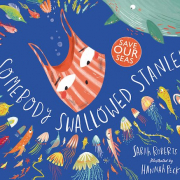
A collection of carefully curated stories designed for Early Years Foundation Stage settings that bring STEM contexts to life while introducing children to diverse people working in STEM roles.
Our curriculum-linked careers resources help teachers at Key Stages 1 and 2 integrate careers discussions into their science teaching. These include our curriculum careers tool, which maps STEM careers to specific curriculum topics, helping teachers make explicit connections between classroom learning and real-world applications.