Sun Dial
Learn about the movement of the Earth by building your own sundial.

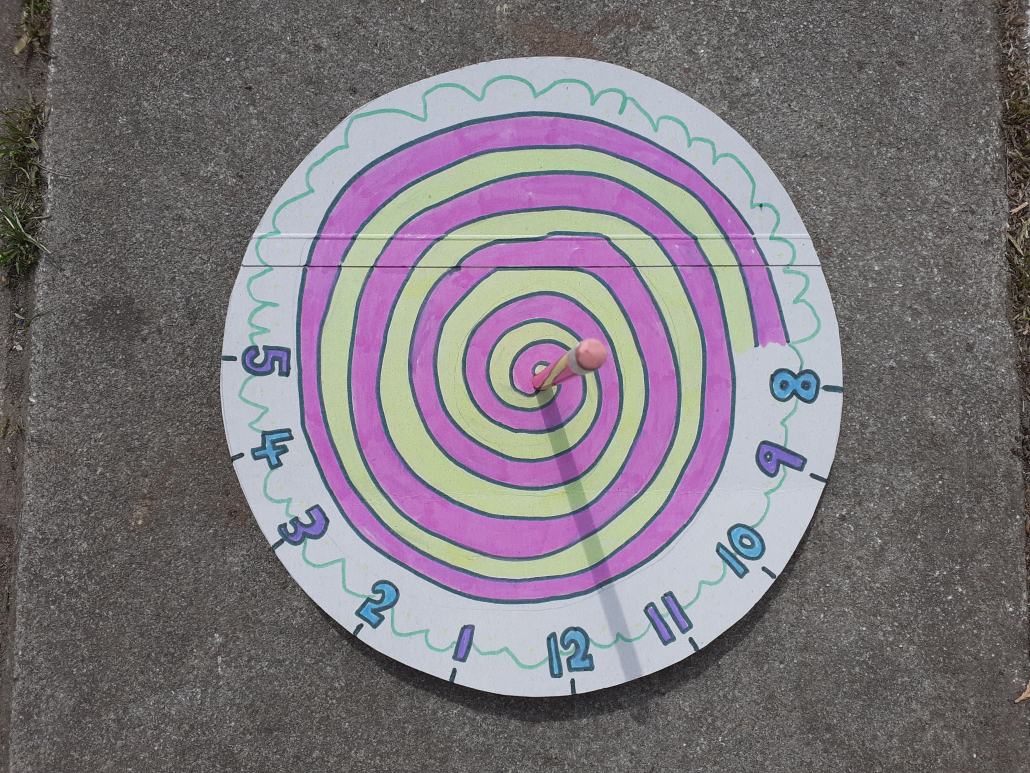
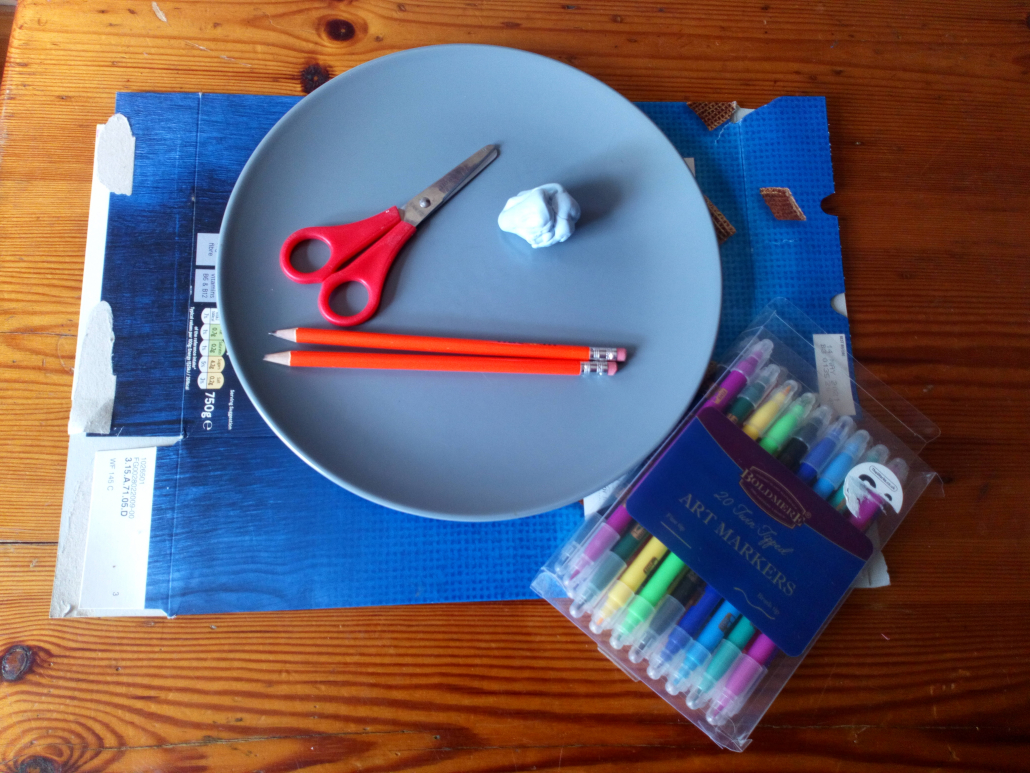
Can you tell the time without looking at your watch or phone? This activity uses some card, two pencils and some sticky tack to let you tell the time using the Sun.
This page will print, but looks a little funky. Click the button for a PDF version which looks a bit better.
Suitable for:
Age 3 up
Duration:
A whole sunny day
Safety notes
You know your children better than anyone, and you should judge whether they’re ready for this activity. You might want to think in particular about:
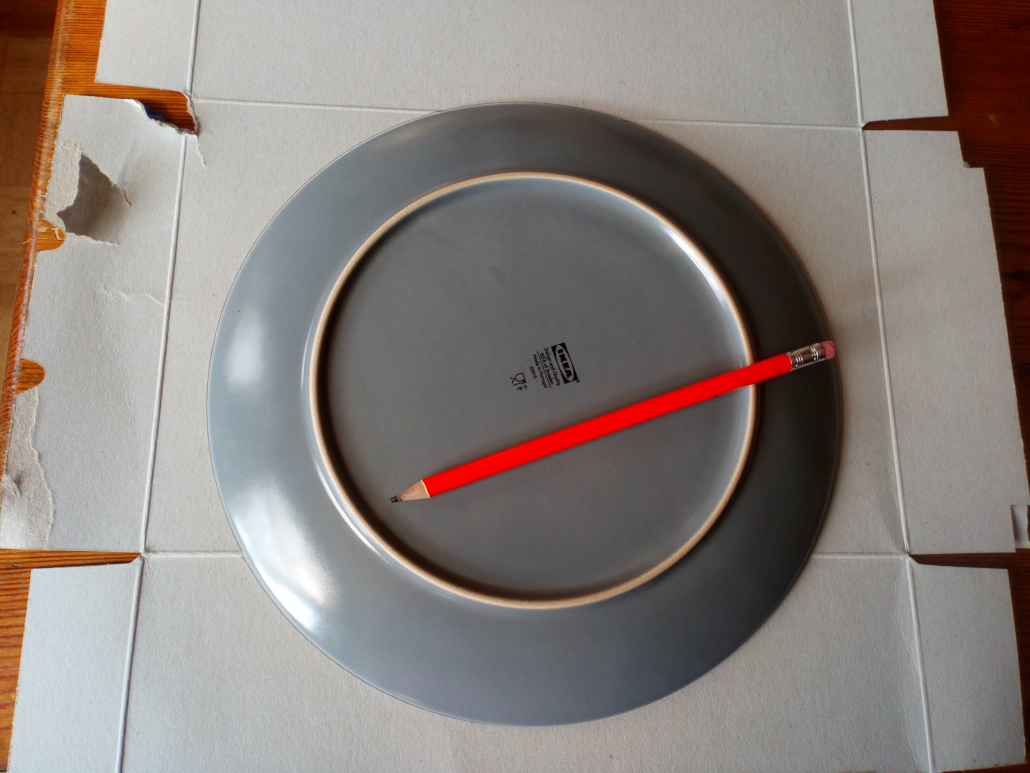
First of all, open up and flatten your box if you need to. Draw around your plate to make a circle.
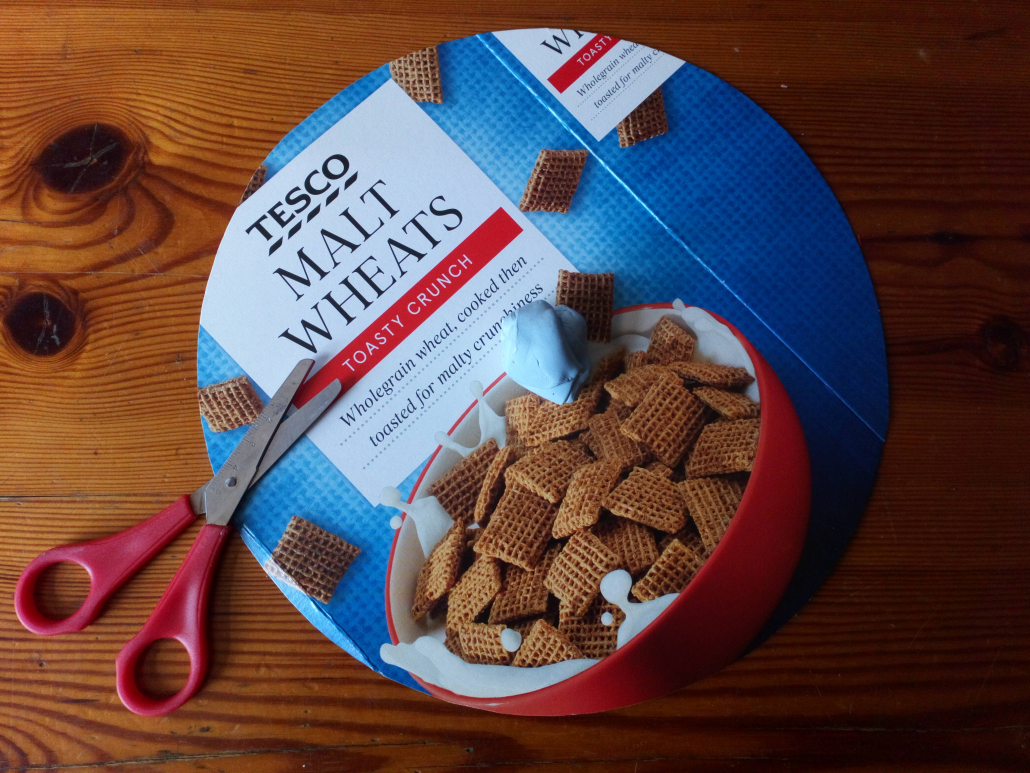
Cut out your circle. Stick your lump of sticky tack to the centre of the underside of your circle.
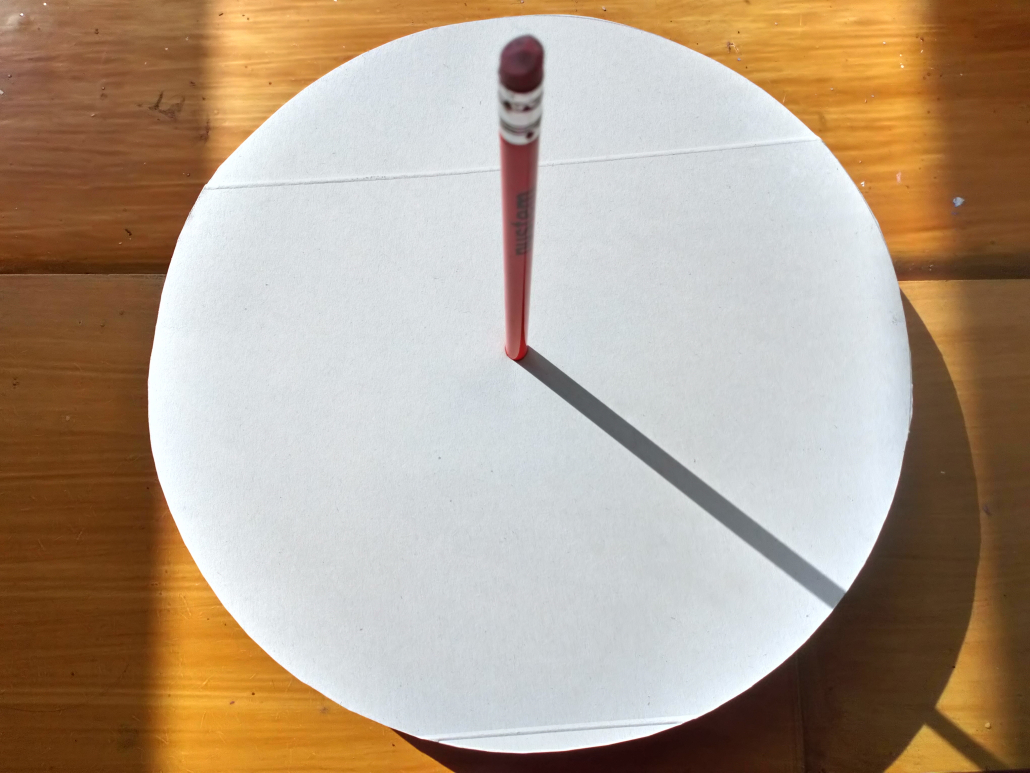
Turn your circle over. Stick your pencil through the centre of the circle into your sticky tack. Your base is ready.
You will need to start marking the hours on your sun dial as early as you can in the morning.
On the hour (e.g. exactly 8 am) put your sundial somewhere in your home that is in the sun as muc of the day as possible.
Look where the shadow falls on your sundial base, and mark this with a pencil. Write on the time next to your mark.
Then leave your sundial exactly where it is (this is really important!), and you might want to sticky-tack it down so that it doesn’t get moved.
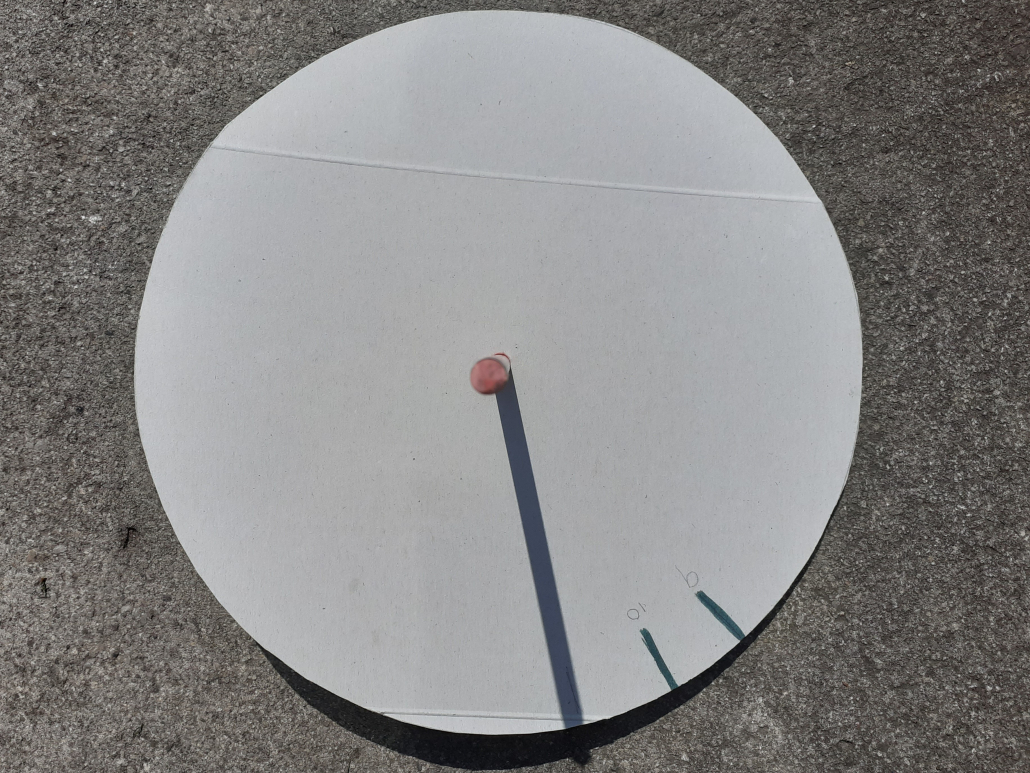
After an hour, check your sundial again. You should see that the shadow has moved. Mark where the shadow falls now on your sundial. Write the time next to this mark.
Again, leave your sundial in place.

Check your sundial every hour and mark the position of the shadow on your sundial each time. Remember to write the time next to the mark.
Do this until as late as you can in the day.
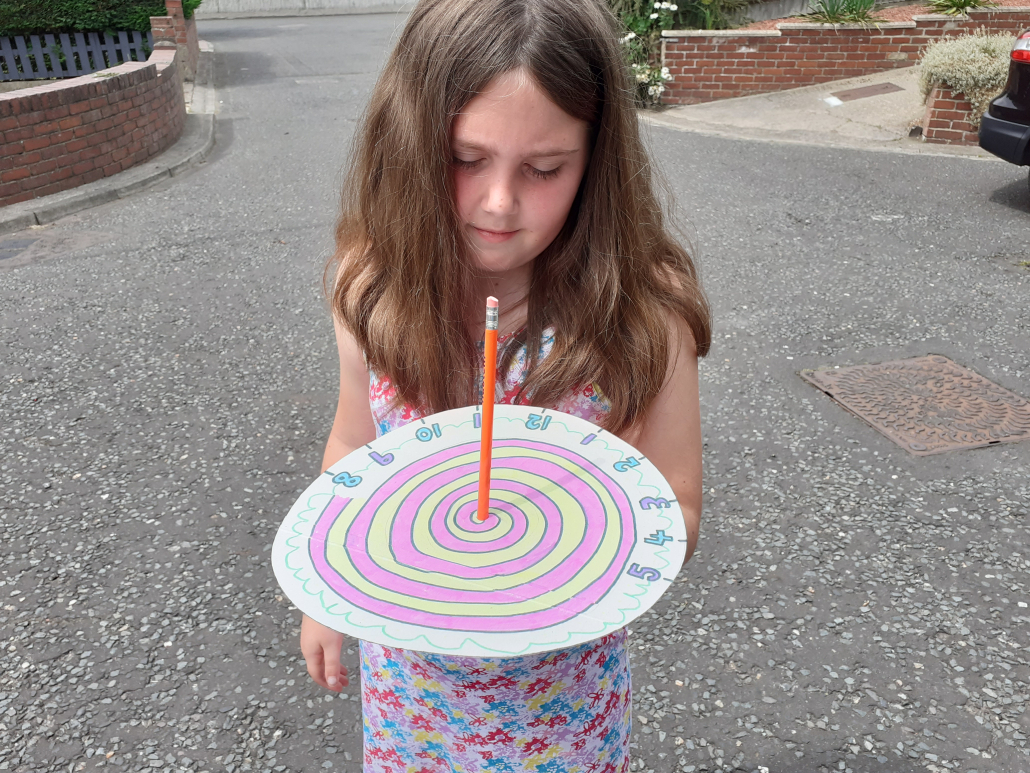
The next day you will be able to tell the time by seeing where the shadow falls. You need to put the sundial back in the same place or remember which direction your sundial was facing when you made it to make sure it tells the right time.
You can decorate your sundial if you want to.
What time was it when this photograph of the sundial was taken?
Shadows form when light is blocked by an object. For this investigation, the light you are using travels from the Sun and is blocked by the pencil of your sundial. The shadow falls opposite to where the Sun is in the sky.
Although the Sun appears to move across the sky, it is actually the earth that is rotating which causes the sun to look like it’s moving (find out more here https://www.bbc.co.uk/bitesize/clips/zkynvcw).
Over a day we see a pattern: the sun rises in the east and in the morning as the Sun is rising, your shadows were long, and point to the west. At 12 noon, the Sun appears at its highest in the sky, the shadows are at their shortest. In the afternoon, the Sun is in the west and the shadows point to the east. The shadows get longer and longer until the Sun sets in the west.
You will need:
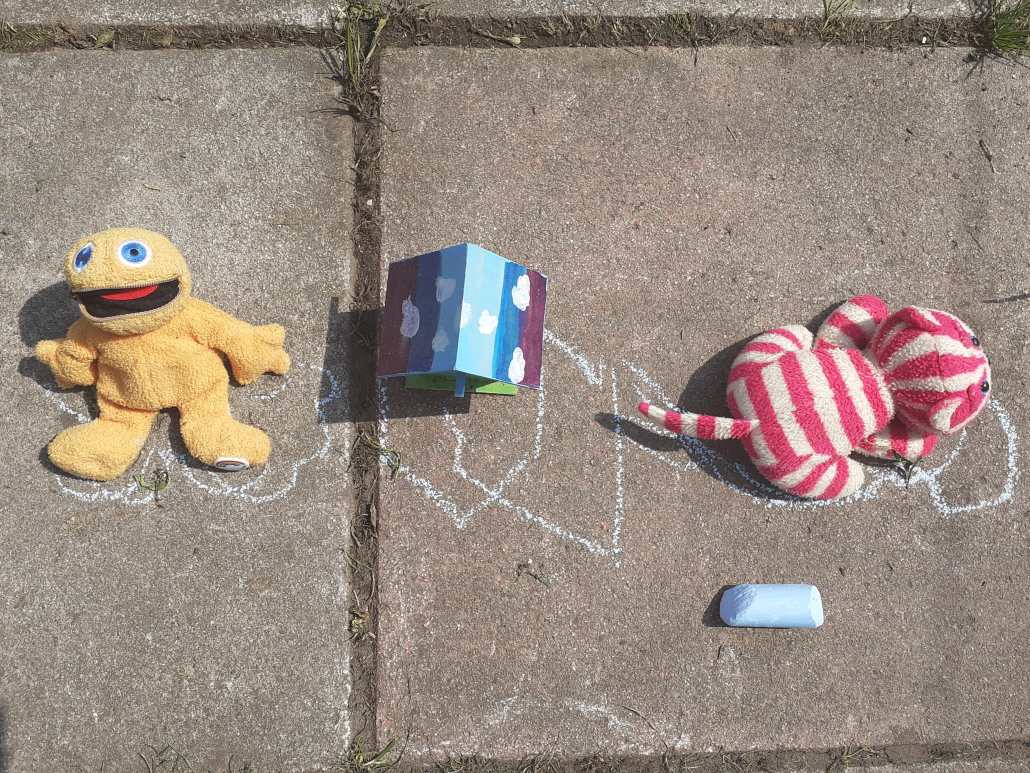
Place your toys somewhere sunny and then use the pencil or chalk to draw the outline of their shadows.
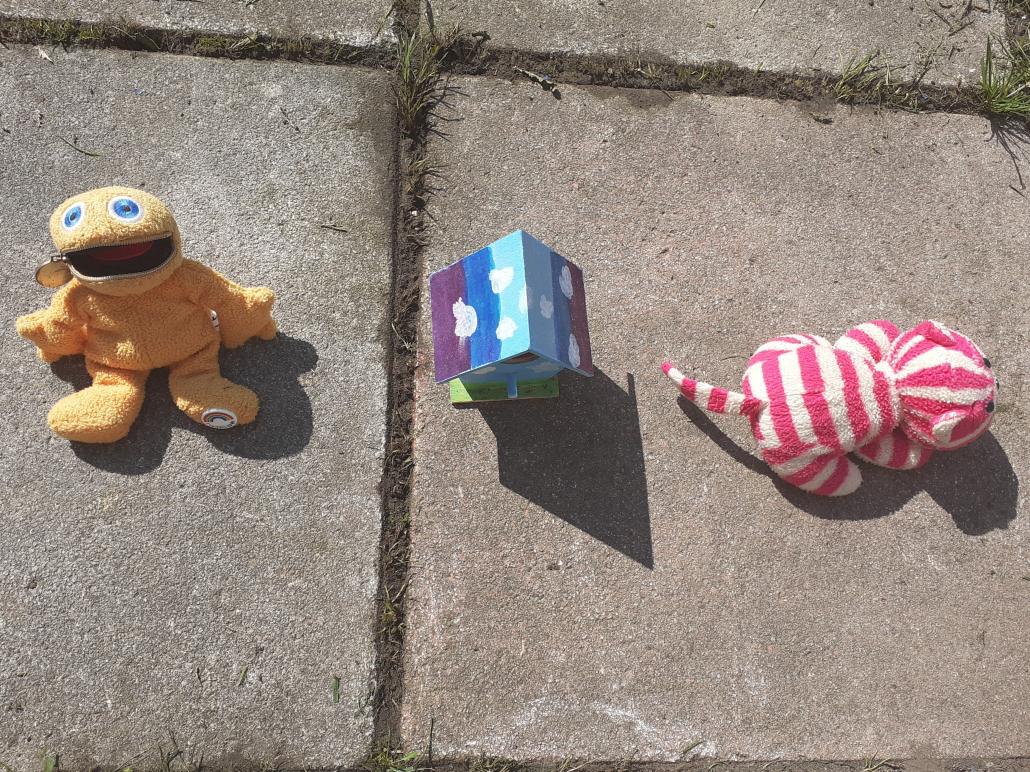
Leave the toys and come back an hour later. Draw around the new shadow.
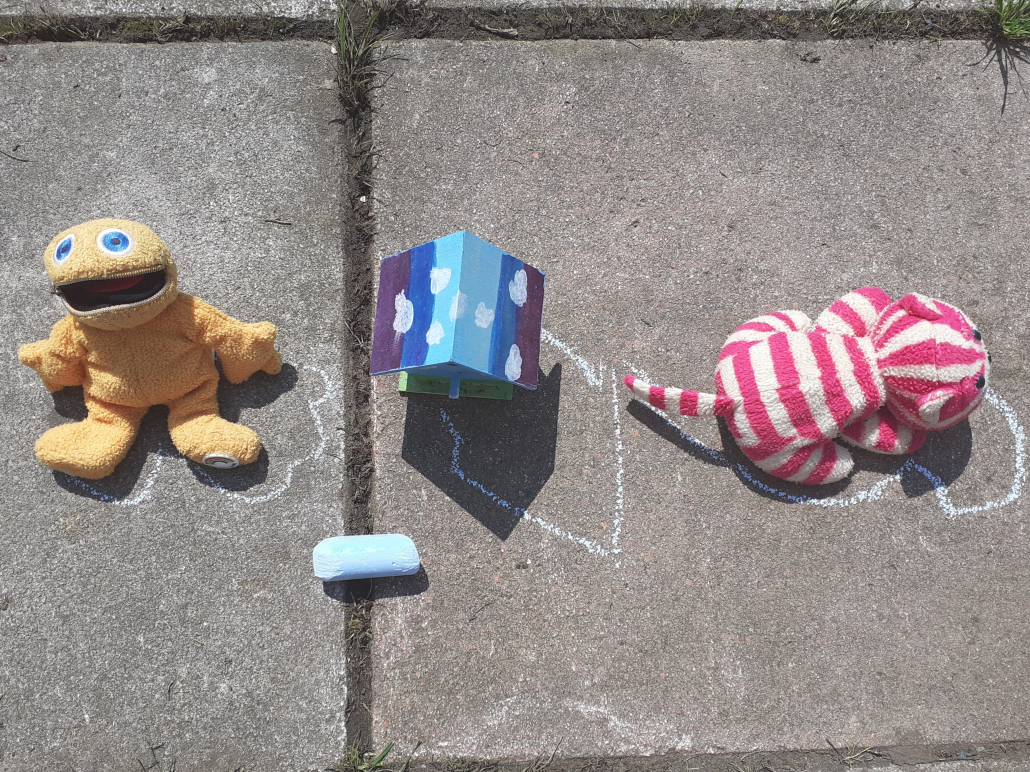
Do the same thing later on in the day and see how the shadows have moved again.
Suitable for:
Age 3 up
Duration:
A whole sunny day
Safety notes
You know your children better than anyone, and you should judge whether they’re ready for this activity. You might want to think in particular about:
Careers link – Astronomer
Today you’ve been exploring the light that’s coming from the Sun, our nearest star. Astronomers are also interested in the light that comes from stars. Instead of looking at shadows, they use telescopes to look far out into space and learn about the stars that you can see in the night sky. The light from those distant stars can tell us many things: what a star is made from, how big it is, or how old it is.
Attributes: observant, tenacious, collaborative


 Make Pixel Art