Growing seeds
Why is water so important to plants? Watch how seeds sprout and grow in this activity.

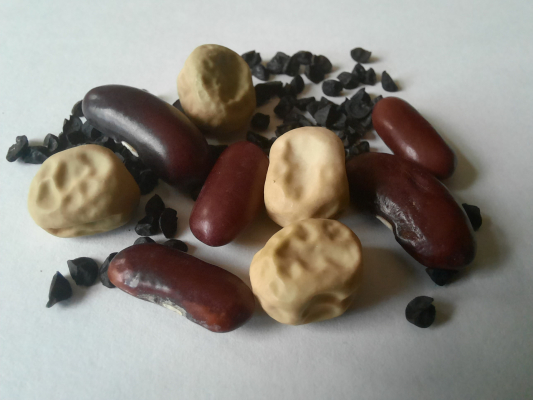
Have you ever wondered what happens to seeds when we add water to them? Do you know what seeds look like as they start to grow underneath the soil? To observe this, all you need is a clear freezer bag, paper towel, staples and some seeds.
This page will print, but won’t look great. Click the button for a print-friendly PDF version.
Before you start, you may want to listen to the story on the left called Little Cloud by Anne Booth. It is a great introduction to the water cycle and to understanding why water is so important for plants and animals to grow and survive.
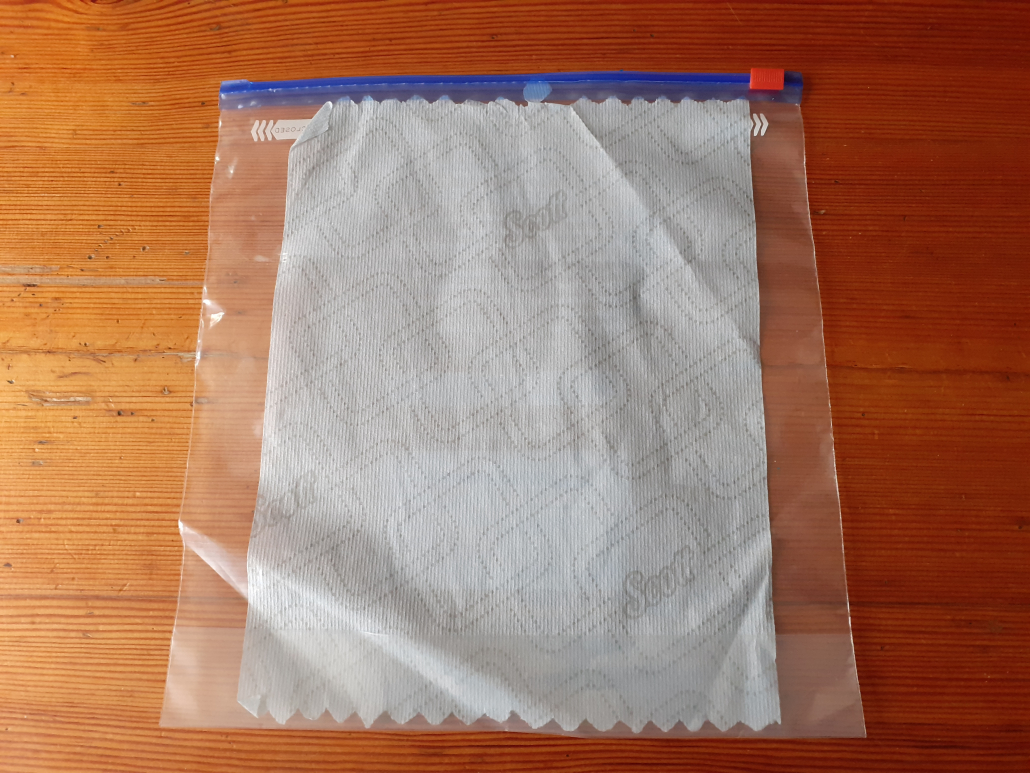
Take your sheet of paper towel and place it inside your plastic bag. Try to get it as flat as possible.

Place your plastic bag on your stapler, with the bottom of the bag as near to the hinge as possible. Put a staple in the bag as near to the edge as you can.
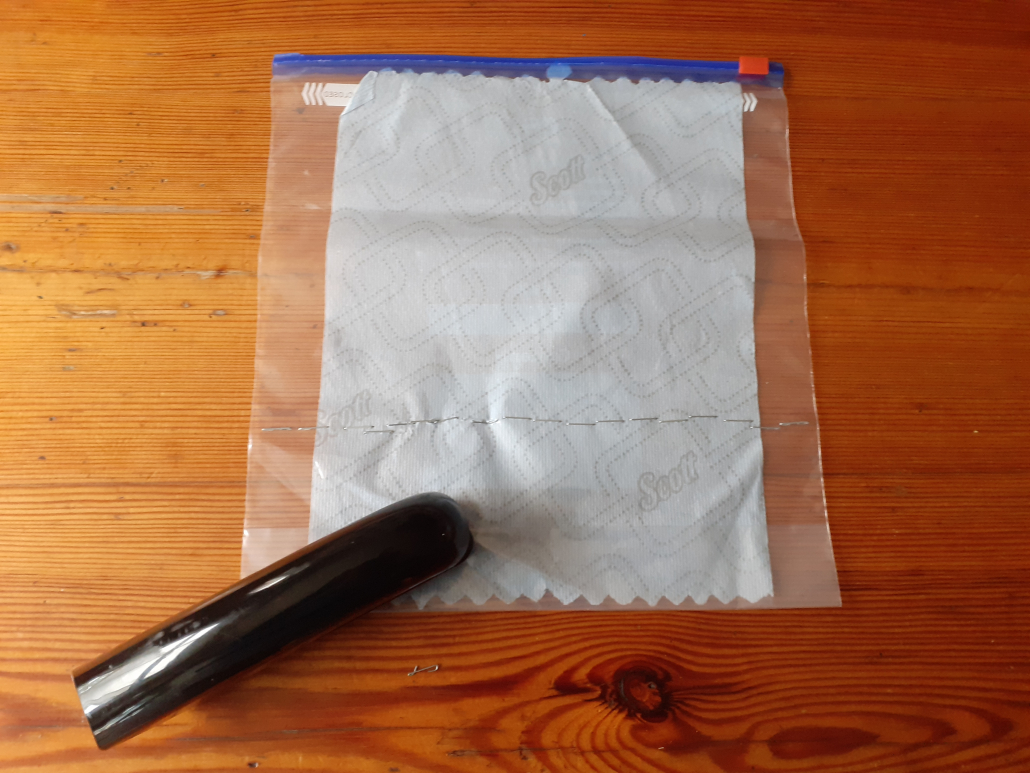
Put staples all of the way across the bag. Try to get the staples as close together as possible. This will make a ledge for the seeds to grow on. The roots should grow downwards underneath the staples and the shoots should grow upwards.
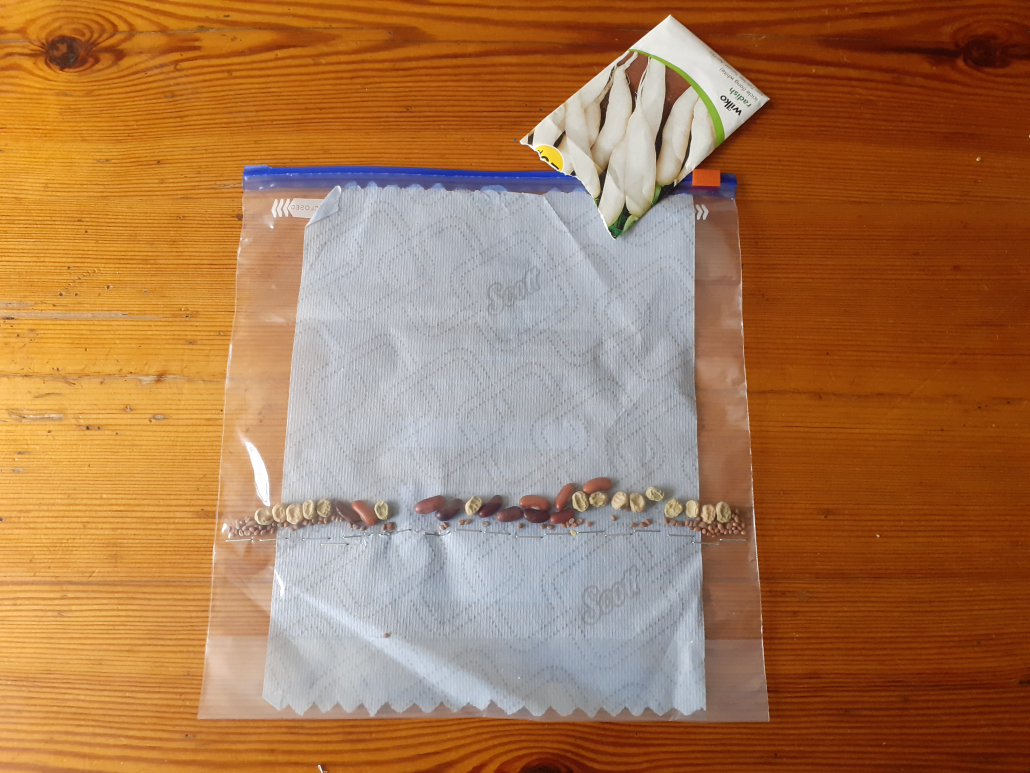
Carefully sprinkle your seeds onto the staples. Make sure the seeds are all on the same side of the paper towel and that they are spread evenly across the bag.
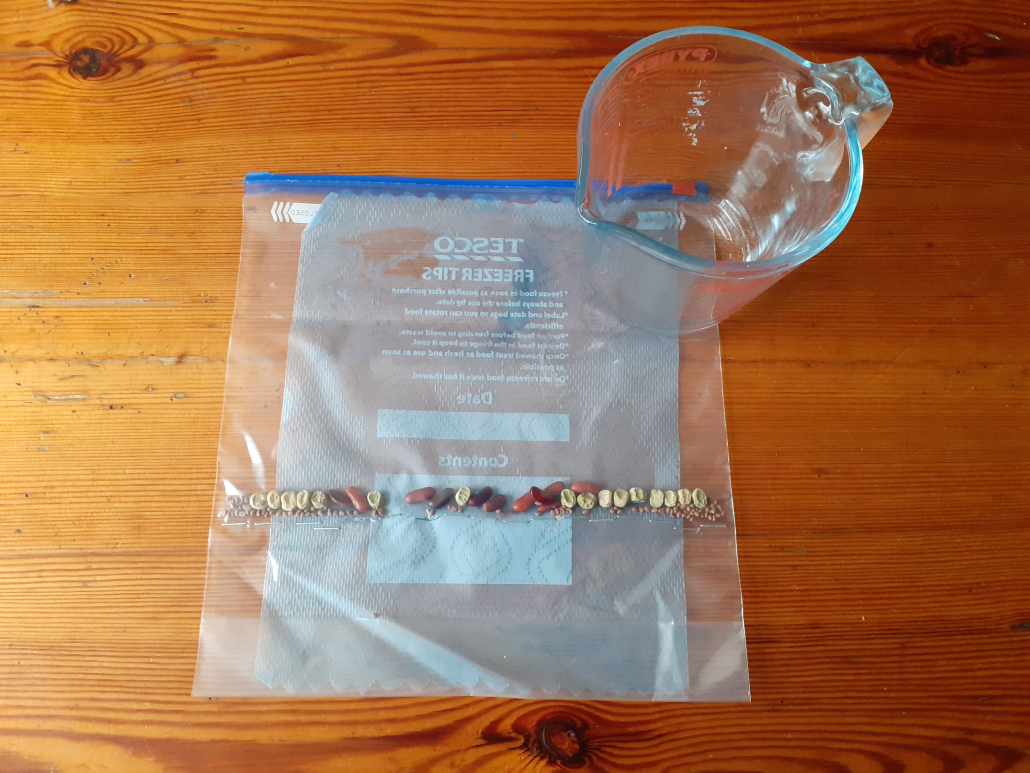
Add a small amount of water to your bag. This should all be absorbed by the paper towel.
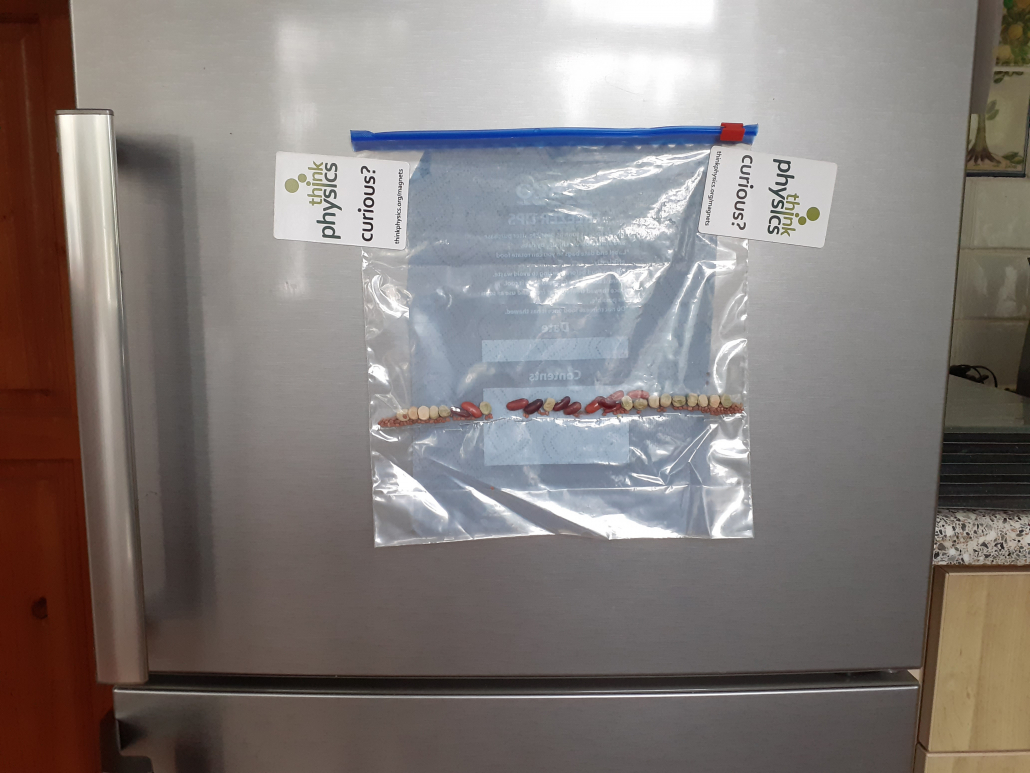
Put your seed bag in the light and observe the seeds each day. You could use magnets to stick your bag to your fridge or sticky tape to stick your bag to the window. Check to make sure that your paper towel remains damp.
In order for a seed to grow, it needs to germinate. For germination to happen, a seed needs water.
A seed contains an embryo, a young plant waiting to be activated to grow, and a food source, where the embryo gets it’s energy to grow. These are surrounded by the seed coat to protect them.
A seed is dormant or not active until conditions are just right for germination and for the plant to survive.
When a seed gets wet, it soaks up the water and this activates the release of energy from it’s food store. The embryo swells and gets longer.
Next, the embryo breaks through the seed coat. The root is activated and pushes downwards, then the leaves break out and the shoot is activated.
Watch the clips below to watch this happening.
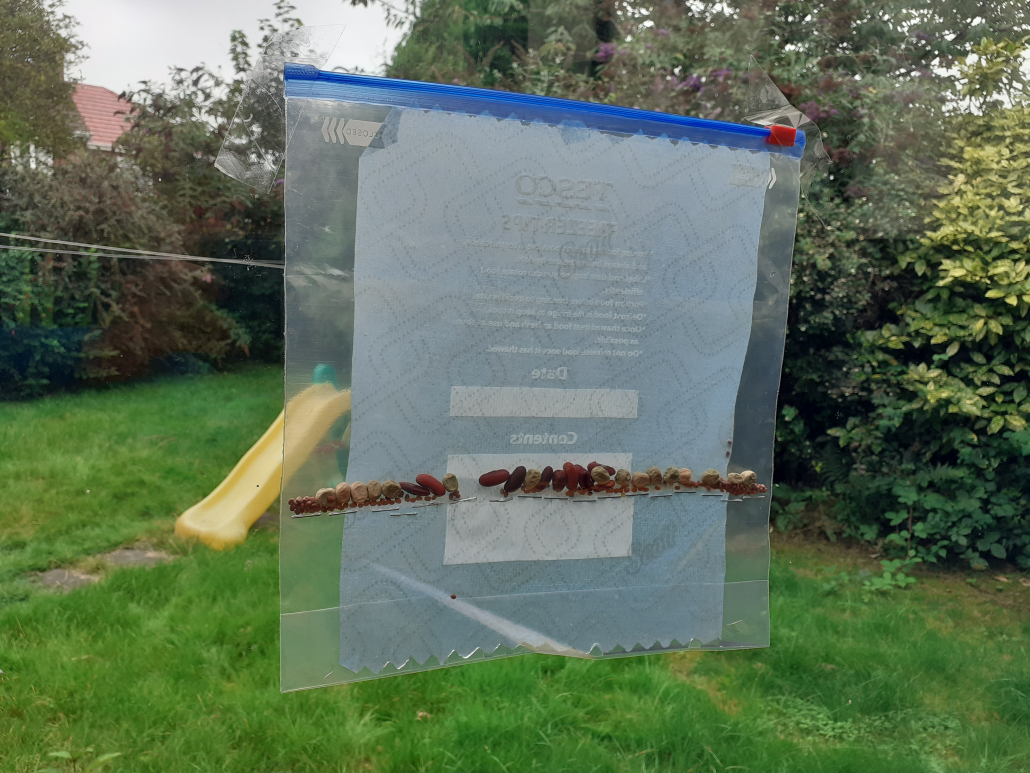
Why not investigate growing seeds in different parts of your home? You could try a putting your seeds on a window or in a room at the front and at the back of your home and record which seed bag grows fastest or which shoot grows taller. You could investigate what happens if you put your seeds in a dark cupboard. How about if you put your seed bag in the fridge or in the bathroom?
You will need:
What to do:
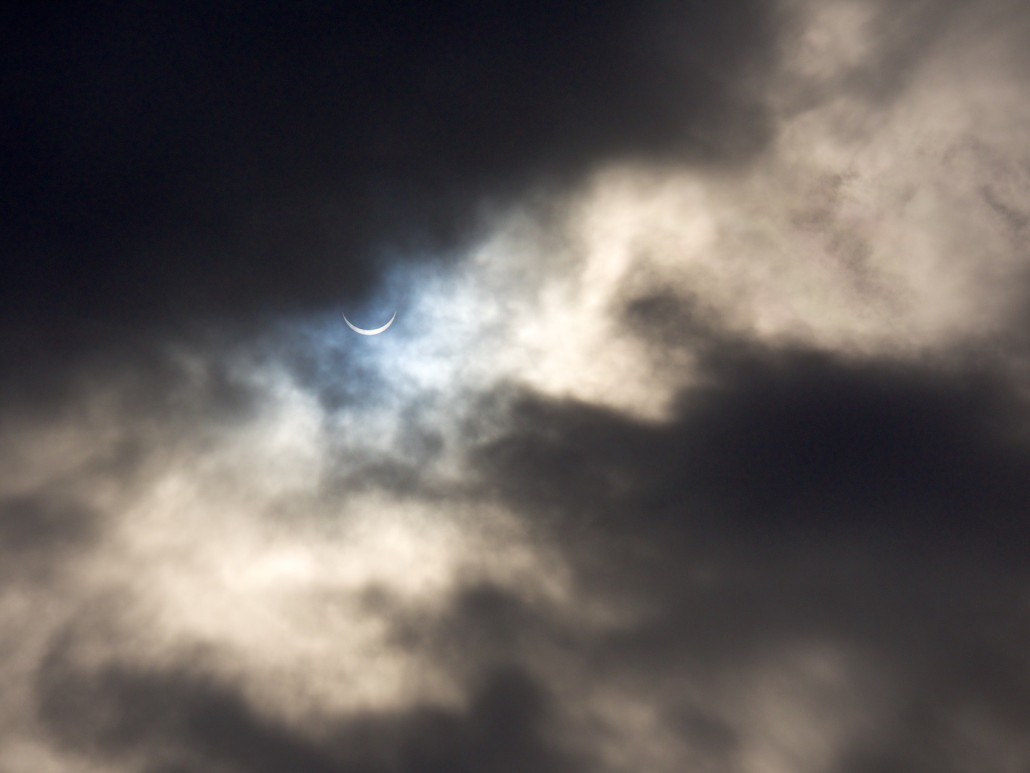
Stand, sit or even lie down on the floor and look up into the sky and carefully draw the clouds you see. You could ask:
Use the cloud guide to identify the clouds you can see. Cumulonimbus and nimbostratus are rain clouds. Do you think it will rain today?
You could also compare the drawings made of clouds on different days or make a cloud diary and record whether it rained or not that day.
10 minutes or so plus growing time
Age 3 and up
You know your children better than anyone, and you should judge whether they’re ready for this activity. You might want to think in particular about:
Meteorologists need to know what the weather is doing now, calculate how this will change in the future and use their expert knowledge to refine the details. Meteorologists:
Did you know that some weather presenters on television and radio are meteorologists?


 Water filters