
Case Study: Sammie Buzzard
At a glance
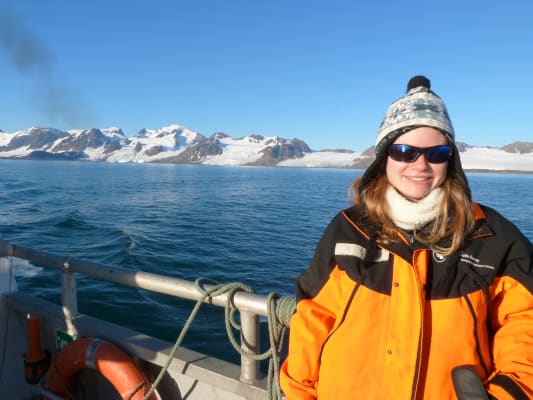
Sammie works in the Geography department of Northumbria University applying maths to creating simulations of Arctic and Antarctic ice. She uses data from satellites to monitor how the ice is changing and responding to climate change.
Sammie’s journey into STEM
Sammie studied for A-levels in Maths, Biology and Chemistry. She then did a degree in Maths at Exeter University. After that, Sammie did a PhD at Reading University Meteorology Department, researching ice shelves (Glaciology).
Observing how ice is behaving as the climate is changing
Sammie uses Maths to create computer simulations to look at how the ice in the Arctic and the Antarctic is changing as the climate changes. She uses a computer to create code to investigate data produced by satellites orbiting the Earth that monitor the poles. This is then used to monitor how ice is changing and responding to climate change.
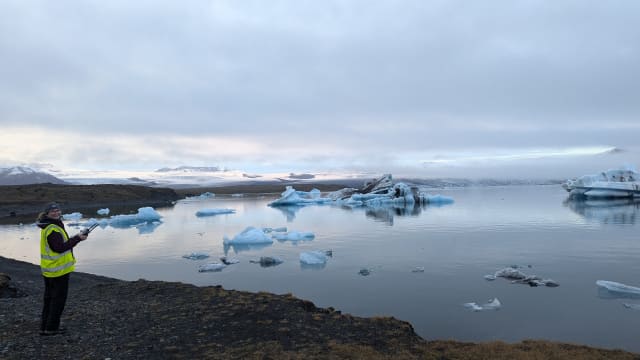
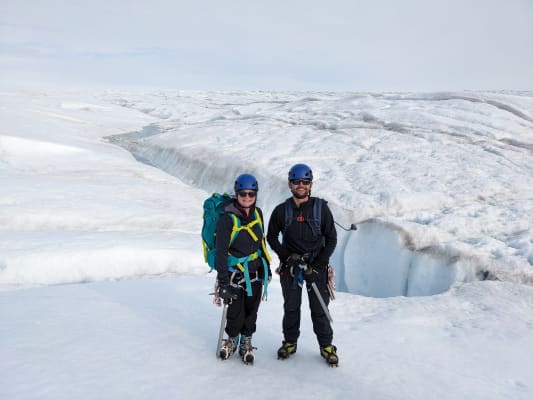
She has worked on projects that look at lakes in Antarctica and is currently working on looking at lakes underneath the Greenland ice sheet. She has had chance to go and camp and carry out fieldwork in Greenland to take measurements of the ice as part of this.
Sammie teaches Geography students at Northumbria University and helps to supervise new scientists. She talks about science a lot so people know that our planet is changing. She does this in schools, in public and sometimes even on the radio or TV.
Sammie loves her job because:
It’s different every day and I get to research things I care about. When I’m lucky I get to travel to the Arctic and Antarctic to take measurements of the ice.
Sammie’s STEM attributes
Sammie is hard-working because her job involves lots of studying to get my qualifications and there are lots of different tasks for her to do each day, working with other researchers and university students. She is creative when using Maths to make computer simulations. She is logical because she uses Maths and computers to create simulations and understand data.
Sammie is also curious and wants to understand how humans have impacted our planet, especially in the poles. She is collaborative as her work involves scientists from many countries, and she works with space agencies such as NASA and ESA. Sammie is a communicator:
It’s important that people know how we are impacting our polar regions and to be prepared for changes.
Loving the outdoors
Sammie has a rescue dog called Pingo (a name related to ice!) and she likes running and being outdoors. She feels very lucky in her job because:
I get to go to places likes Greenland that I would never get to go to otherwise.
Sammie’s advice to young people is:
If you’re working on something you care about it can often be frustrating, especially if you can see other humans not helping the planet, but it’s also great to know what you’re doing is something that matters, it’s never boring!
This case study is featured in our STEM Person of the Week 2025 set. You can download the whole set, which includes a poster of Sammie using this link.
Job: Assistant Professor of Glaciology
Key Attributes: hard-working, creative, logical
Qualifications: PhD at Reading University