
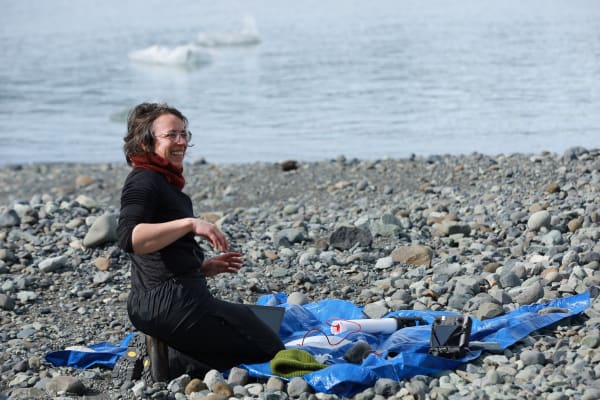
Case Study: Ronja Reece
At a glance
Ronja’s research is about the Antarctic Ice Sheet. This is the continent at the South Pole that is covered in ice, in places the ice is more than 4km thick. Climate change will cause ice loss and thereby raise global sea levels. She uses computer models, theory and observations to find out how much ice will melt and how fast.
Wanting to make a difference to the world
Ronja studied mathematics at a university in Germany (University of Bonn) after doing the German A-level equivalent (in Maths, Physics, Latin and History). Ronja wanted to make a difference to the world, so:
I decided that I want to apply my knowledge for a societally relevant topic – and did so through my PhD in climate physics at the Potsdam Institute for Climate Impact Research.
As she loves her job, she continued to work on glaciers and got a job at Northumbria University where she continues to do research and now also teaches students in Geography.
How can Maths and Physics help us see how quickly ice is melting?
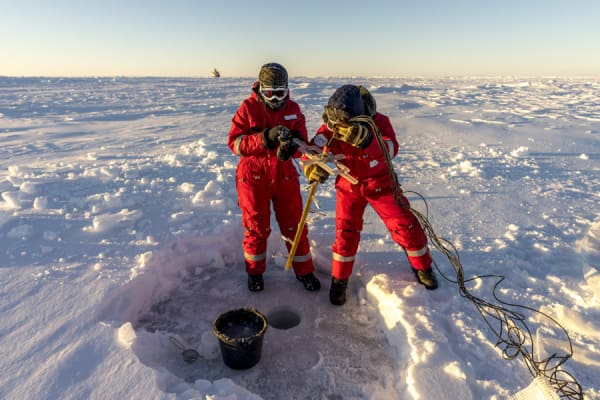
Ronja’s background is in Mathematics and Climate Physics. She work on projections (estimates and predictions) of future sea-level rise and the stability of the Antarctic Ice Sheet. She mostly uses and develops numerical models that show us how ice flows and how ice and the ocean interact with each other. She has also been to Antarctica to measure sea ice with the icebreaker Polarstern, and to Iceland to do drone-based measurements of the ice.
My job allows to follow my curiosity for the planet, and glaciers in particular. At the same time, I research a topic that is important for people all over the world because the melting of ice causes sea-level rise.
Ronja’s STEM attributes
Ronja is collaborative as she needs to work together with a lot of colleagues from all over the world. She is patient and self-motivated because:
I often have to try different ways and go back the start to answer a question.
Ronja also describes herself as curious as she looks into all kinds of research for her work, logical as she uses Maths to understand glaciers and creative because she comes up with new approaches and understanding.
Climate change in her spare time
Outside of work, Ronja loves to talk about her research and to discuss it with everyone! She also enjoy reading, dancing:
At the moment I’m into Swing Dance.
She also likes hiking and climbing.
Ronja’s advice to young people is:
Try and find out what excites you, and follow that for your studies and job. Also, especially when you are a girl, people might not see your Maths, Physics or Geography skills – don’t let that stop you if you like those subjects.
This case study is featured in our STEM Person of the Week 2024 set. You can download the whole set, which includes a poster of Juna using this link.
Job: Vice Chancellor’s Fellow in Glaciology
Key Attributes: collaborative, patient, self-motivated
Qualifications: PhD in Climate Physics