Fruit chew rock cycle
Use fruit chews to model how sedimentary, metamorphic and igneous rocks are formed.

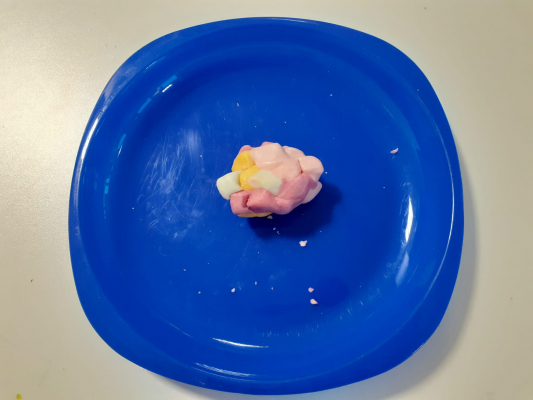
Use chewy sweets to create sedimentary, metamorphic, and igneous rocks.
This page will print, but looks a little funky. Click the button for a PDF version which looks a bit better.
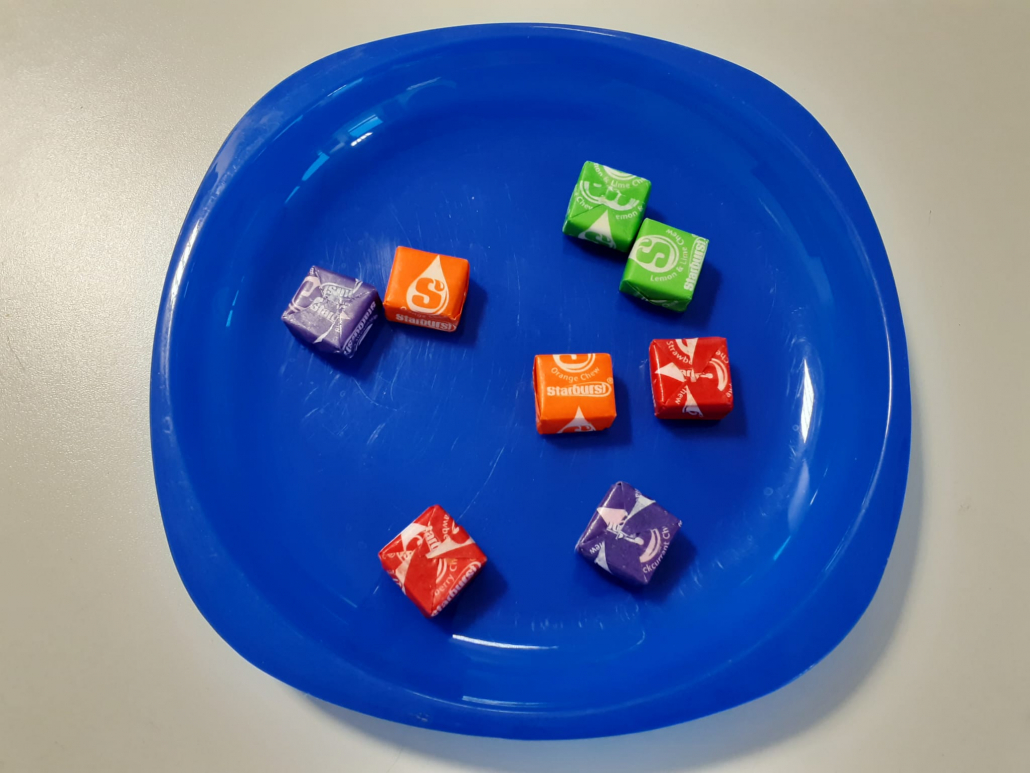
First select 2 or 3 of each flavoured sweet.
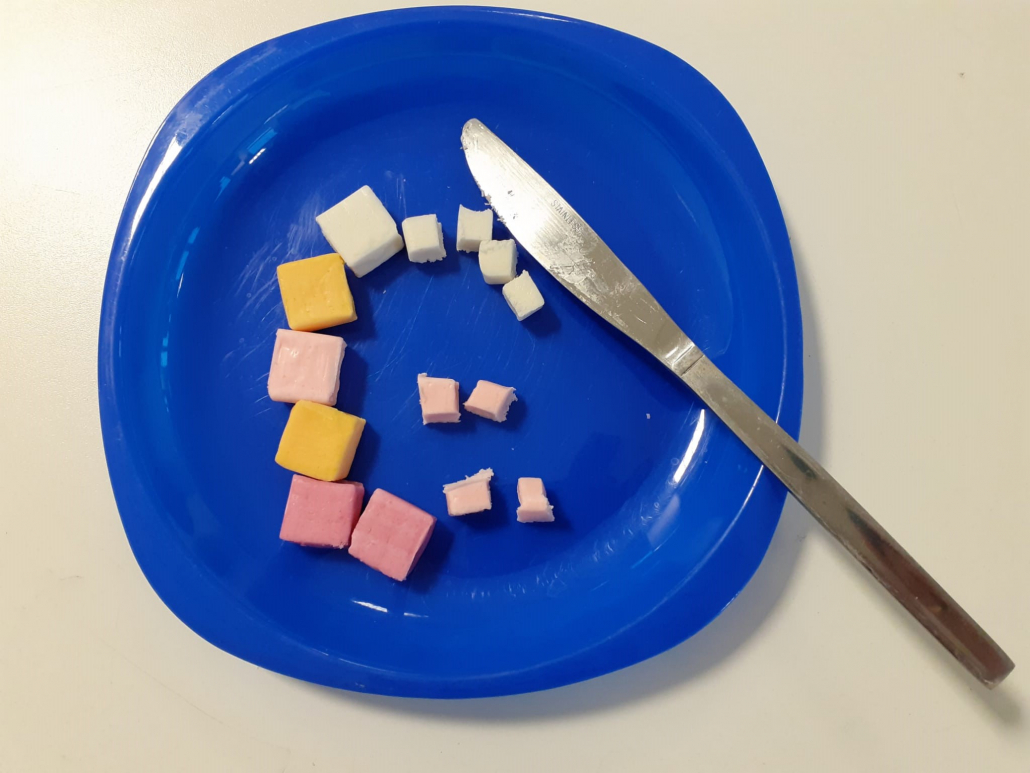
Unwrap the sweets and chop each one into 4 pieces with your dinner knife.
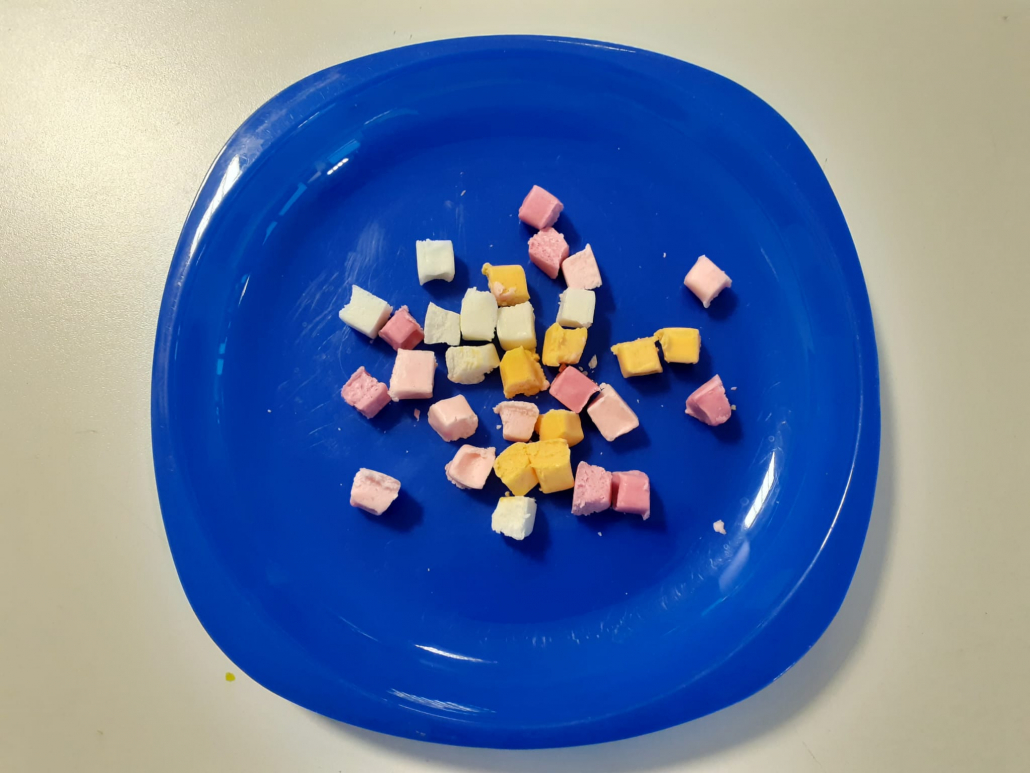
When you have chopped up all of the sweets, mix them up. This represents the different pieces of rock, sand, pebbles, shells and plant matter that make up sediment.
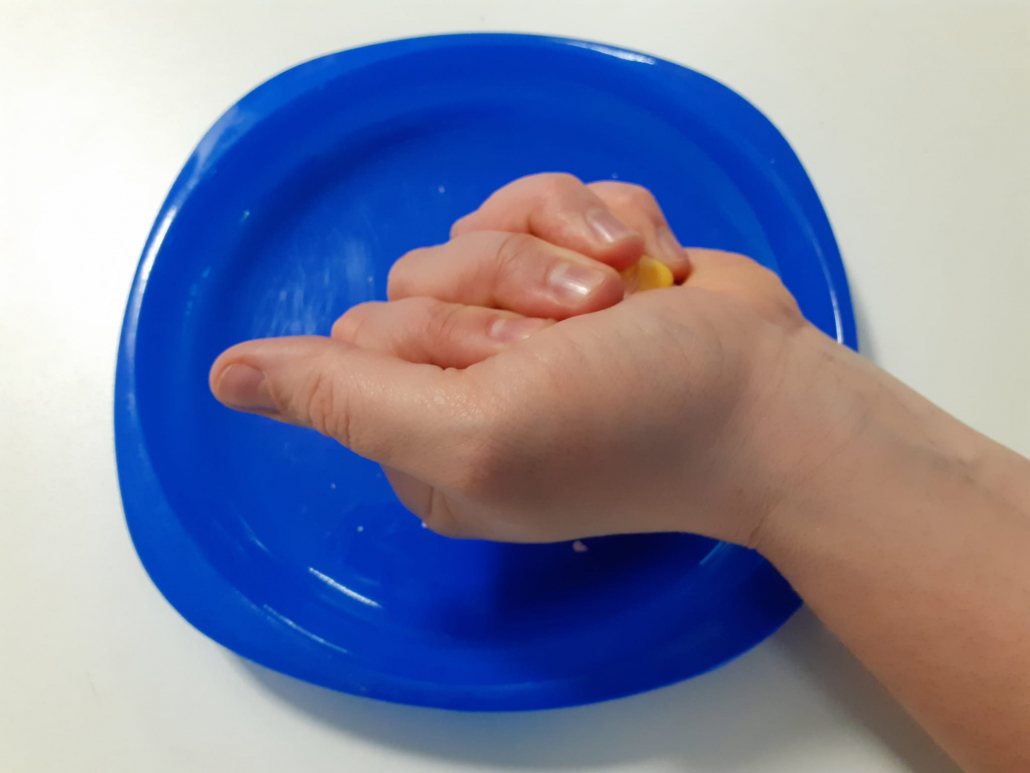
Gather up the chopped up sweets into your hand and squeeze a little bit to compress (pack) your rocks together. If you have small hands or lots of sweets, you might have to use two hands.
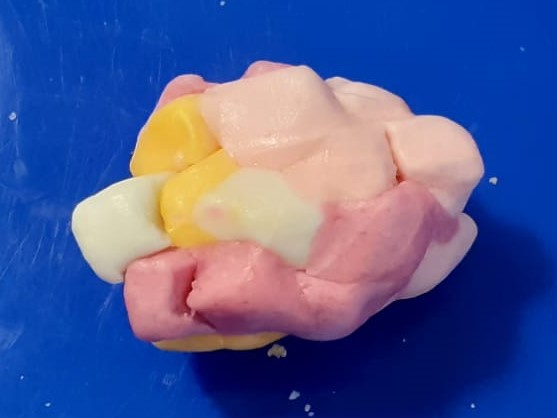
By squeezing the pieces together, you have created sedimentary rock!
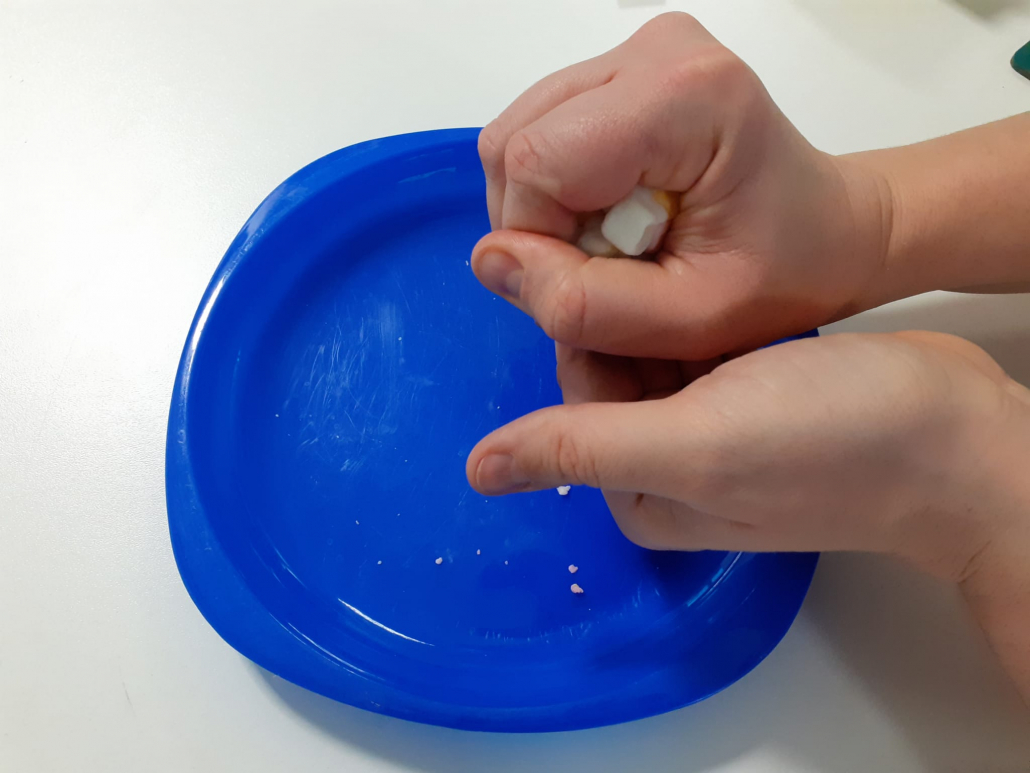
Take your sedimentary rock in both hands and breath onto your rock to warm in up. Now squeeze your rock hard in both hands.
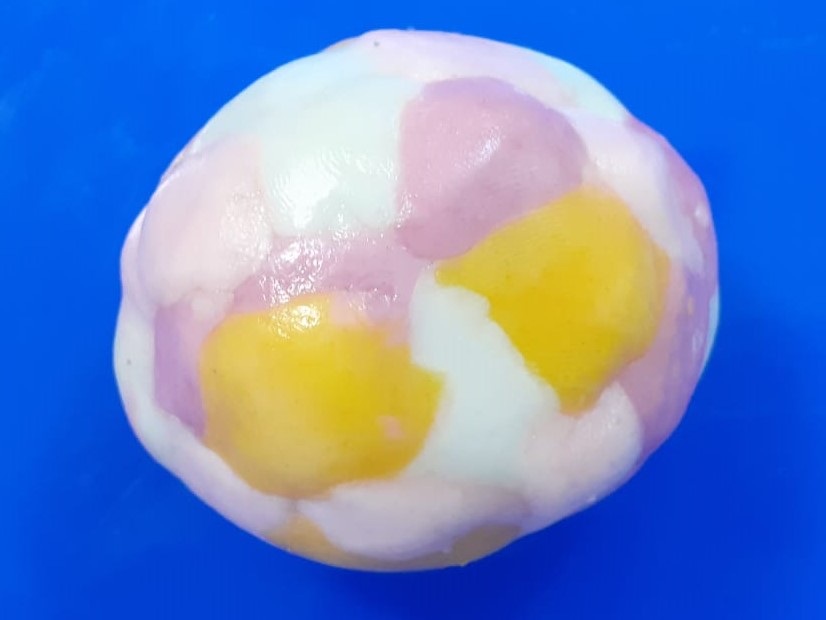
You have now made a metamorphic rock!
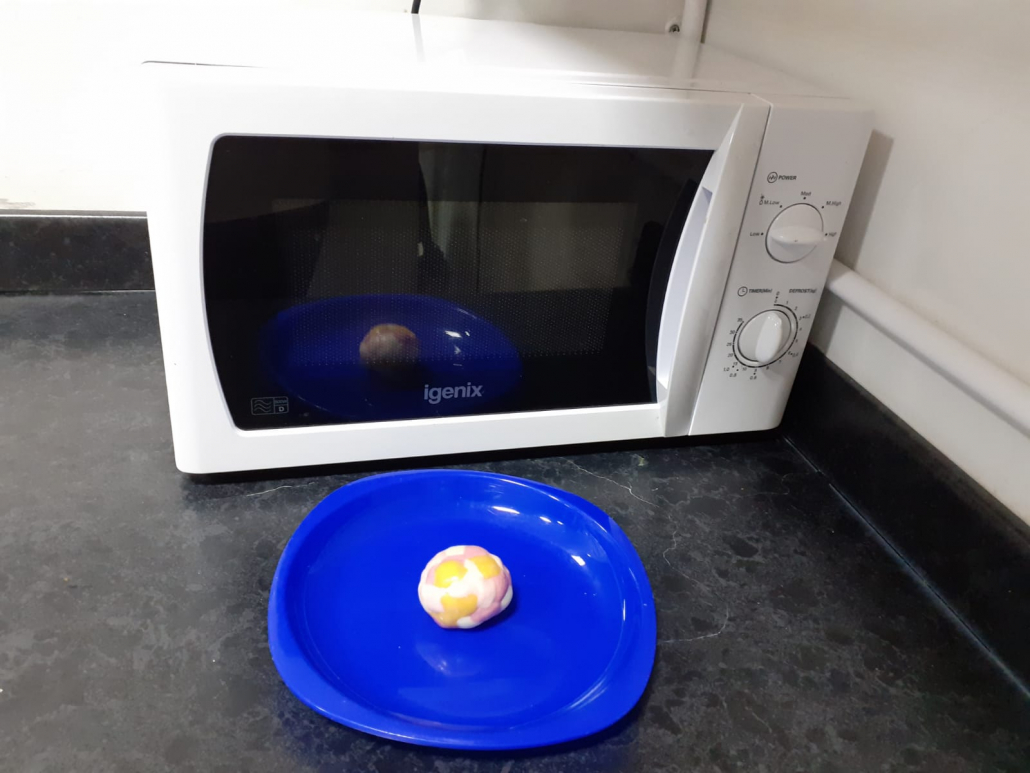
Put your metamorphic rock into the microwave and heat it. You may need to ask an adult to do this for you. We found 30 seconds in our microwave was enough to melt our rock. Keep an eye on it and take it out before it starts to bubble.
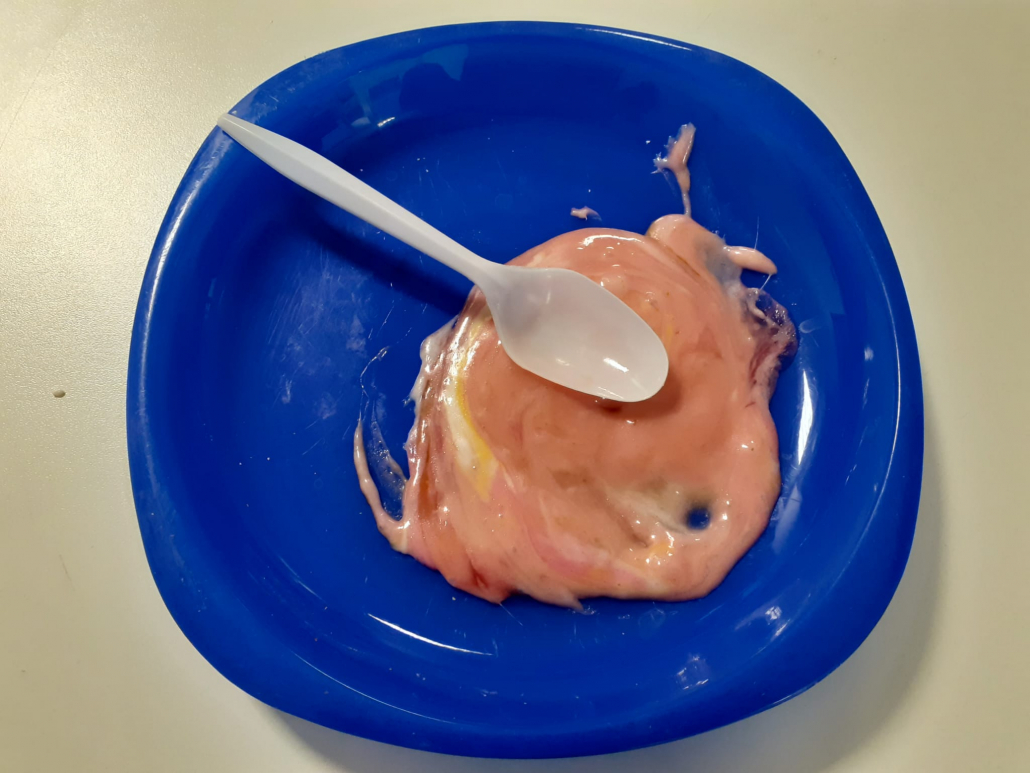
Slowly and carefully stir your molten rock.
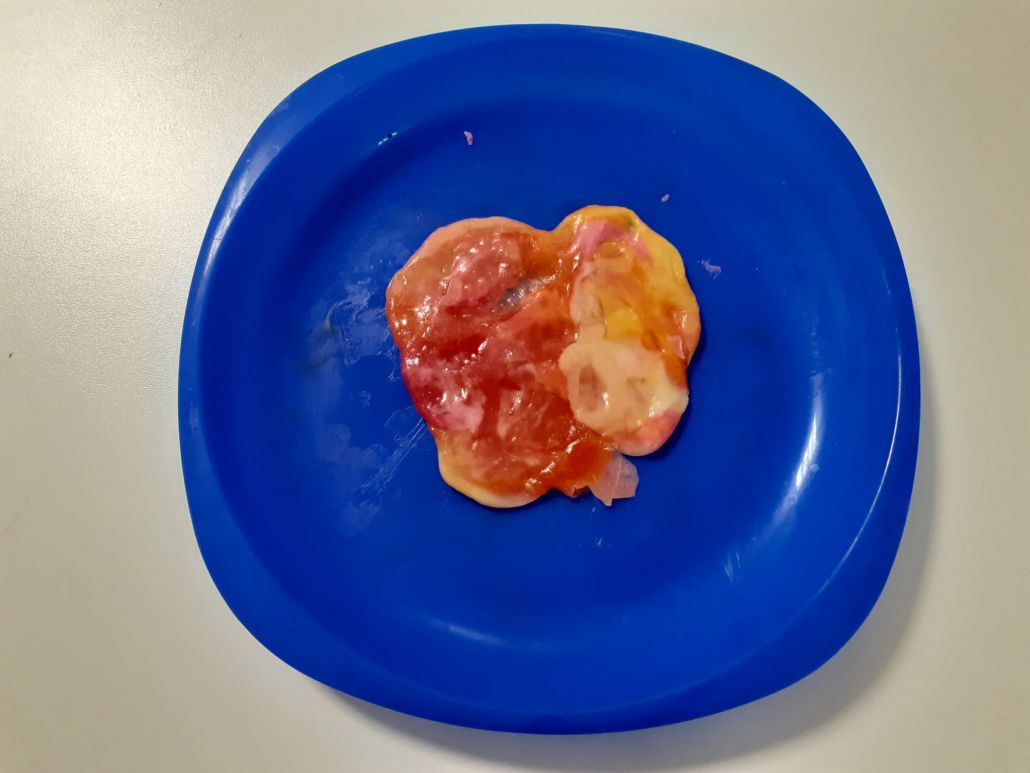
Leave your rock to cool and harden. You have now created igneous rock!
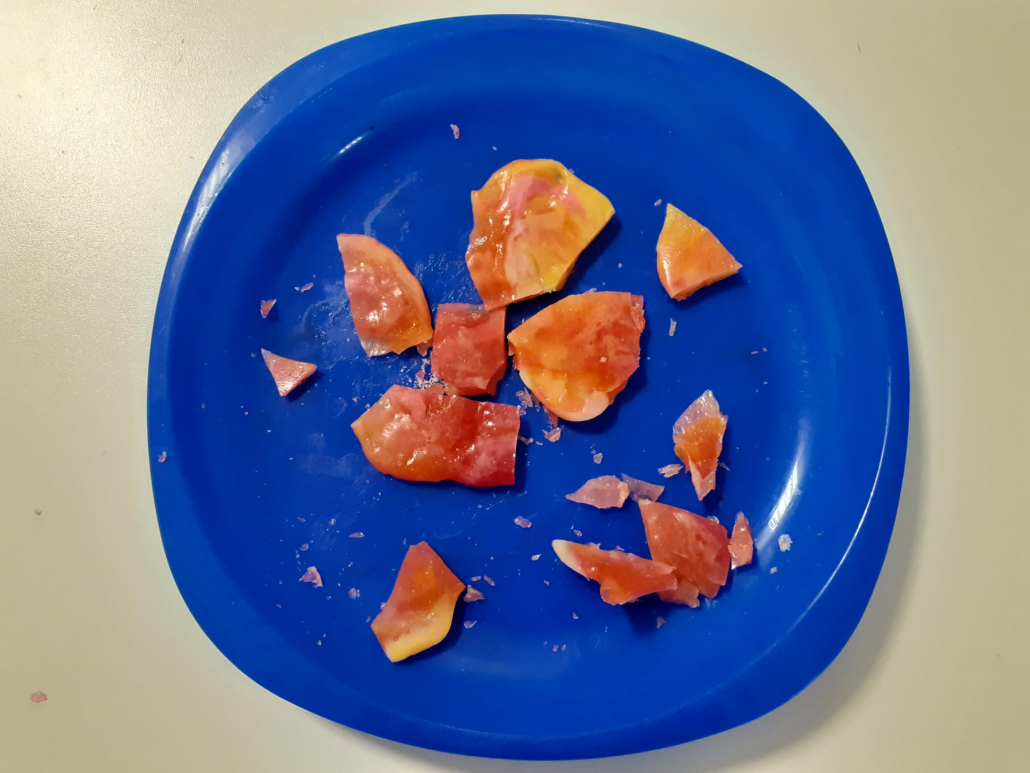
Use your rolling pin or the other end of your spoon to break up your rock. Be careful when you do this and remember to pick up any pieces from the surface, table or floor and put them in the bin. You have now created the eroded (broken up) rocks that then become sedimentary rocks at the start of our rock cycle!
Can you think of anything that is made from rock?
Do you know the names of any rocks?
Do you know which rocks are sedimentary, metamorphic or igneous?
Can you explain how sedimentary, metamorphic and igneous rocks are formed?
The rock cycle describes the way that rocks on Earth are constantly changing and reforming.
Sedimentary rocks are made up of layers of of rock that has been broken up (eroded), pebbles, shells and plant matter. Over time these are squashed together to form rock. Examples of sedimentary rock are limestone and coal.
Metamorphic rocks are rocks that have been changed deep underground by heat and pressure. Examples of metamorphic rocks are slate and marble.
Igneous rock is magma or molten rock that has cooled down. Granite is an example of an igneous rock.
In our sweet rock cycle, we created our sediment by chopping up our sweets and mixing them together. We then squashed these pieces together with our hand to form sedimentary rock.
We then added heat with our breath and more pressure with our hands by squeezing really hard to create metamorphic rock.
After that we heated our metamorphic rock up in the microwave to become magma and let it cool to become igneous rock.
Finally, we broke up our igneous rock to create the sediment ready to start the rock cycle again.
Mr Bradley will take you on a rocky adventure climbing cliffs and crossing deserts all to learn a little more about rocks in this fascinating video.
20 minutes or so.
Age 7 and up.
You know your children better than anyone, and you should judge whether they’re ready for this activity. You might want to think in particular about:
Geologists work to understand the history of our planet so they can understand Earth’s history and can predict how events and processes of the past might influence the future. Geologists seek to understand the processes of landslides, earthquakes, floods, and volcanic eruptions well enough to avoid building important structures where they might be damaged. They prepare maps of areas that have flooded in the past in order to prepare maps of areas that might be flooded in the future. Geologists locate rocks that contain important metals, plan the mines that produce them and the methods used to remove the metals from the rocks. They also locate and produce oil, natural gas, and groundwater. Geologists study past climates of Earth and how they have changed across time. This provides an understanding of how our current climate is changing and what the results might be. They also study the age of rocks, attempting to piece together a chronology of events for the formation of our land masses and changes over time.
Attributes: observant, curious, hard working


 Journey Stick