Download progression document
Includes statements from Development Matters (birth to age five) and the relevant ELGs in full, for the Ice towers provocation

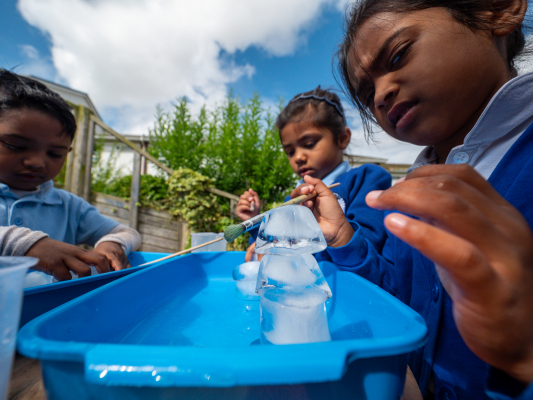
Includes statements from Development Matters (birth to age five) and the relevant ELGs in full, for the Ice towers provocation
Play, Be, C Units provide enabling environments with teaching and support from adults. Reflecting on the characteristics of effective teaching and learning, children will have opportunity to learn and develop by:
- Playing and exploring – children investigate and experience things, and ‘have a go’.
- Active learning – children concentrate and keep on trying if they encounter difficulties and enjoy achievements.
- Creating and thinking critically – children have and develop their own ideas, make links between ideas, and develop strategies for doing things.
Early Years Foundation Stage Statutory Framework: accessed November 2024. Available under the Open Government Licence v3.0.
Freezing, cold, solid, hard, melting, dripping, smooth, shiny, white, crystals, see through, cloudy, stick, build, tall, high, wide
Fill your containers, bags and trays with water and put them into the freezer overnight. You may want to add some food colouring to some of the water.
Place a selection of different shape and size ice blocks into the centre of your tough spot or tray. You might want to keep some of the ice in the freezer to use with other groups.
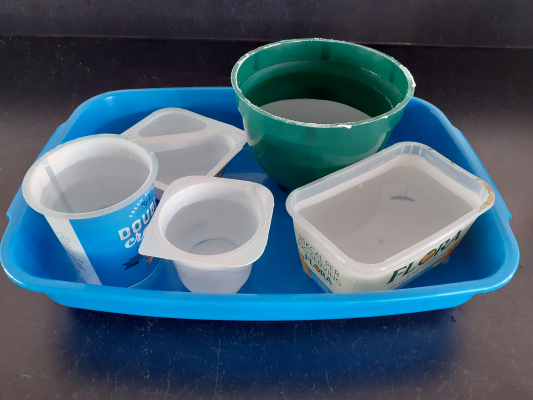
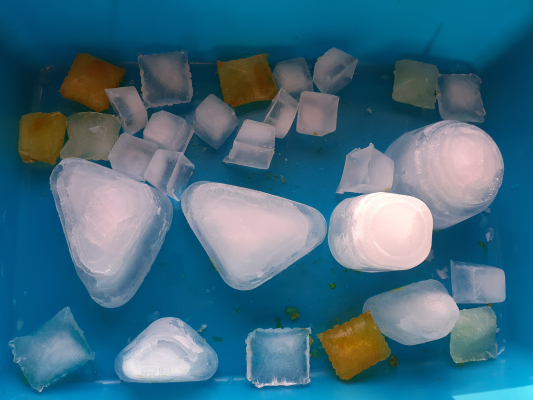
Tell the children that they are going to be glaciologists, You could show them the glaciologist poster. Tell the children they will be curious like glaciologists and find out how to build towers with ice. They will be observant like glaciologists and notice which shaped ice fits together best. They will be resilient like glaciologists, because if their tower falls down, they will try again.
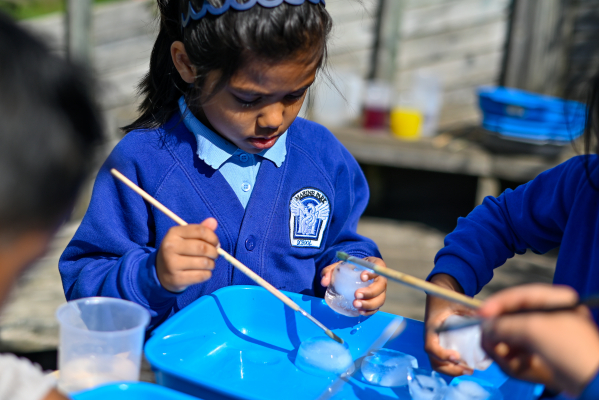
Show the children how to stick lumps of ice together. This is done by using the water as glue and painting water where they want the ice to stick together.
Challenge the children to build their towers. You could use our ice towers provocation.
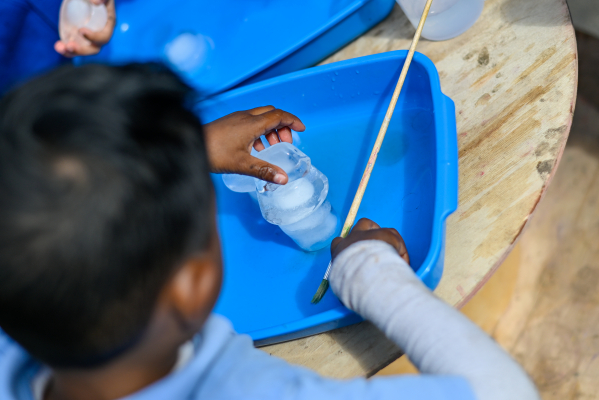
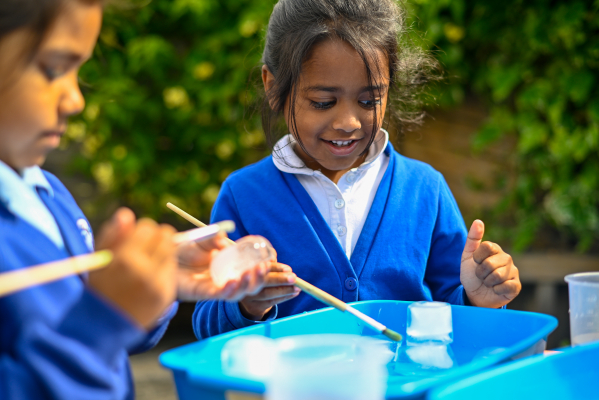
Remember to refer to the children as glaciologists and praise them for using the attributes. You could say things like:
“You have been curious like a glaciologist and found out how to use ice to build a tower…”
You could set other ice building challenges such as building the widest structure, building a particular structure such as a house, castle or bridge or challenge children to use particular shapes to build something.
We have put together some useful information about the science of glaciology to accompany this activity. Don’t worry, this is for your information only and to help you answer any questions children may have. We don’t expect you to explain this to the children in your setting!
The molecules in water are constantly moving. In a liquid, the molecules move more, and faster, than in a solid. As the liquid cools down the molecule movement slows down. When the water temperature reaches around 0°C, the molecules are closer together and weak bonds form between them. They form a solid that we call ice.
When ice is heated, the molecules which are held together by weak bonds, start to vibrate more vigorously. As the temperature of the water rises above 0°C the movement of the molecules is enough to break the bonds between them and liquid water forms.
If you push down on the ice blocks or squeeze them together, the pressure causes the ice to melt. When this pressure is released, the melt water quickly refreezes, sticking the blocks together. This is exactly what happens in a glacier: the ice is so heavy and causes so much pressure that the underneath begins to melt without any change in temperature. Think about squeezing an ice cube tightly in your hand- it melts faster from the pressure of the squeeze than from the heat of your hand alone.
The blocks of ice that come out of the freezer have a temperature of about -10 degrees Celsius which is colder than freezing point. When you paint water onto the ice it, the cold surface temperature of the ice quickly freezes the thin layer of water. If you place another block of ice on top of the water before it is frozen, the action of the water freezing will stick the two blocks together.


 Investigating floating and sinking adult led activity