Lighting technician family STEM story time
Families will make a shadow tube to investigate light and shadow.

Children’s parents, carers and other family members all help shape children’s ideas about themselves and what they should do with their lives, including what would be a suitable future job for them.
A family STEM story time is an opportunity to introduce STEM careers, ideas and activities in a relaxed and enjoyable way. STEM story time also provides an opportunity to positively model how adults and children can share stories together.
Each session begins with an introduction to a STEM career and the attributes used in the job. There is then a STEM story which introduces a STEM concept or problem to the group. The session then continues with a practical activity based on the concept introduced by the story. This is designed to be completed by an adult and a child working together. They can successfully complete the challenge together, ensuring their experience of STEM is a positive one.

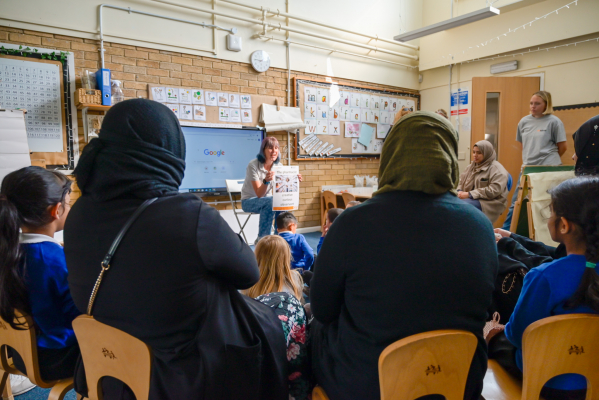
For this activity, you’ll invite children’s parents or carers into your setting, so they can work alongside each other.
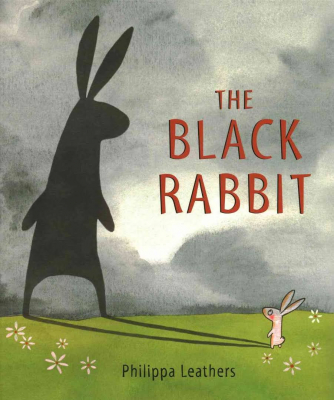
The black Rabbit is widely available from bookshops and education suppliers.
Light – the brightness that comes from the sun, an electric light source (torch, light bulb) or a fire that allows us to see.
Dark – when there is little or no light.
Shadow – when light is blocked by an opaque material resulting in an area of darkness behind it.
Opaque – a material you can’t see through.
Transparent – a material that lets all of the light through.
Do these things before the session
Think about:
If you have already had story times with your families you will know what works best in your setting, but if not you may want to consider:
Start the session by showing families the lighting technician poster and telling them that a lighting technician is a job that uses science. If you have already done some of the activities from the lighting technician unit, you could ask the children to explain to their families what a lighting technician does. If this is a new topic, you could ask the families if they have ever seen buildings, statues or bridges lit up at night and tell them that this is one of the jobs lighting technicians do.
Tell everyone that for this activity, they are going to be like lighting technicians.
You could tell the families that lighting technicians design the way lights are used in television programmes, films, concerts, in the theatre or to light up buildings, statues or bridges from the outside. The production director of an event decides what they want from the lighting and explains this to the lighting technician who will bring that vision to reality.
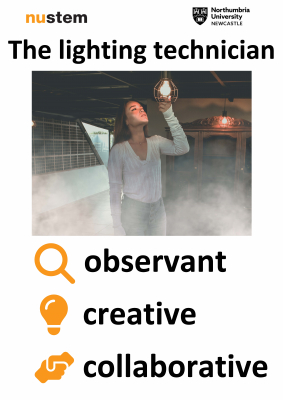
Introduce these attributes by telling the families that attributes are personal skills or qualities that we already have, and that are needed to work in a STEM career. You could tell them that lighting technicians are:
Observant and look carefully at light and shadows.
Creative in the way they use lights to make people feel happy, sad, frightened or excited.
Collaborative when they work in a team to set up lights for shows, filming and events.
During the activity, the children and adults might also be able to identify where they are using these attributes.
You know the families in your setting and the best way to read a story with them, but to help we have designed these STEM focused questions to use alongside the questioning you would usually use when reading a story.
Show the lighting technician poster again and use the attributes in the activity explanation. You could tell the families that they are going to be:
Creative by making a shadow tube and using this to make shadows.
Collaborative by working as a family to create a shadow tube and investigate shadows together.
Observant and look carefully at light and shadows.
You could tell the families that you are going to be using an opaque material (stickers or shapes) to create shadows and a transparent material (clingfilm) to let the light through so that you get a shadow that is the same shape as your opaque material.
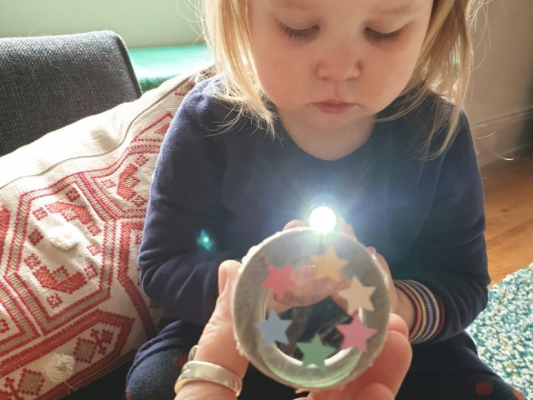
Demonstrate how to make the shadow tubes:
You could ask your families to predict what they think will happen when they shine the torch through the tube.
Remind children and families not to shine torches into anybody’s eyes.
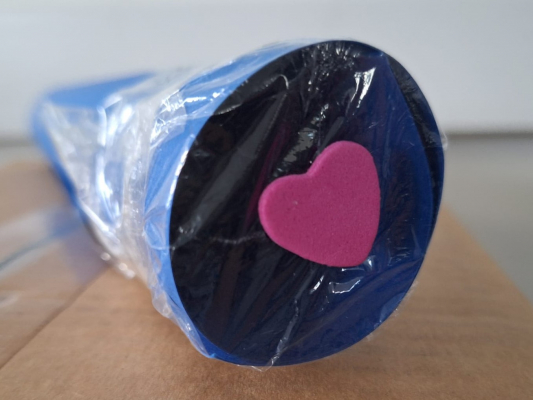
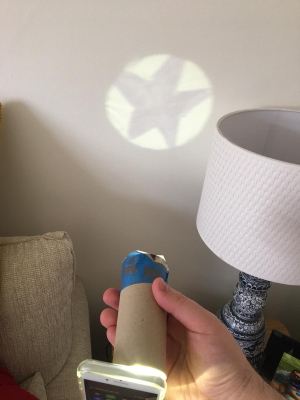
When the families have made their shadow tubes, make sure they know that they need to shine the torch through the open end of the roll with the shape at the opposite end, and that they need to shine it onto a flat surface such as the ceiling, floor or wall.
While the families are investigating the shadows they have created, you could ask:
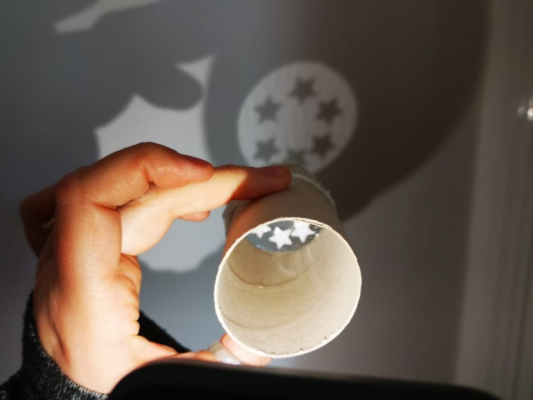
When your families have finished investigating, you could remind them of the attributes they have used. They have been creative like a lighting technician by making a shadow tube, collaborative by creating a shadow tube and investigating shadows together and observant by looking carefully at light and shadows.
There is a STEM at home activity linked to this activity. This includes how to make shadow tubes at home, more STEM careers information and other activities for the whole family to try at home.
You could tell the families that if they have enjoyed today’s activity, maybe they could be lighting technicians in the future.
This section is for your information. It’s intended to be useful background – you’re welcome to include it in the session, but we expect you’d more commonly draw on it when children or their families have questions.
Shadows are made when the path of light is blocked. Light travels from a light source in straight lines. If an opaque object gets in the way, it will absorb the light and stop the light from travelling through it. This results in an area of darkness appearing behind the object – which we call a shadow.
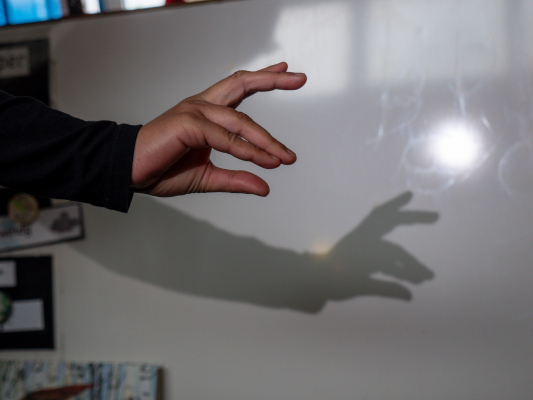
To make a shadow grow bigger move the object you are using closer to the light source. To make a shadow grow smaller move the object further away from the light source.
Transparent materials let all the light that hit them pass through without reducing the amount of light very much. Windows, water and clear plastic are transparent.
When light hits translucent materials, some of the light is absorbed, but some passes through. This light is scattered by the material, so you cannot see clearly through the material. Tissue paper and frosted glass are translucent.
Opaque materials absorb all the light that hits them, and no light passes through. You cannot see through an opaque material.


 Glaciologist family story time