Make Paper Aeroplanes
Make paper aeroplanes that you can fly and test at home.

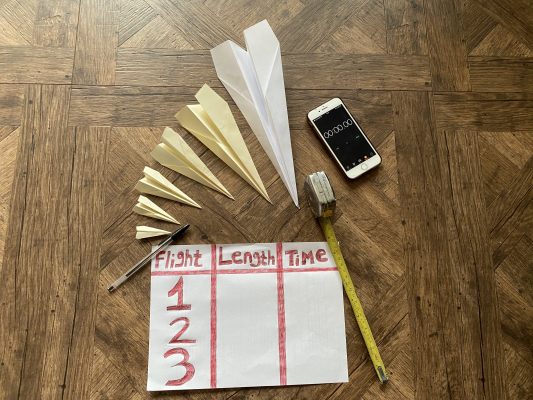
In this activity, you will make planes using paper. Then you’ll test how fast and far they can fly.
All you need is paper, timer, tape measure, somewhere inside to test the plane.
20 minutes or so.
Age 4 and up.
You know your children better than anyone, and you should judge whether they’re ready for this activity. You might want to think in particular about:
Before you start, you might want to listen to the story on the left as inspiration for your paper aeroplanes. It is called Violet the Pilot by Steve Breen. The story is about a young girl with a gift for engineering, who uses her creativity and hard work to build flying machines.

Use a piece of A4 paper. Fold the paper in half to make a long thin rectangle. This makes a crease in the centre. Now unfold the paper.
If you want to watch how to fold the plane instead, this video might help.

Fold both top corners so that they meet the centre line.

Fold the new left and right corners to the centre line.
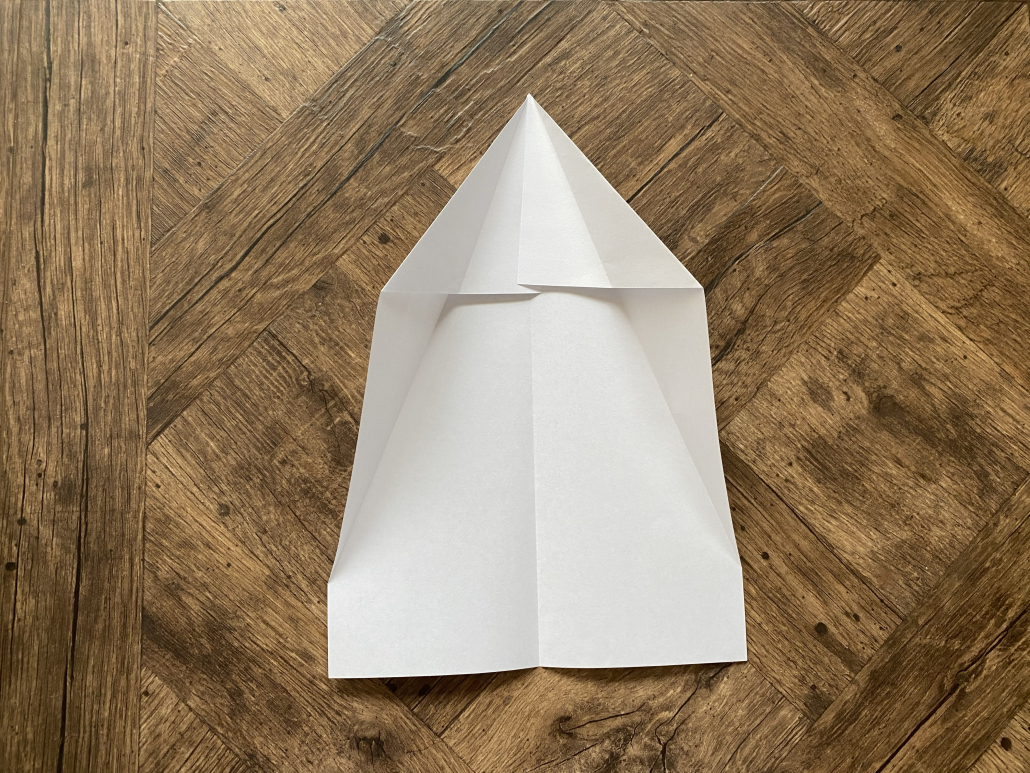
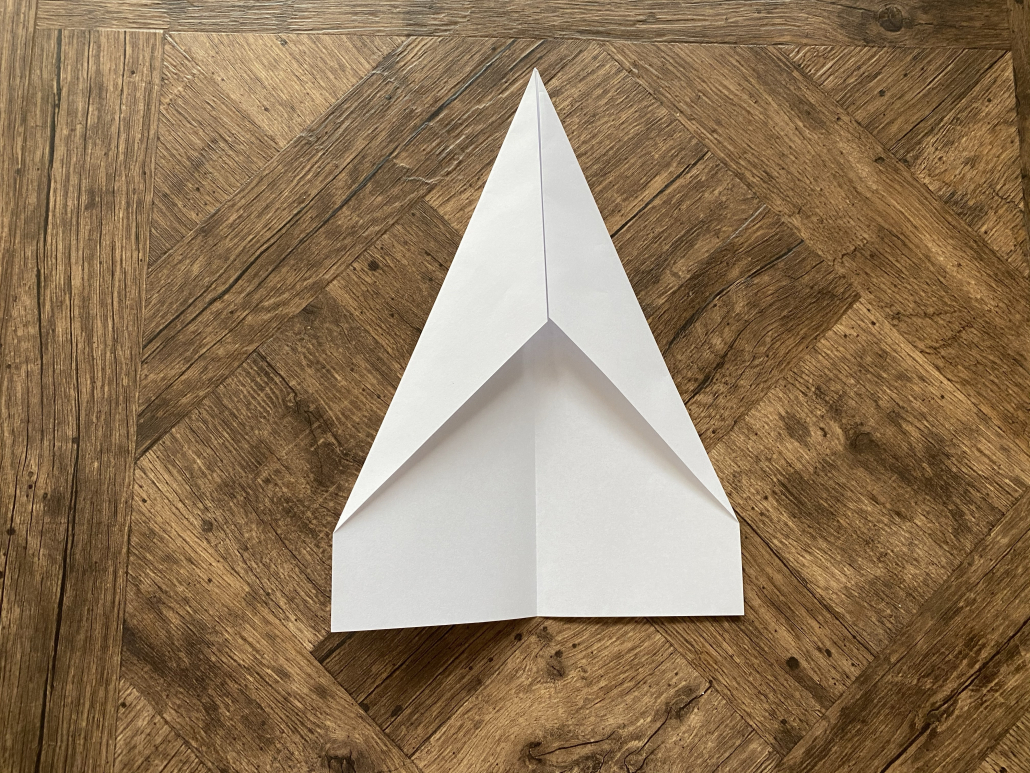
Fold plane in half from right to left.
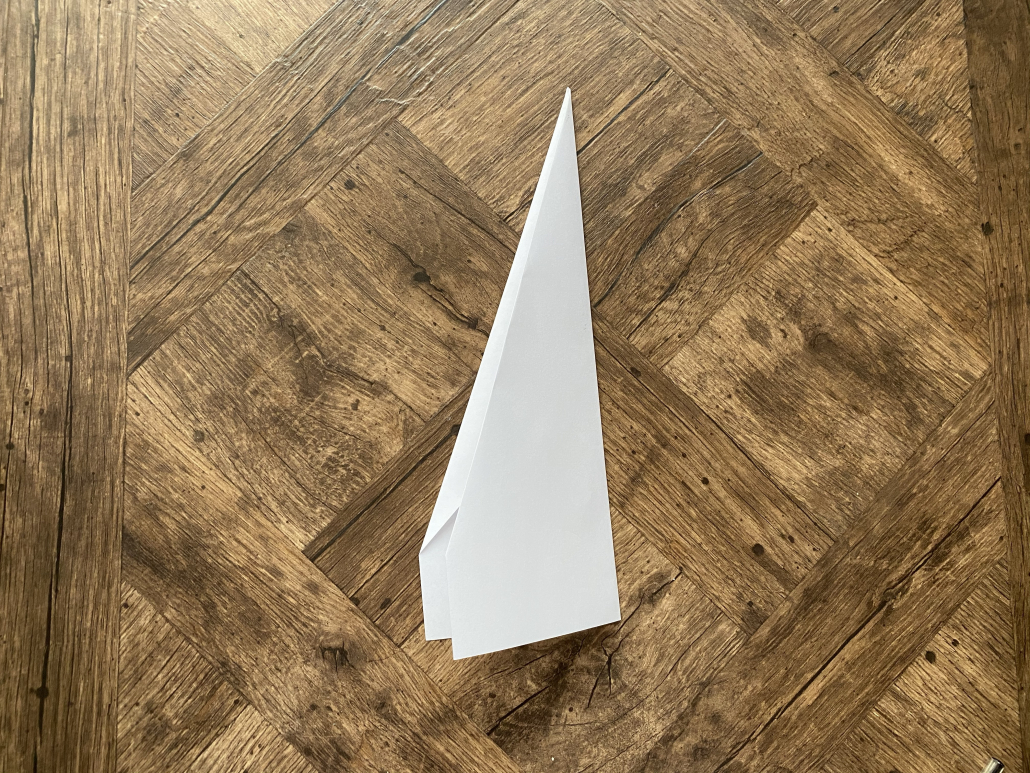
Now fold one edge back out to make a wing. Use your fingernail to help make the tip as pointy as possible. Turn the plane over, then fold other wing to line up with the first wing.

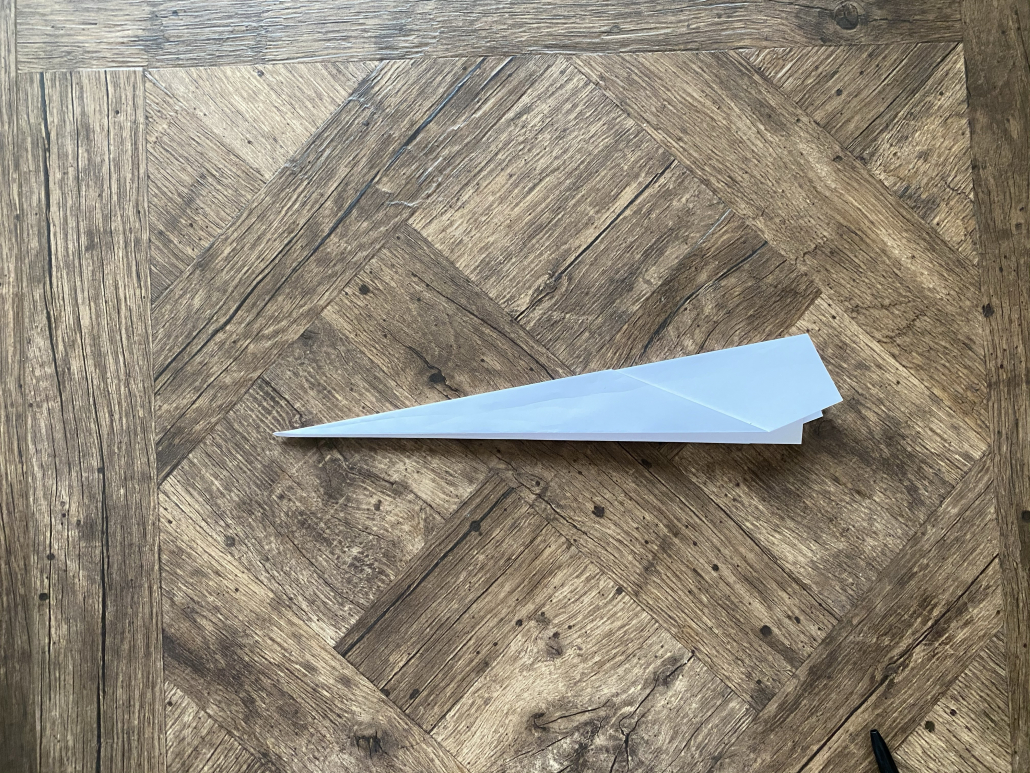
The final step is to unfold the wings slightly so that it looks (a bit) like an aeroplane.
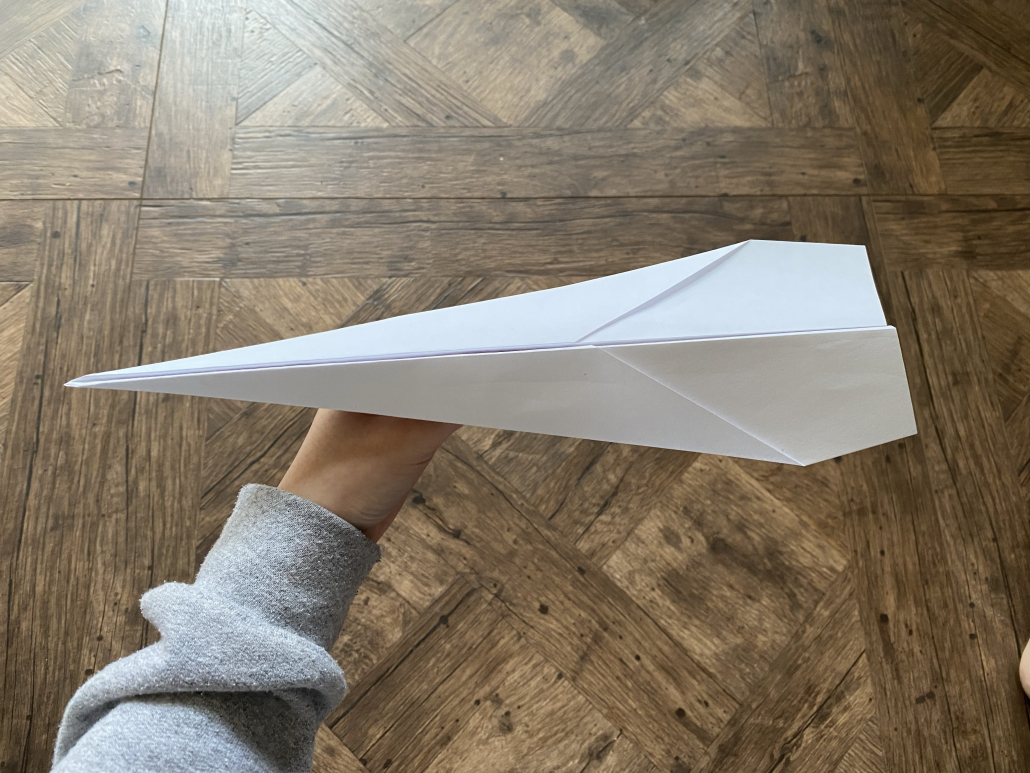
You’re ready to start testing your plane.
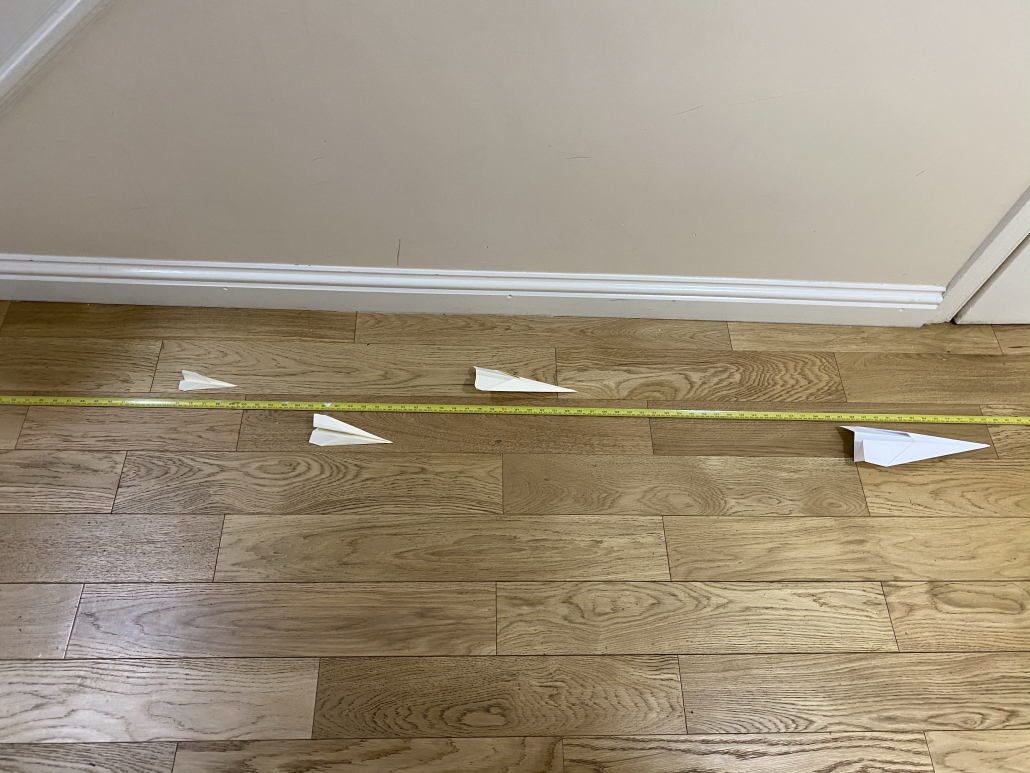
Put your tape measure on the floor. This is your test-flight area. It’s sensible to test the planes somewhere out of the way of other people.
Stand at one end of the tape measure. Carefully launch your plane so that it flies along above the tape measure. When the plane lands, you can then measure how far it flew. You’ll need to try a few throws to get an average distance.
You can make different size planes by using smaller rectangles of paper.
Try to predict which plane will fly furthest.
Fly your aeroplanes, and record the distance of each flight to the nearest cm.
Which went farthest? Was your prediction right?

You could ask questions like:

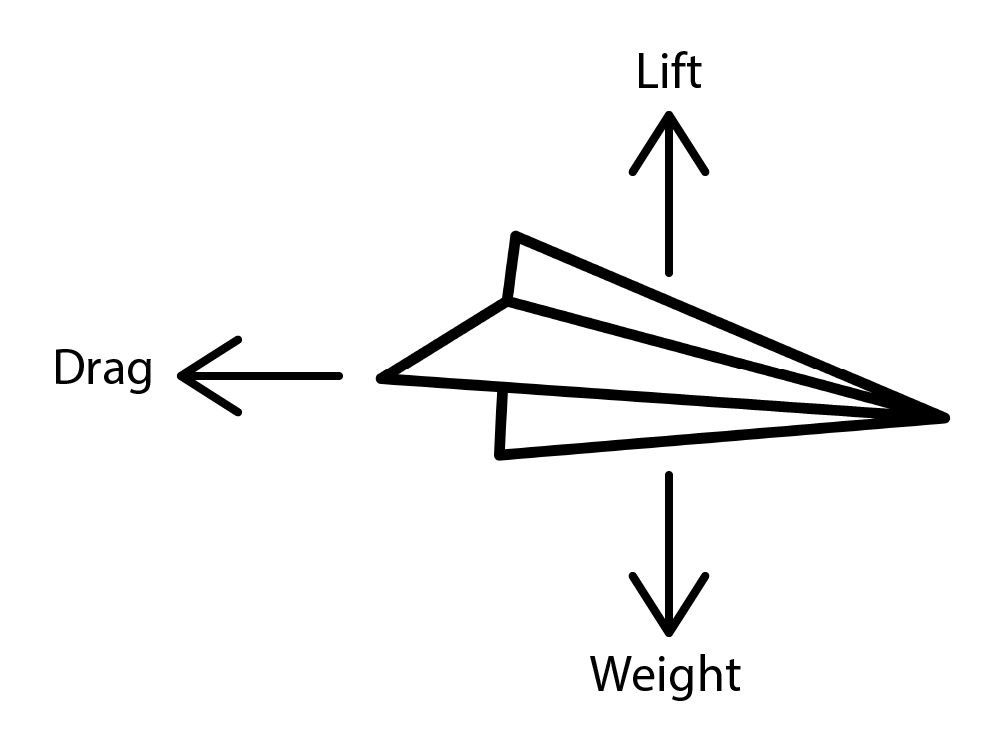
Learn how to make other paper planes such as: a Star crusher plane, Spy plane, Headhunter plane.
Once you have made your planes you could test them all to see which one flew the furthest.

20 minutes or so.
Age 4 and up.
You know your children better than anyone, and you should judge whether they’re ready for this activity. You might want to think in particular about:
Aerospace engineers design, build and maintain aircraft, spacecraft, satellites, and missiles. They may be involved in creating and testing prototypes, researching ways to make fuel efficient parts, developing navigation systems, or supervising the manufacture and maintenance of aircraft or spacecraft.
Attributes: creative, passionate, tenacious


 Cub Astronomer Activity Badge