Download progression document
Includes statements from Development Matters (birth to age five) and the relevant ELGs in full, for the Meeting specifications provocation

Includes statements from Development Matters (birth to age five) and the relevant ELGs in full, for the Meeting specifications provocation
Play, Be, C Units provide enabling environments with teaching and support from adults. Reflecting on the characteristics of effective teaching and learning, children will have opportunity to learn and develop by:
- Playing and exploring – children investigate and experience things, and ‘have a go’.
- Active learning – children concentrate and keep on trying if they encounter difficulties and enjoy achievements.
- Creating and thinking critically – children have and develop their own ideas, make links between ideas, and develop strategies for doing things.
Early Years Foundation Stage Statutory Framework: accessed November 2024. Available under the Open Government Licence v3.0.
Build, create, fasten, balance, heavy, light, tall, short, high, wide, narrow, structure, waterproof, windproof, strong, weak, wet, dry, big, small, move, turn, spin, up, down, open, close, design, test, improve
Tell the children that they are going to be creative like civil engineers and build an Elephant Island that solves a problem. They will need to be resilient as it might not work the first time. You could use these provocations:
Can you build an Elephant Island that:
You could make your own examples of Elephant Islands that meet these specifications. You may need to discuss, clarify and check the children understand what your specifications mean. You might want to introduce one specification per session, day or week.

You may have some interesting moving parts in your construction sets that you could use here!
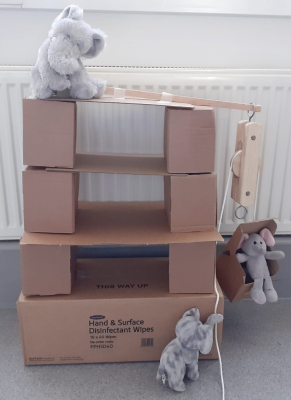
Encourage the children to create their island independently using the construction materials and fastenings of their choice. You could ask the children to draw a plan of their island instead of making it.
While they are building, you may need to refer them back to the specifications. You could ask:
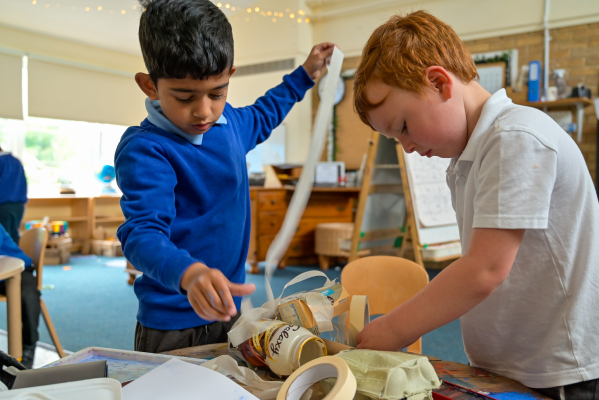
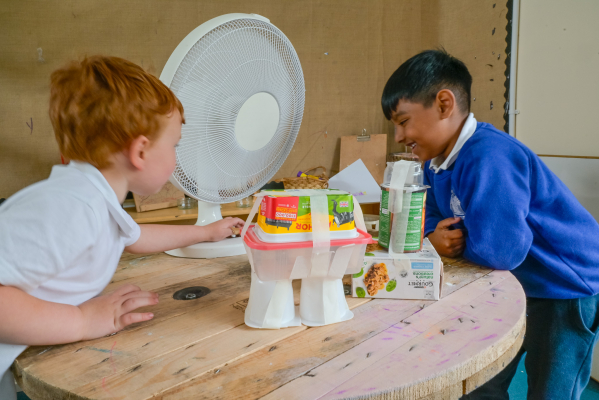
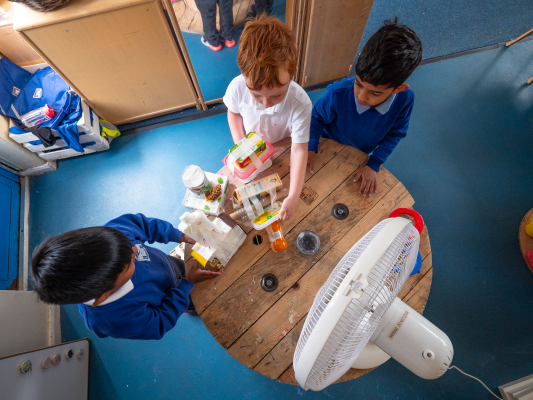
When the children have finished their models, you could ask them to test the models to see if they met the specifications. You could test if the models are waterproof by poring water over them in the water tray. You could test the windproof models by blowing them with a hairdryer. You could ask:
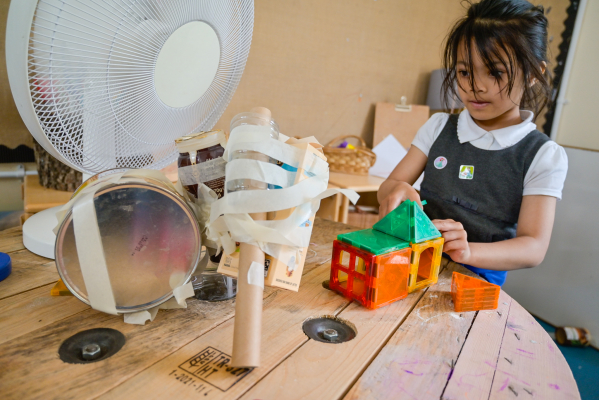
Remember to refer to the children as civil engineers and praise them for using the attributes. You could say things like:
“You have been creative by designing and building an island.”
“You were resilient as you kept trying until you solved the problem.”
We have put together some useful information about the science of civil engineering to accompany this activity. Don’t worry, this is for your information only and to help you answer any questions children may have. We don’t expect you to explain this to the children in your setting!
Water cannot pass through an object or material that is waterproof. Waterproof, water repellant and water resistant materials are different. Waterproof materials will stop water passing through them no matter how long they are in the water. Examples include: latex, plastic, rubber, silicone and wax.
Water repellant surfaces are not easily penetrated by water and the water droplets form a sphere shape on the surface. An examples is the teflon coating on a frying pan.
Water resistant materials will only offer a limited amount of protection. Examples are shower-proof coats which will keep you dry for a while, but the rain will soak through eventually.
When the wind blows it ‘pushes’ against the structure and applies a force. If the force is too big, the structure may be damaged or fall down.
When civil engineers are designing wind-resistant structures, they need to think about:


 Create your own Elephant Island provocation