The pharmacist game
Play the game to discover more about the medicines a pharmacist dispenses to treat different medical conditions.


Play this fun game and find out what pharmacists can prescribe and dispense to treat different medical conditions and illnesses.
This page will print, but looks a little funky. Click the button for a PDF version which looks a bit better.
Before starting this activity, please make sure that your children understand:
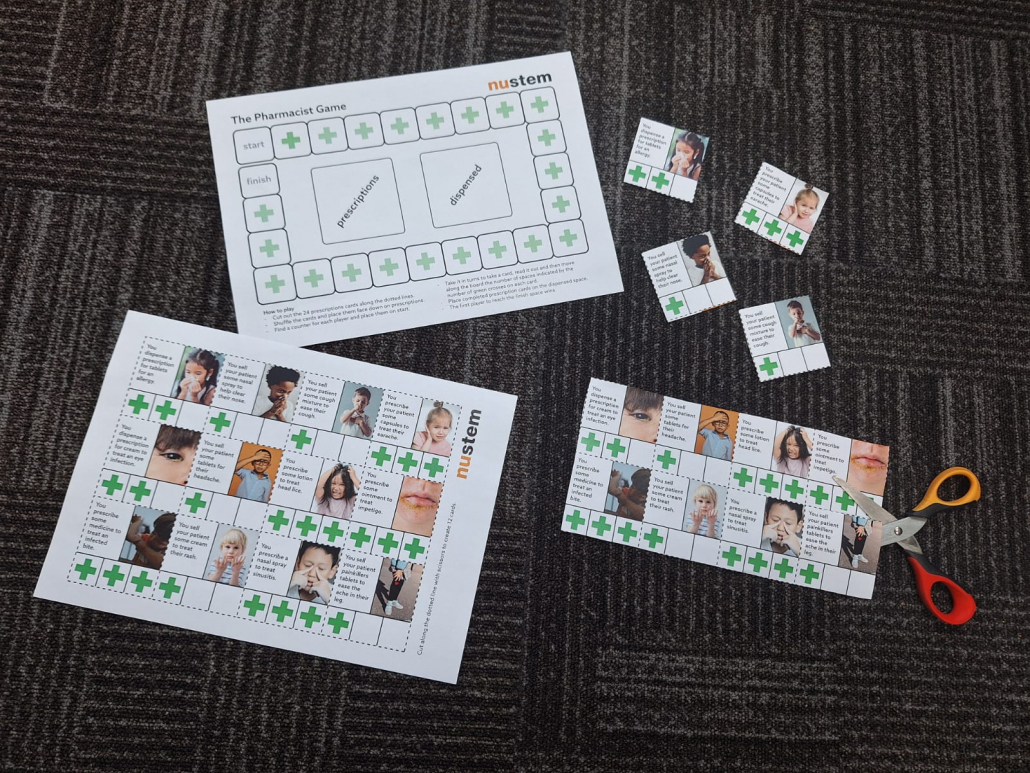
Print out the pharmacist game and game cards. Cut out the 24 prescriptions cards along the dotted lines.
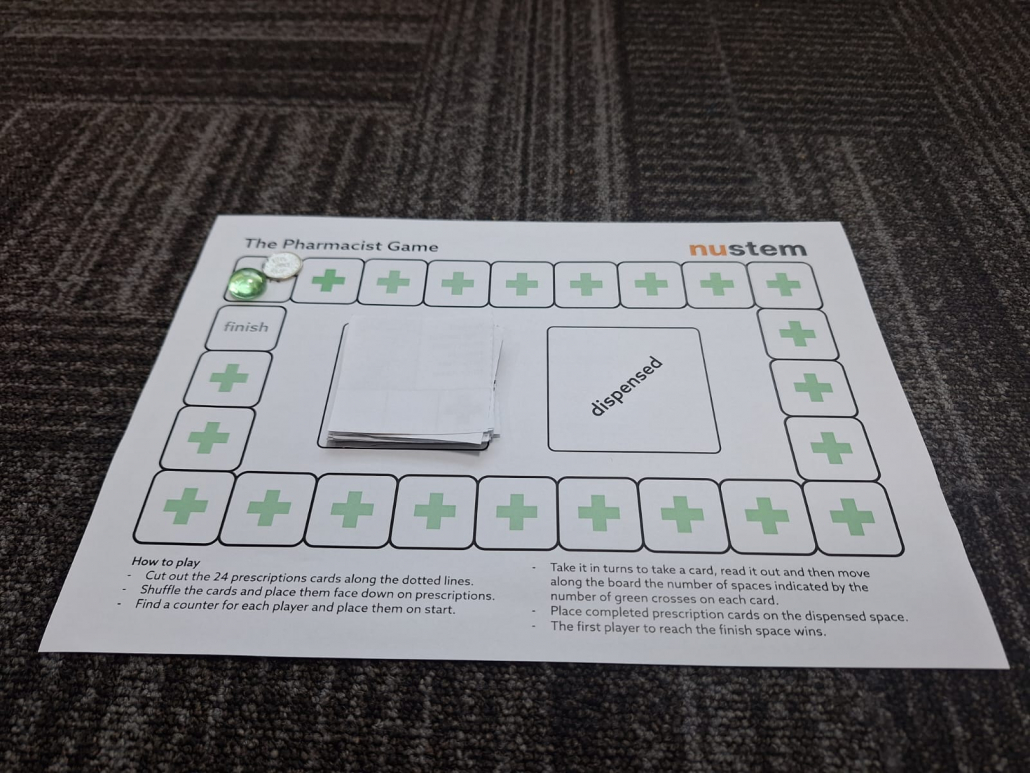
Shuffle the cards and place them face down on the prescriptions space. Find a counter for each player and place them on start space.
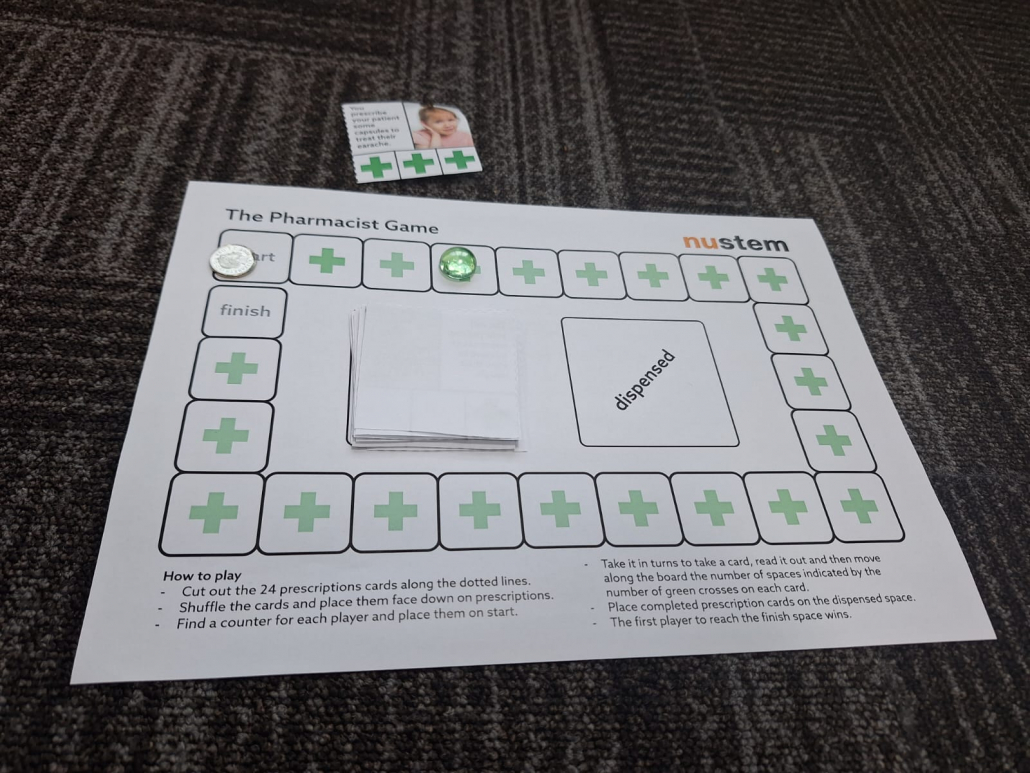
Take it in turns to take a prescription card, read it out and then move along the board the number of spaces indicated by number of green crosses on each card.
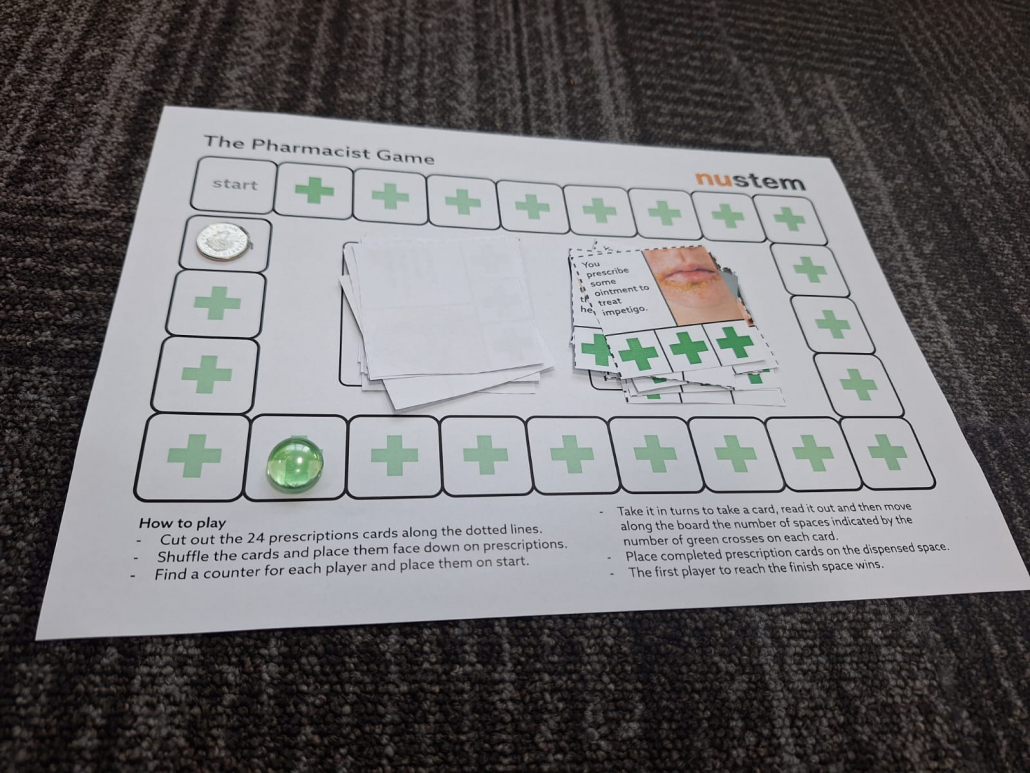
Place the completed prescription cards on the ‘dispensed’ space. The first player to reach the finish space wins.
One cross for advice and ‘over the counter’ medicines.
Pharmacists can give advice about coughs, colds, sore throats, ear infections and aches and pains. You don’t need to make an appointment with your doctor if you or a family member has one of these illnesses. A pharmacist can sell you a treatment for these conditions that does not require a prescription.
Two crosses for dispensing medicines that have been prescribed by a doctor.
Pharmacists can dispense medicines and treatments that have been prescribed for you by the doctor. You will have to make an appointment to see the doctor first.
Three crosses for medicines that pharmacists can prescribe.
Most pharmacists can prescribe medicines for some conditions without you needing to make an appointment with a doctor.
You could talk about times you or members of your family have been ill or had medical conditions.
Could you buy a treatment from the pharmacist to make you better?
Did you need to make an appointment and visit the doctor?
Could the pharmacist have prescribed a treatment for your medical condition?
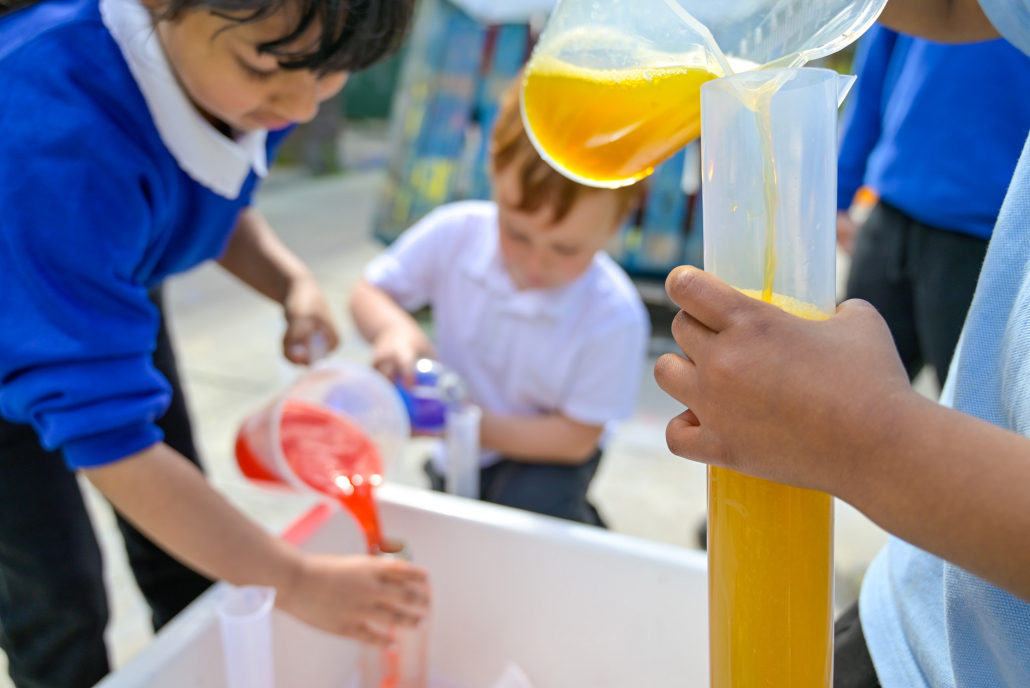
Make up some containers of different coloured water using food colouring or a small amount of poster paint. You could use different shapes and sizes of containers, jugs, cups, spoons and bottles to make different medicines. You could try this outside on a warm day or in the bath.
You could ask:
10 minutes or so.
Age 3 and up.
You know your children better than anyone, and you should judge whether they’re ready for this activity. You might want to think in particular about supervision: the activity involves small parts, so there’s a choke hazard.
Pharmacists dispense medicines. This means they prepare and give medicines to people who have a prescription (or their adult if they are a child). Pharmacists can work in a pharmacy, hospital or GP practice. They can also give advice about prescriptions, how to use and store medicines, and the dangers of medicines. Some pharmacists also make and test new medicines.
Pharmacists are:
Creative when they make new medicines and when they prepare and make special medicines for patients.
Curious about what is wrong with their patients when they are unwell and about which medicines will be best to make them better.
Observant they need to read prescriptions carefully and make sure they give the correct amount of each medicine to their patients.

 Marine engineer family story time