

What makes engagement with (astro)physics outreach significant?
Lots of university physics departments offer outreach activities to sixth-form students in schools and colleges, in part to try and encourage them to study at (preferably their) university. But does that work?
To try and find out, I have been researching what outreach activities what activities undergraduates, who have just started physics or astrophysics degrees, did and where. I’ve also asked them if they thought that any of the activities were significant in helping them make their decision about where to go to study. Finally, I also wanted to see if there were geographical patterns between the significant outreach activity and a student’s current place of study.
Around 250 physics and astrophysics undergraduate students completed the survey and shared their views. Students were asked to complete the survey even if they hadn’t done any outreach activities whilst at school or college. I’ve written a short report which outlines the preliminary findings that you can download here, but my main findings so far are:
- 40% of the students went to at least one outreach activity. The students who did not attend any activities mentioned that they didn’t know about such activities, or there were barriers which prevented them from attending (including within their school).
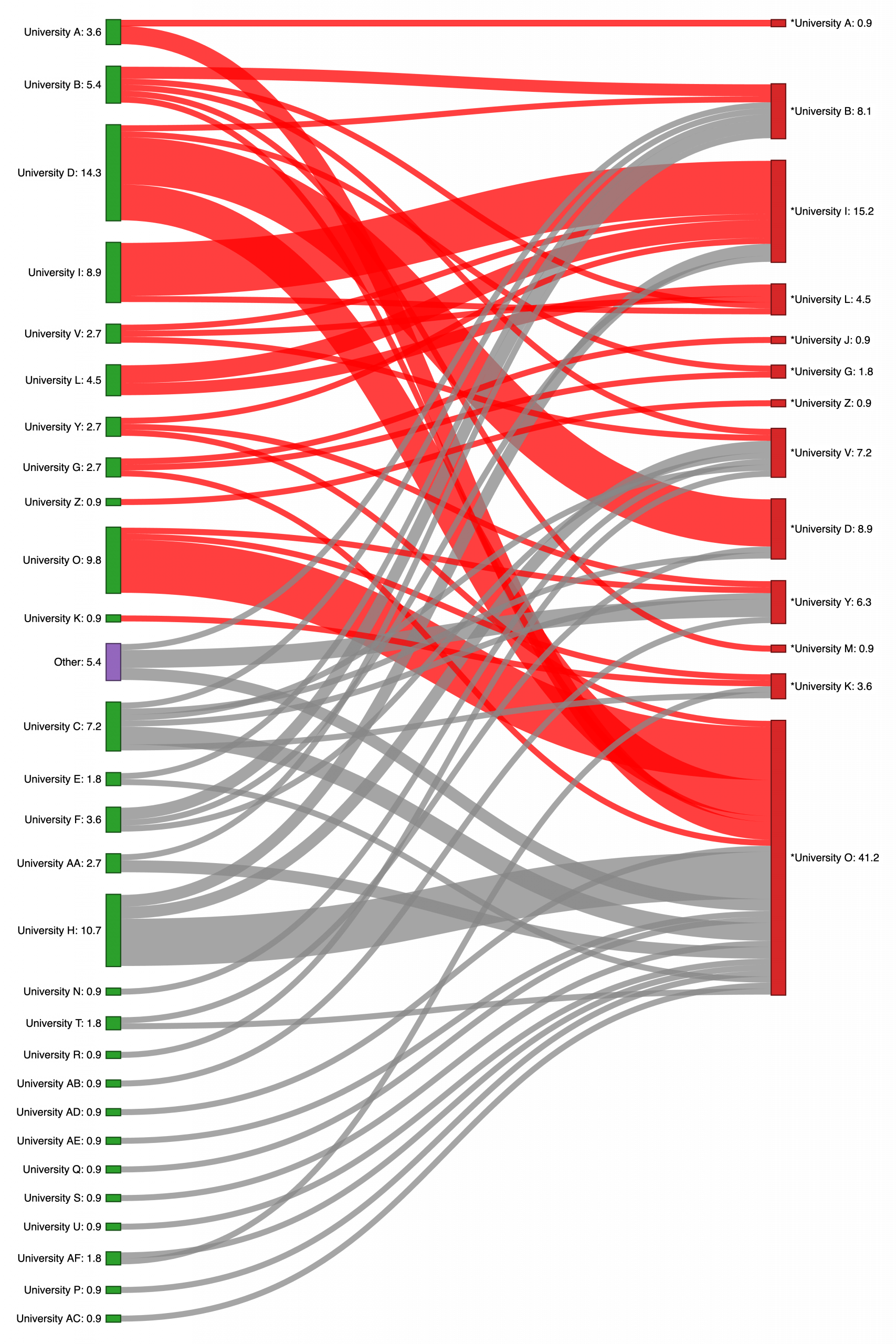
- Where students had done an activity, 56% went to study at the same university that had organised the outreach but 44% went to another university. You can see this movement in the diagram below.
- However, male students were more likely to stay at the same university than female students, and this finding was statistically significant (35% female, 65% male).
- Talks and University Experiences such as summer schools or experience weeks were the most mentioned types of outreach activities. However, fewer female students said that University Experiences were significant outreach activities than male students, and this finding was statistically significant (30% female, 70% male)
- Students gave a range of reasons why they thought an outreach activity was significant for them. This included that it was a positive or interesting experience, or that it supported their view of themselves as a ‘physicist’. However, some students did comment that there had had limited opportunities to go on any outreach activities.
My research has found that there is evidence of positive links between outreach activities and where students go on to study at university. The outreach activities influence and validate students’ choices but also support the development of a physics identity. So overall, there is evidence for physics departments to keep offering outreach activities to students because it benefits the whole of the physics community as well as their own university.
Over the next few months, my colleagues and I will be busy revisiting the survey and preparing a comprehensive analysis with full methodology and theoretical framework for a peer-reviewed publication. We’ll let you know when it’s available!


Leave a Reply
Want to join the discussion?Feel free to contribute!