Meteorologist family STEM story time
Children and adults will work together to make windsocks and observe the wind at home.

Children’s parents, carers and other family members all help shape children’s ideas about themselves and what they should do with their lives, including what would be a suitable future job for them.
A family STEM story time is an opportunity to introduce STEM careers, ideas and activities in a relaxed and enjoyable way. STEM story time also provides an opportunity to positively model how adults and children can share stories together.
Each session begins with an introduction to a STEM career and the attributes used in the job. There is then a STEM story which introduces a STEM concept or problem to the group. The session then continues with a practical activity based on the concept introduced by the story. This is designed to be completed by an adult and a child working together. They can successfully complete the challenge together, ensuring their experience of STEM is a positive one.
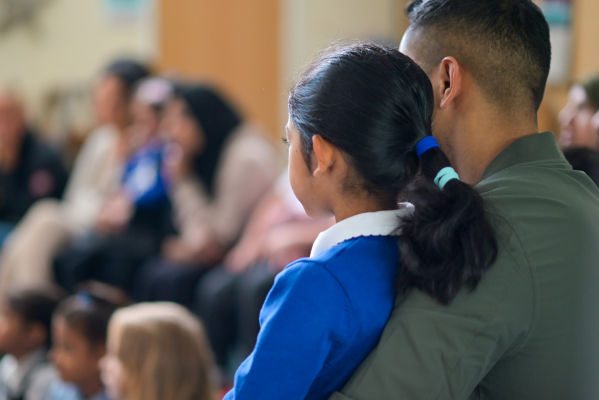
For this activity, you’ll invite children’s parents or carers into your setting, so they can work alongside each other.
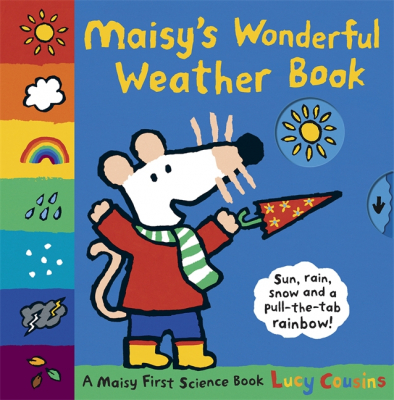
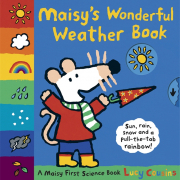
Maisy’s Wonderful Weather Book is widely available from bookshops and education suppliers.
Forecast – using data collected to predict what the weather will be like before it happens.
Predict/prediction – what might happen in the future based on prior knowledge, experiences, observations and research.
Instruments – equipment that measure and record atmospheric conditions such as temperature, precipitation, wind, cloud and humidity. They are used to help meteorologists understand weather systems. Examples are thermometers to measure temperature and anemometers to measure wind speed and direction.
Satellite images – pictures taken by satellites so meteorologists can see the clouds across a much bigger area.
Do these things before the session
Plastic rings: cut the bottom off your 2l bottle. Then cut across the bottle to create a 3cm tall ring of plastic. Repeat until you have enough rings for one per family.
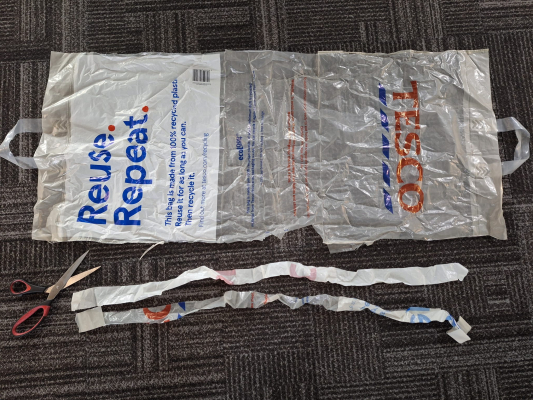
Plastic bags: open up your plastic bags by cutting along the side seams and leaving the bottom of the bag intact. You want the strips to be as long as possible.
Plastic strips: if you don’t have much time in the session, you may want to prepare the plastic strips in advance. Cut the bags length ways into 2cm wide strips.
Think about:
If you have already had story times with your families you will know what works best in your setting, but if not you may want to consider:
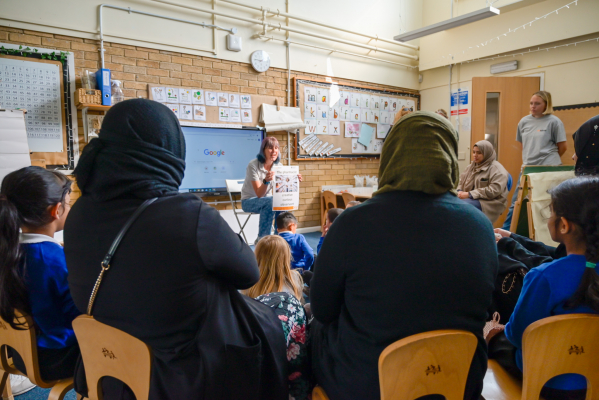
Start the session by showing families the meteorologist poster and telling them that a meteorologist is a job that uses science. If you have already done some of the activities from the meteorologist unit, you could ask the children to explain to their families what a meteorologist does. If this is a new topic, you could ask the families if they have ever looked at a weather forecast on the internet, seen one on the television or heard one on the radio?
Tell everyone that for this activity, they are going to be like meteorologists.
You could tell the families that a meteorologist is a scientist that observes, records and predicts the weather. Meteorologists use a variety of instruments and satellite images to observe and record the weather 24 hours a day across the globe. They input this data into a supercomputer that creates models that predict the future weather.
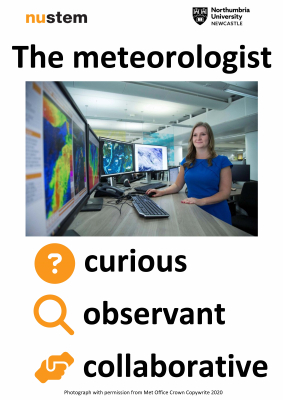
Introduce the attributes by telling the families that attributes are personal skills or qualities that we already have, or can develop.
You could tell them that meteorologists are:
Curious and want to know what the weather will be like in the future.
Observant when they look at what the weather is like today.
Collaborative as they work together with other people to get their job done.
During the activity, the children and adults might also be able to identify where they are using these attributes.
You know the families in your setting and the best way to read a story to them, but to help we have designed these STEM focused questions to use alongside the questioning you would usually use when reading a story.
Show the meteorologist poster again and use the attributes in the activity explanation. You could tell the families that they are going to be:
Collaborative by working together as a family to make a wind sock.
Curious about the weather and whether the wind is blowing.
Observant when they use their instrument (wind sock) to see which way the wind is blowing.
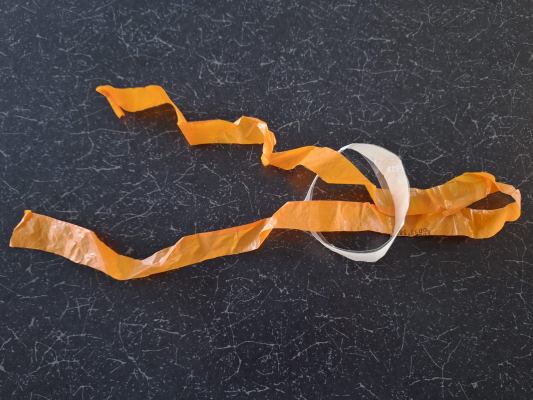
If you haven’t already prepared the plastic strips, demonstrate how to open up the plastic bags by cutting along the side seams and how to cut a 2 cm strip from one side of the bag. Tell the families that the strips need to be as long as possible, but that they don’t have to be exactly the same length.
Remind children not to put plastic bags near to their heads or faces.
The strips need to be attached to the ring using a lark’s head knot. First, demonstrate how to fold the plastic strip in half to make a loop and slide it through middle the plastic ring.
Next is the most complicated part! Pull the two ends of the strip around the outside of the ring and push the two ends of the strip through the loop you created in the middle of the strip.
Pull the two ends of the strip to tighten the strip around the ring. Continue adding strips of plastic bag until you have covered the entire plastic ring.
To finish off, attach a 40 cm length of string to your ring at opposite points.
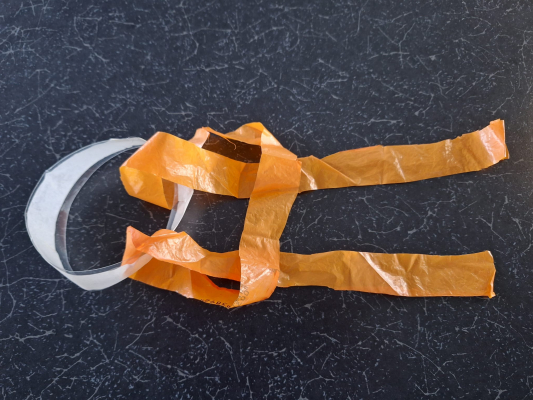
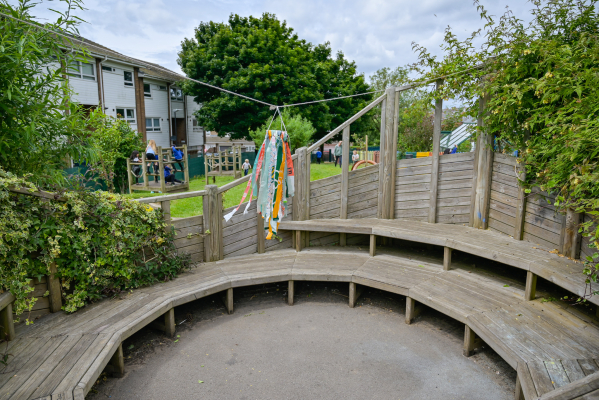
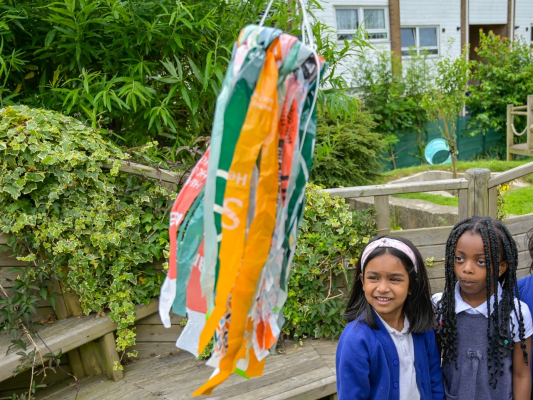
When the families have completed their wind socks, tell them to hang their wind sock from a pole, tree or washing line if they have a garden or yard, where it has space to blow. If they don’t have an outside area, hang it from a window.
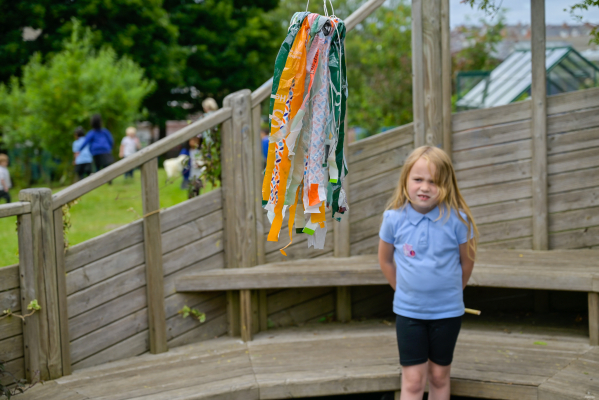
If you have time, go to the outside area and show the families how to observe the wind. To observe the direction of the wind, look up at the windsock from below at look at which way the plastic strips are blowing.
To observe the strength of the wind, look at your windsock from one side to see how much the wind is blowing the plastic strips. No wind would be the strips hanging straight down, strong wind would be blowing straight out to the left or right.
Depending on your children, families could take home a recording sheet. We have an example here.
You could remind the families of the attributes: being collaborative by working as a family to make a wind sock, curious about the weather, and observant to see which way the wind is blowing.
There is a STEM at home activity linked to this story. This includes how to make a wind sock, more STEM careers information and other activities for the whole family to try at home.
You could tell the families that if they have enjoyed today’s activity, maybe they could be meteorologists in the future.
This section is for your information. It’s intended to be useful background – you’re welcome to include it in the session, but we expect you’d more commonly draw on it when children or their families have questions.
Wind is the movement of air around the Earth’s atmosphere – called air currents.
Winds can happen from two different causes:
Air moves from places of high pressure to places of low pressure. This is shown on a map by lines called isobars. These lines join places of equal atmospheric pressure together. When the isobars are closer together the wind is stronger and blows harder. When they are further apart the wind is calmer.
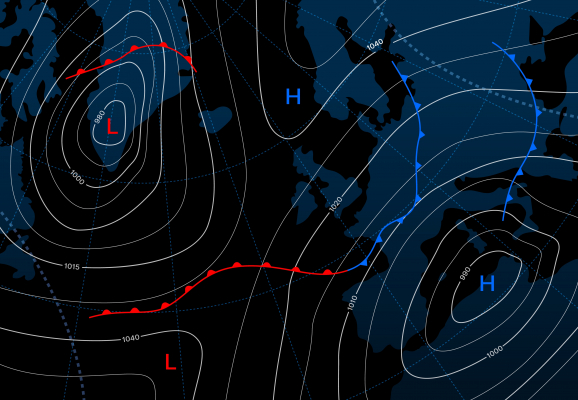
Air will move from areas of high pressure to areas of low pressure. Depending on where these areas are relative to each other will determine which direction the wind blows in.
Meteorologists use measurements of what the weather is doing now, calculate how this might change in the future, and use their knowledge to improve their predictions.
They observe and record the weather 24 hours a day across the globe. They can combine this with satellite pictures to see how the Earth’s atmosphere is behaving in terms of temperature, rain or snow fall (precipitation), air pressure and cloud cover.
Meteorologists use thermometers to measure temperature, barometers to measure air pressure, and anemometers for measuring wind speed. They use weather balloons to measure temperature, air pressure, wind speed and wind direction in the lower levels of the Earth’s atmosphere and where almost all weather conditions take place.
Meteorologists input the weather data collected into a supercomputer that performs complex equations to create models that predict the future weather. They check their models to make sure their forecasts are going to plan and adjust them where necessary.


 Lighting technician family story time