Case Study: Maria Box
At a glance
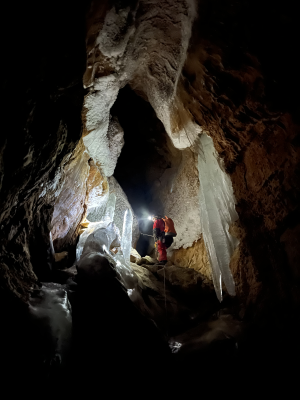
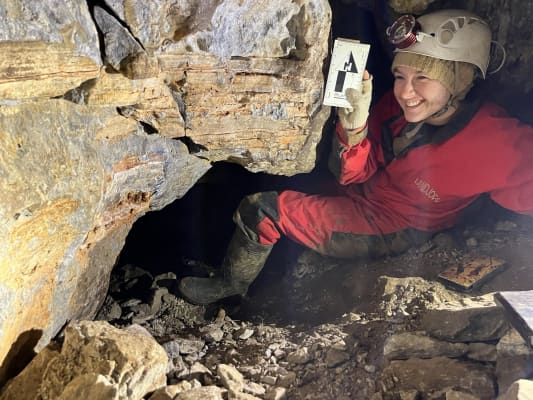
Maria is a Postgraduate Researcher at Northumbria University and she studies caves. During her research she has explored caves across the world, from Mongolia to Morocco to Germany to Australia. She has also researched plants in the US Rockies and geology in central Australia.
Maria’s journey into STEM
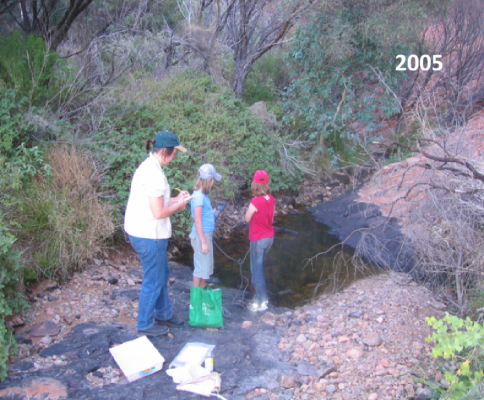
Maria grew up in a very rural town in the Australian desert and went to a small school without many science subjects. She wasn’t a good student and struggled a lot in school. However, outside of school, she had some great opportunities to learn about environmental science. Her mother is an Environmental Researcher, and when she was 8 years old, Maria started going on some of her work trips with her mother. They camped in the desert and studied waterholes and Maria began to be interested in the world around her.
Later, when Maria went to high school,
“I had the chance to volunteer at a local palaeontology museum and even went on a fossil dig, which made me want to learn more about geology and the prehistoric world..”
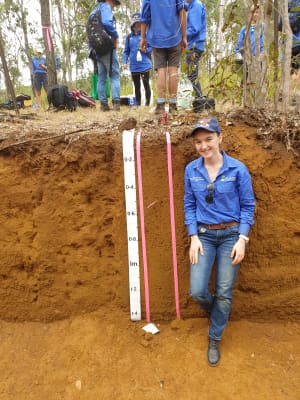
She went on to study Earth Science at university, where she learned about about paleo-environments and climate change. Her professor noticed that she was super interested in the subject and invited her to volunteer in his lab. She ended up doing a project with him, where she used a stalagmite to reconstruct the environment in western Australia. That project introduced her to cave science and her current research. After working in Australia for a couple of years, she moved to the UK and started working on her current project at Northumbria University.
Using caves to reconstruct the past
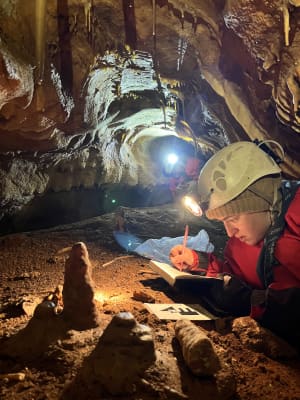
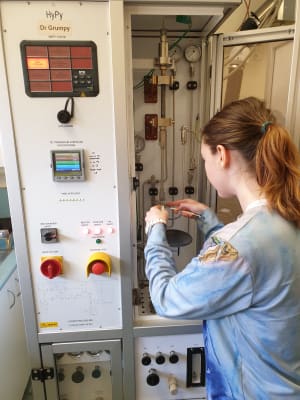
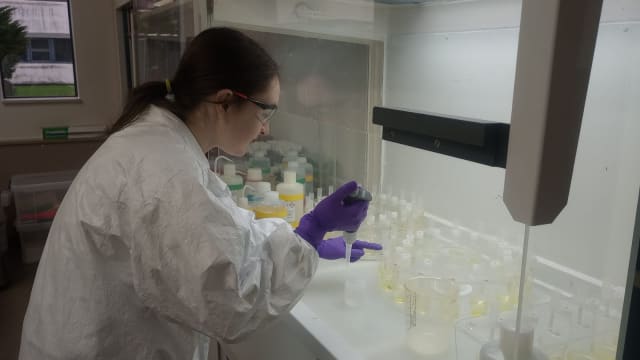
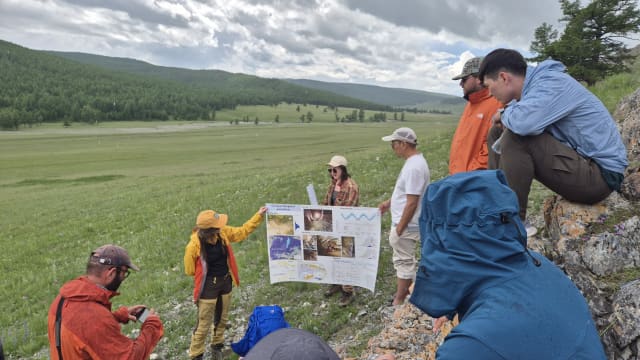
Maria studies caves because she wants to find out what the environment was like thousands of years ago. First, she and her colleagues explore caves, map them, install monitoring equipment, and carefully collect stalagmite samples. Then, back in the lab, she chemically analyses the stalagmite layers for different chemicals that tell her about the past. Finally, she compares the information gathered from her stalagmites to other environmental archives, which is like putting together a puzzle about what the world was like thousands of years ago.
Caves contain lots of clues about what the environment used to be like, such as fossils or stalagmites. Stalagmites are especially useful because their layers contain chemicals called ‘proxies’ which tell us lots of things about the climate in the past, such as how much rain fell in the past and what vegetation grew over the cave.
Maria’s STEM attributes
Maria is collaborative. She believes that everyone has different strengths, and we can learn much more by teaming up with people who might know something we don’t.
She is open-minded. She says,
Nobody knows everything, and I’m often proven wrong by new results or new data, so I need to always be open to new ideas.
Maria is curious. She knows that the key to the past usually lies in understanding why things are how they are in the present, so she is always wondering why?
She describes herself as observant. She says everything is connected to everything else, and something as simple as a rock contains a whole story about what the world used to be like. She is also resilient as research can be very difficult, whether it’s dealing with criticism or travelling to new places, so she has to trust that she will be okay even if it feels hard.
Getting outdoors and travelling the world
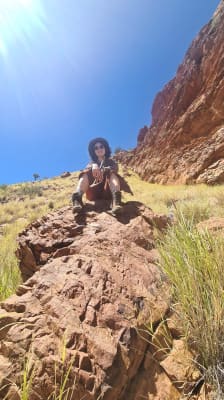
In her spare time, Maria enjoys hiking and camping and tries to spend as much time as she can outdoors. Maria likes to look for fossils on the beaches near Whitley Bay and Seaton Sluice. There lots of ancient shells and corals to find along the Northumbrian coast! If the weather is too bad to go outside, she likes reading, knitting and playing video games – especially games where she can explore caves!
The things the Maria loves best about her job are travelling and that she gets to visit many different places. She also loves working with people from all over the world, who have taught her so many different things.
Maria’s advice to young people is:
Be interested! Never be afraid to ask questions if something interests you, because those questions can lead to great conversations and new friends. Also, if you have the opportunity to do something that seems interesting and fun, do it! Even if you worry that you’re too young, or it’s not for you, or it won’t go well, do it anyways. You never know when you’ll discover something you’ll fall in love with.
Job: Postgraduate Researcher in Geology
Key Attributes: collaborative, open-minded, curious
Qualifications: Studying for a PhD