Ice Rescue
Challenge your family to rescue something or someone trapped in the ice!

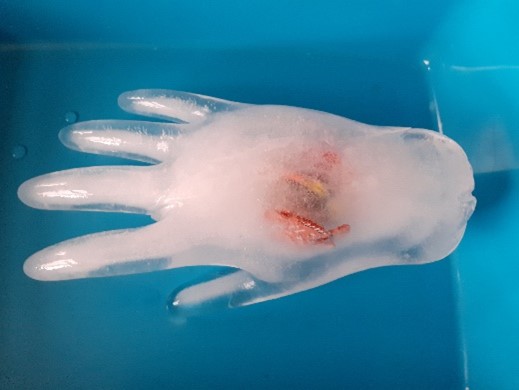
Use warm water and salt to see how quickly you can rescue toys or objects trapped in blocks of ice.
This page will print, but looks a little funky. Click the button for a PDF version which looks a bit better.
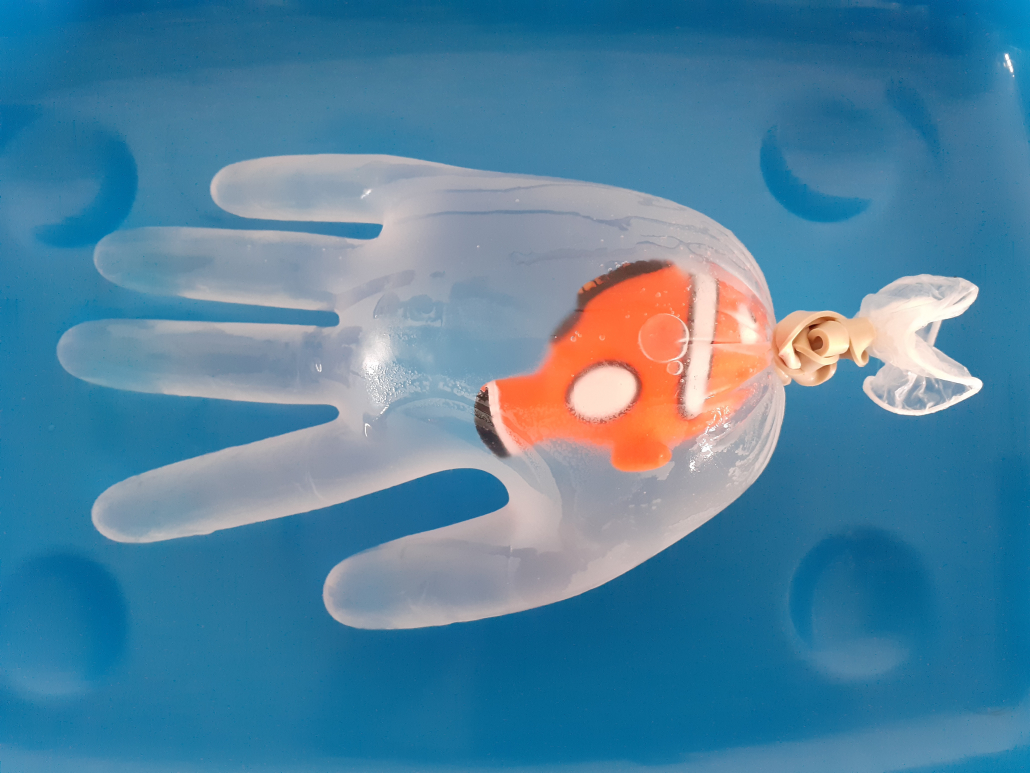
Fill up the container to be frozen with water and put in your objects. If you are using a rubber glove, secure at the wrist using an elastic bag. Place the container in the freezer overnight.
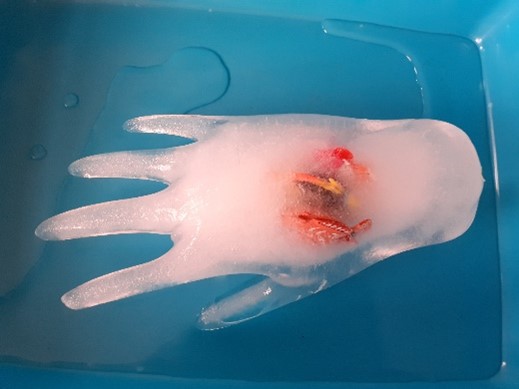
When it is frozen, remove the ice from the container and put it in the middle of your tray, bowl or plate.

Challenge your family to find a way to rescue the object from the ice without touching it. You could use pipettes, syringes or teaspoons to drip or sprinkle warm and cold water and salt onto the ice. This will gradually melt the ice to allow you to rescue the objects.
You could ask:
Why does ice melt?
Ice melts when the movement of the water molecules is enough to break the weak bonds between them. As the ice heats up the molecules start to move faster. At around 0 °C the movement of the molecules can break the bonds and the molecules can move further apart. The ice melts and forms liquid water.
Why does warm water make the ice melt faster?
Warmer water contains more heat energy, causing the molecules to move faster and the bonds between molecules to be broken faster to form liquid water.
Why does salt make it melt faster?
Salt lowers the freezing point of water. This is called “freezing point depression.” The salt makes it harder for the water molecules to bond together to form a solid. In water, salt will dissolve into separate sodium ions and chloride ions. More ions mean more ions getting in the way of the ice bonds.
Why does ice melt faster on the surface?
During melting, the water molecules absorb heat energy. This heat is transferred from the water, air or object surrounding or touching the ice and is why an ice cube melts more quickly on the outside and retains its coldness and solidity longer at the centre.

Try our melting ice activity.
In this activity, you’ll set up a simple experiment to discover the warmest and coldest places in your home using ice cubes, plastic containers, a ruler or measuring stick, and a timer.
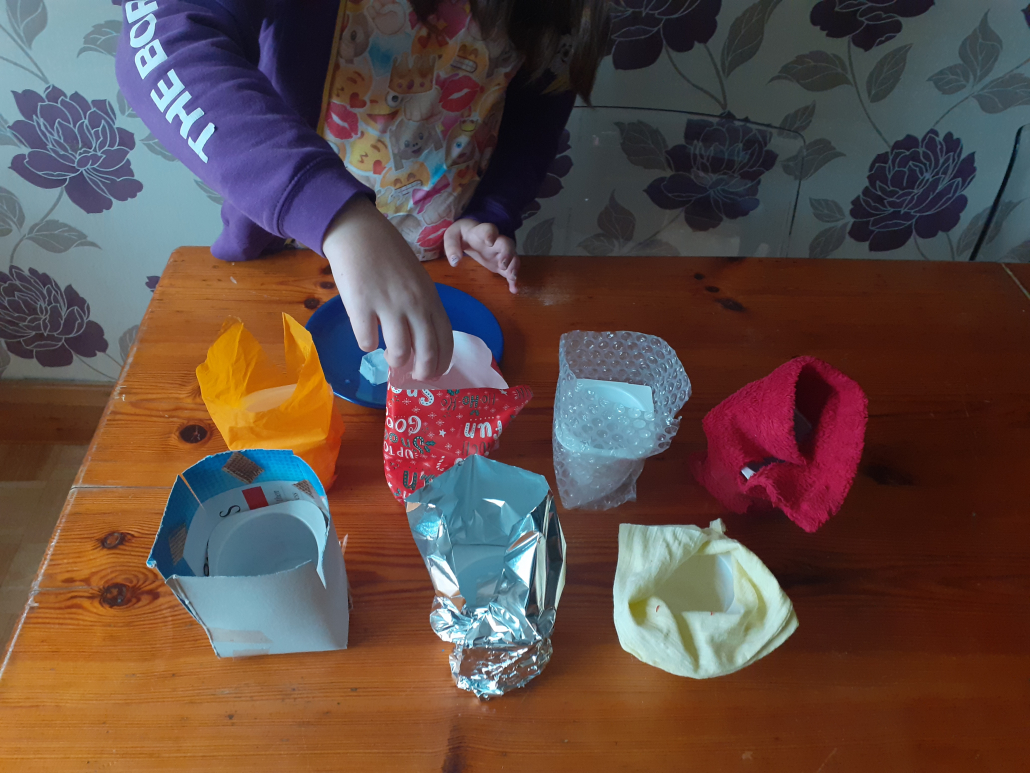
Try our insulating ice activity.
Have you ever wondered how to stop the ice cubes in your drink melting? In this investigation you will use materials from around your home to discover which help to slow down ice melting. You just need your materials, some plastic pots, sticky tape and some ice to try this out.
Age 3 and up.
You know your children better than anyone, and you should judge whether they’re ready for this activity. You might want to think in particular about:
…if you think they’re useful. Clone this block to add more, or delete it if you don’t need it.

 The Computer Programmer