Journey Stick
Make a journey stick to remember a walk and talk about it later on.

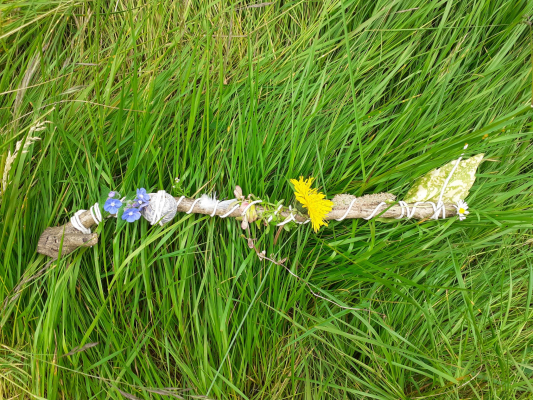
Go for a walk with your family and collect the natural objects you find interesting along the way. You could do this on your way to school, in your local park, in the woods or even in your garden if you have one.
This page will print, but looks a little funky. Click the button for a PDF version which looks a bit better.
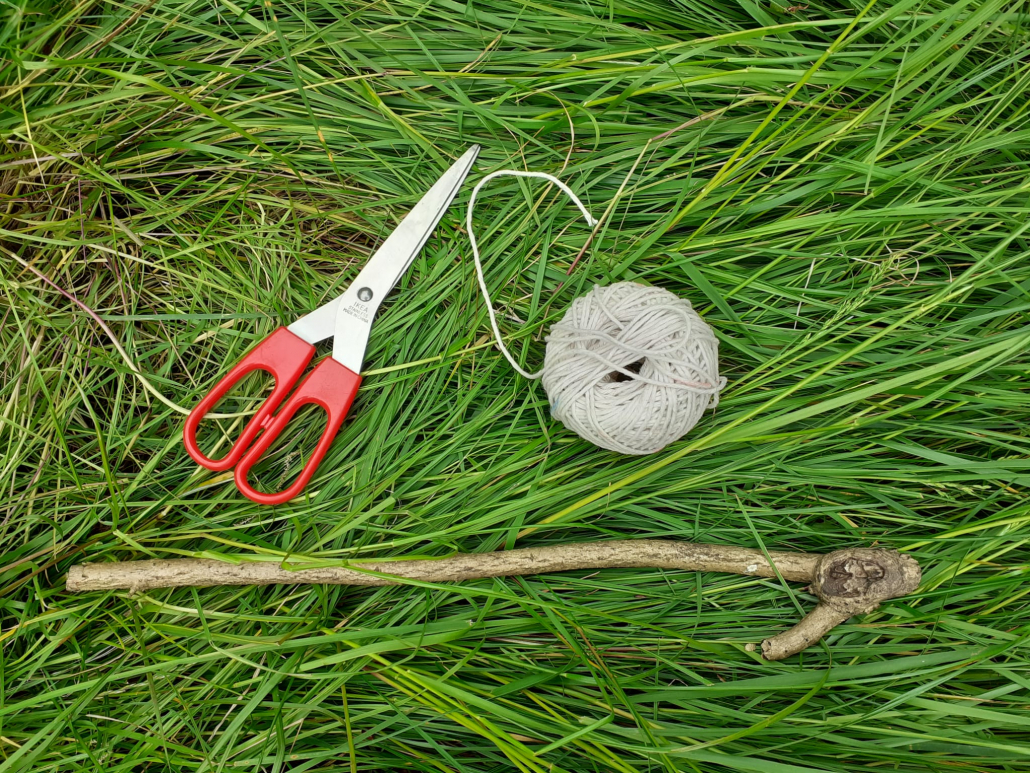
Find a stick that you like. It needs to be big enough to attach 6 to 8 items to, but small enough to carry. You may need to do this on a different walk. Find your scissors and string (or whatever you are using to attach your objects to your stick).
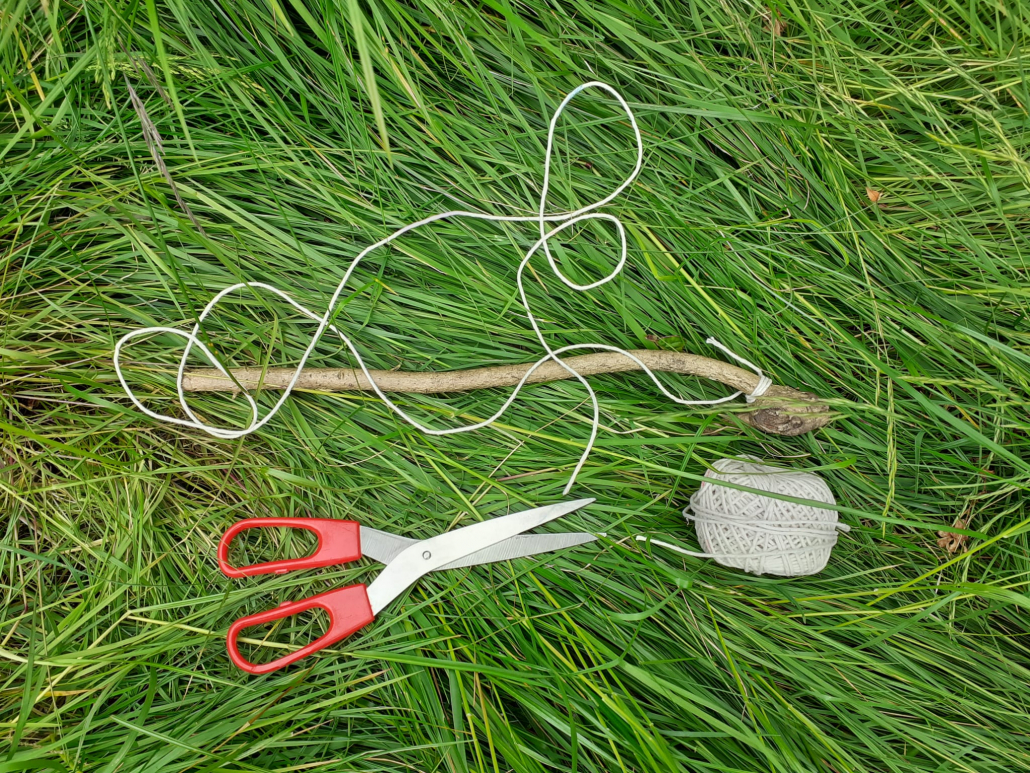
If your string is in one long piece, cut it so that you have a length about four times as long as your stick. This is so you don’t need to take a ball of string and a pair of scissors on your walk. Tie the string to one end of your stick.
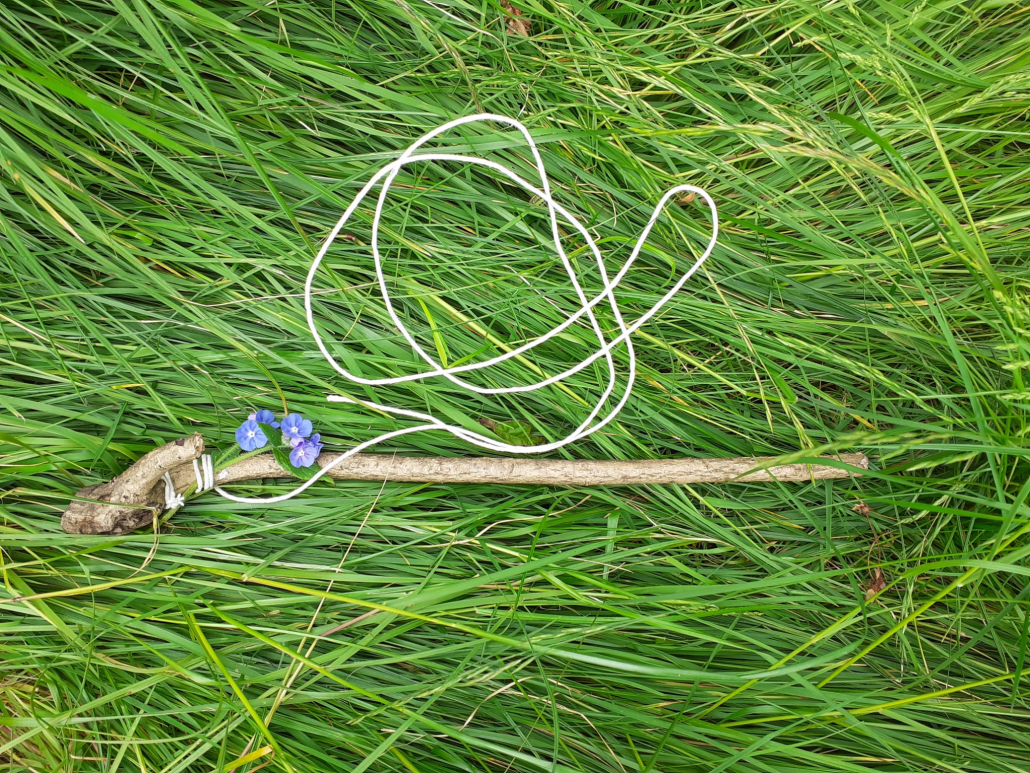
Head off on your walk, looking around for interesting natural objects as you go. Only pick wild flowers or leaves there are plenty of. It is best to use things that are already on the ground. Never pick flowers or leaves from other people’s gardens!
Attach your first item to the bottom of your stick by wrapping the string around it tightly a couple of times.
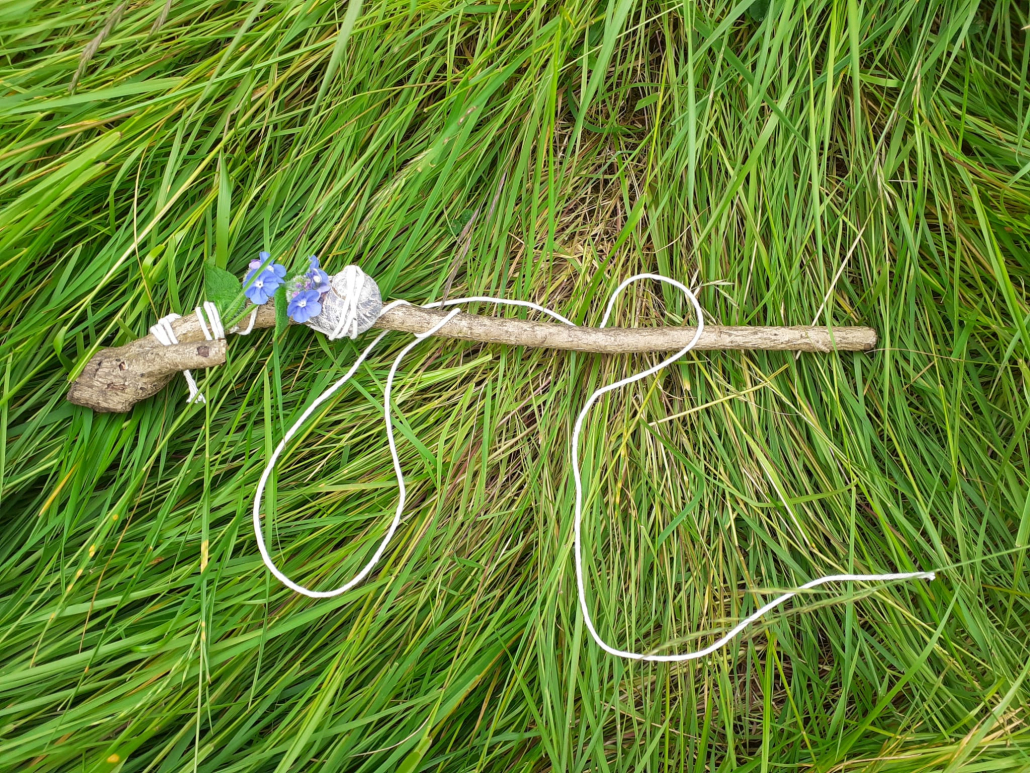
Attach your next object further along the stick from the first object.
Objects you could collect are: leavers, flowers, snail shells, small stones, twigs, bark, seeds and cones or feathers.
Continue adding objects to your stick until it is full.
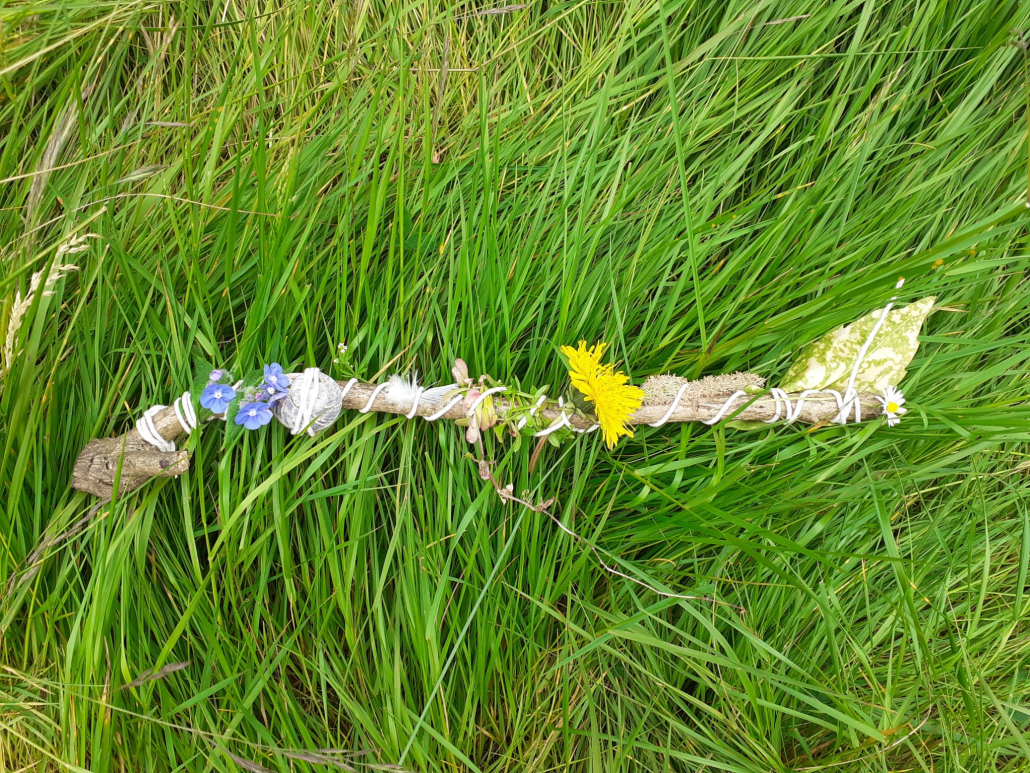
When you are at the end of your stick, tie off the rope by making a loop around the stick and sliding the end through.
Hopefully you can remember where you found each object on you walk and can use your stick to tell people about where you have been.
Biologists and botanists need to identify the specimens they have collected.
The Woodland Trust has some fantastic tree related nature identification sheets. Visit this page to download the resources and apps.
You may be able to identify the bird any feathers you collected came from by using the RSPB identify a bird tool.
To identify any snail shells, you could use the identifying common British snails tool on the Conchological Society website.
You could make a map to show where you have been on your journey.
You could add symbols of what you have found to your map to show where you picked up each of your objects.
You could use Google Maps to help you. If you click the “layers” square in the bottom left hand corner, you can choose the satellite map that could help you add detail to your map.
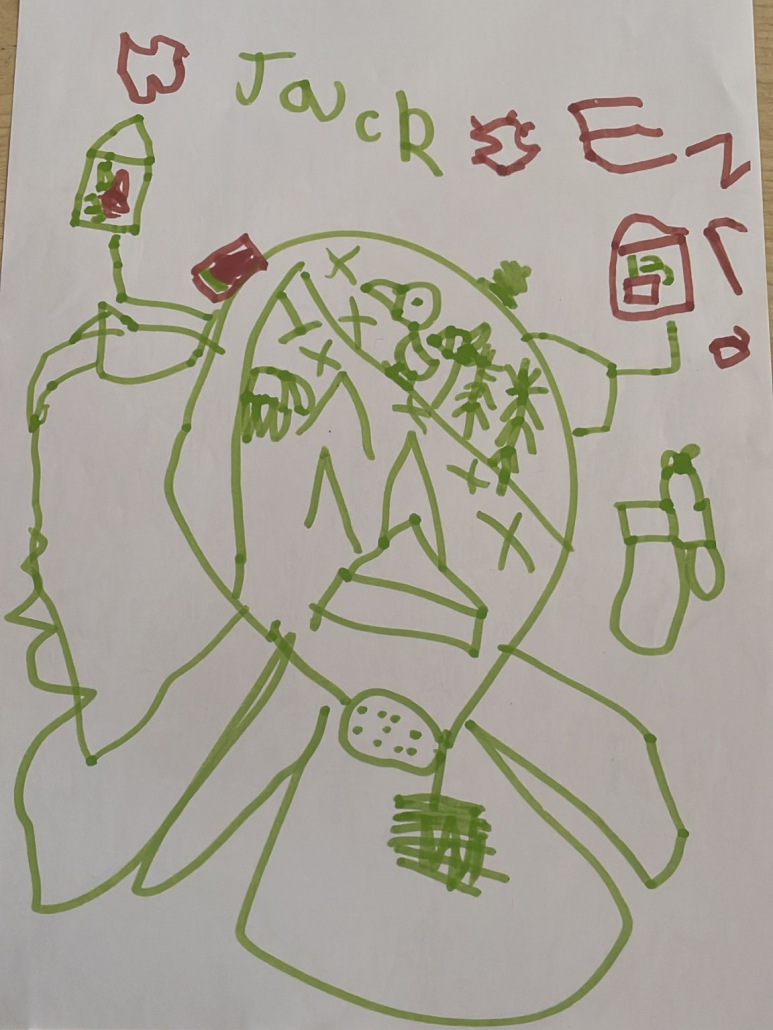
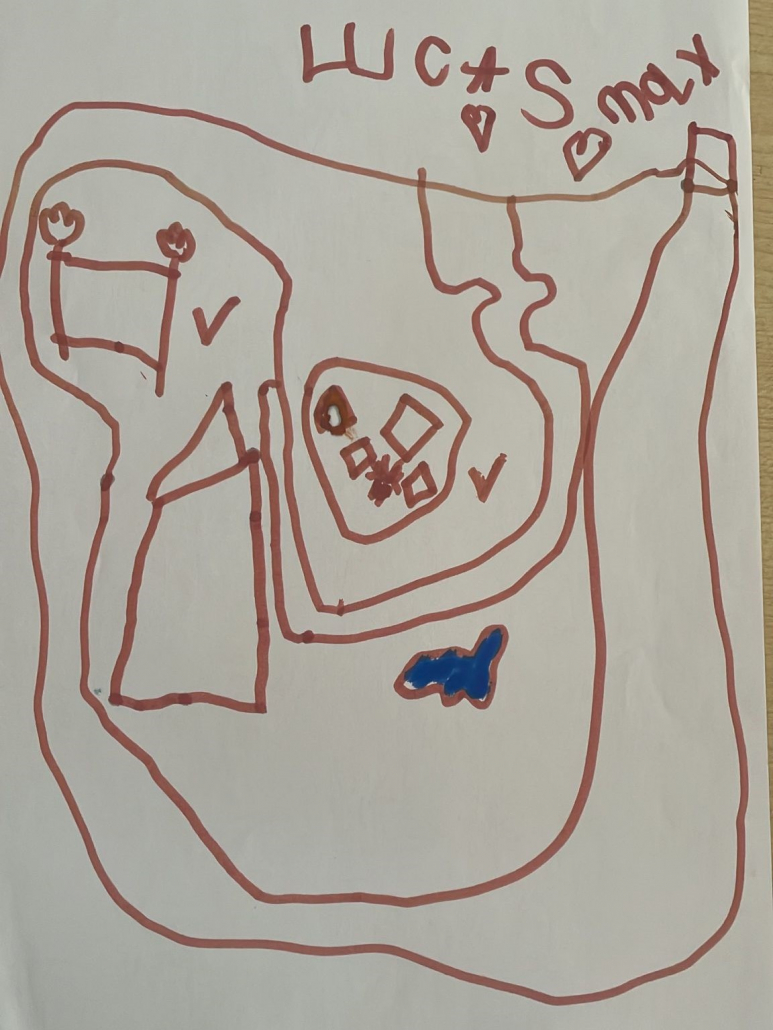
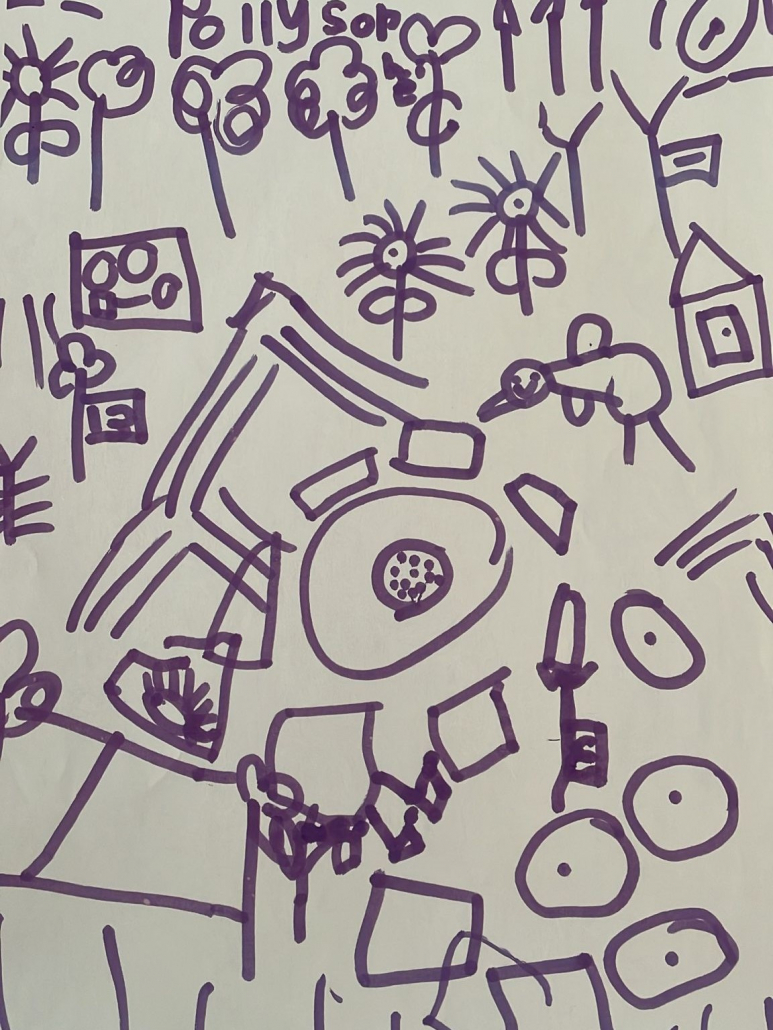
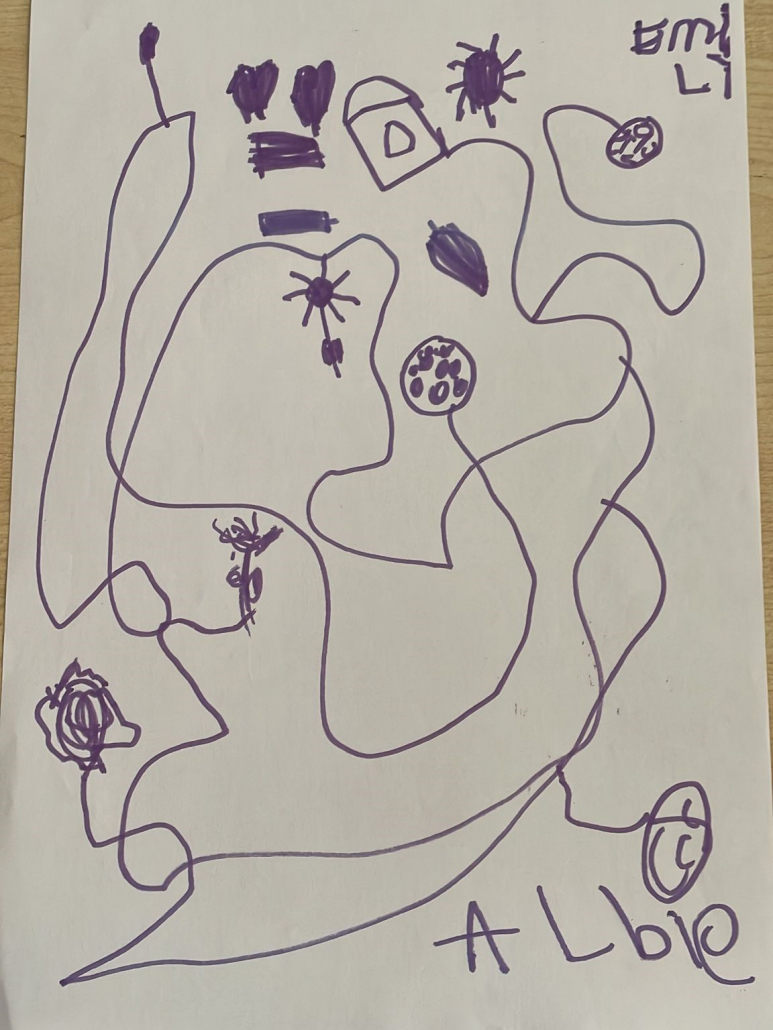
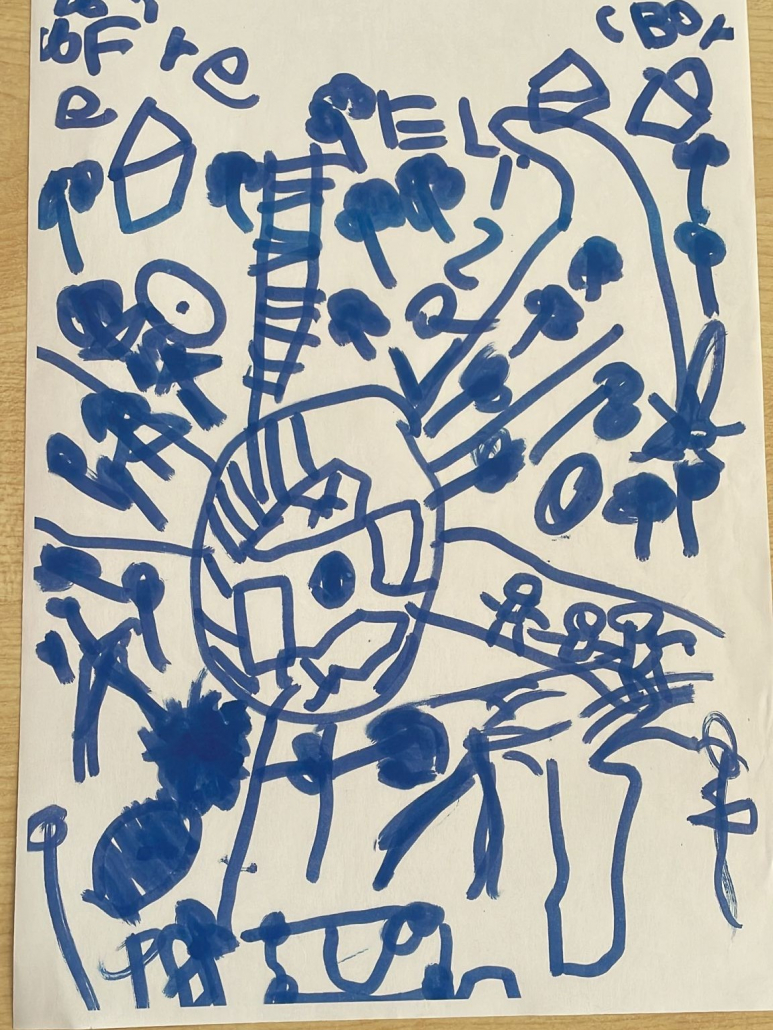
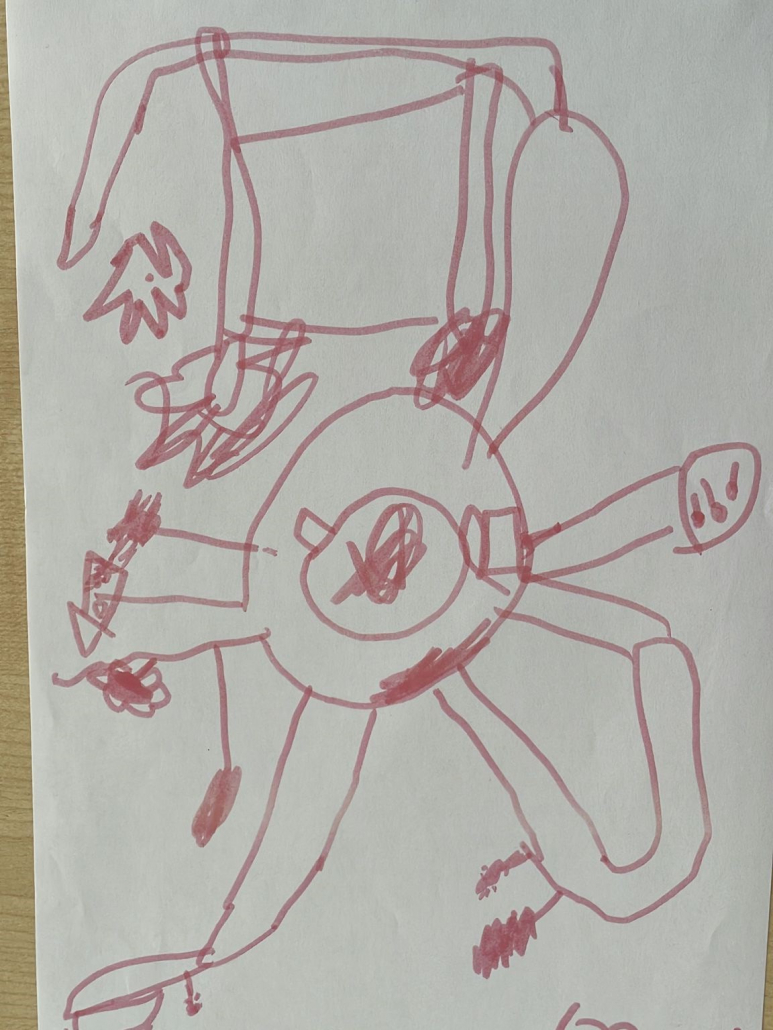
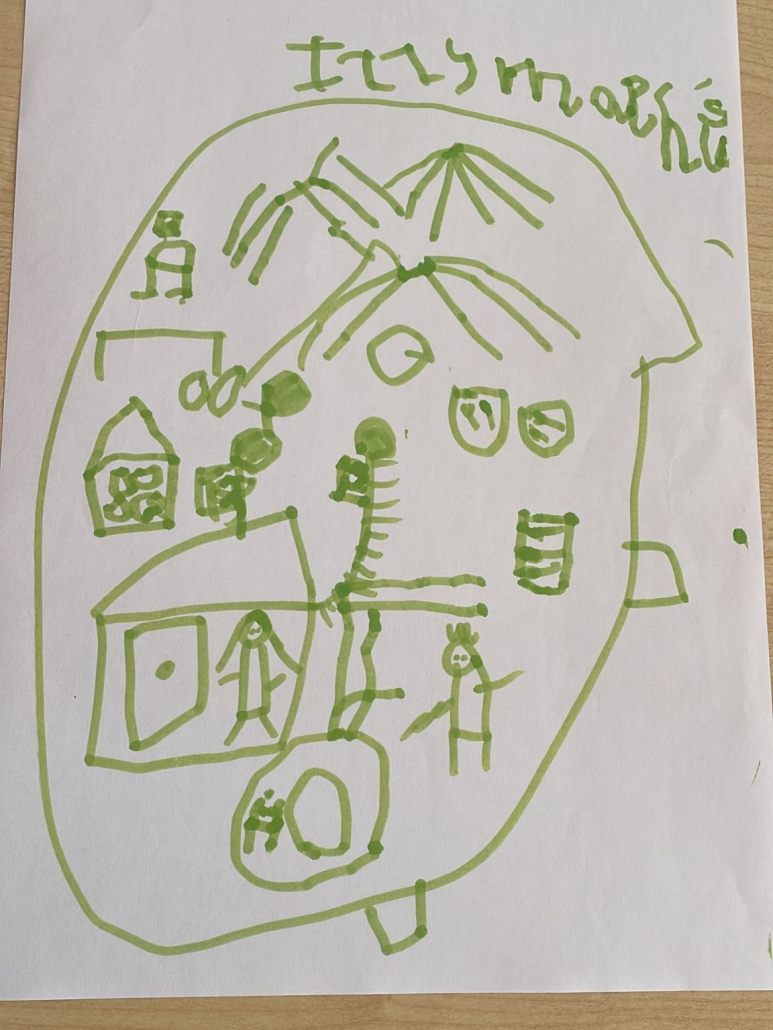
Or you could use your imagination to show where your journey took you, like the maps below.
Depends on the length of your journey, but about 10 minutes minimum.
Age 3 and up.
You know your children better than anyone, and you should judge whether they’re ready for this activity. You might want to think in particular about:
Wildlife biologists look at animals and where they live in the wild. They look at how they interact with other animals and the plants where they live. They also look at how animals from the wild react to humans. They want to learn more and more about all types of animals. They also want to know how people affect where the animals live.
Attributes: open-minded, communicative, curious
Botanists study plants including algae, fungi, lichens, mosses, ferns, conifers and flowering plants. Their research is involved in enhancing crops, developing medicines, cleaning up contaminated sites, and even powering our cars.
Attributes: hard-working, resilient, creative


 Whittling adult led activity