Download progression document
Includes statements from Development Matters (birth to age five) and the relevant ELGs in full, for the Raft building adult led activity

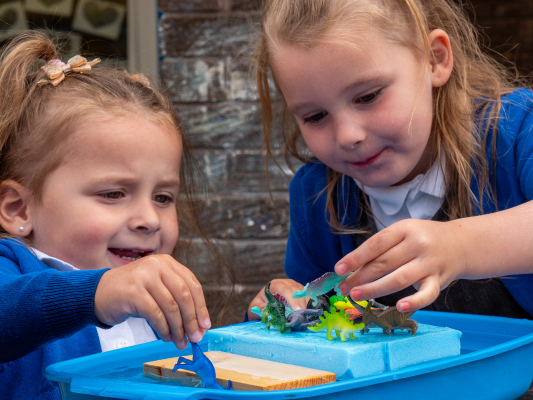
Includes statements from Development Matters (birth to age five) and the relevant ELGs in full, for the Raft building adult led activity
Play, Be, C Units provide enabling environments with teaching and support from adults. Reflecting on the characteristics of effective teaching and learning, children will have opportunity to learn and develop by:
- Playing and exploring – children investigate and experience things, and ‘have a go’.
- Active learning – children concentrate and keep on trying if they encounter difficulties and enjoy achievements.
- Creating and thinking critically – children have and develop their own ideas, make links between ideas, and develop strategies for doing things.
Early Years Foundation Stage Statutory Framework: accessed November 2024. Available under the Open Government Licence v3.0.
10 minutes or so.
Float, sink, sunk, sank, rise, rose, risen, size, big, small, heavy, light, bottom, top, surface, under, side, shape, predict, test
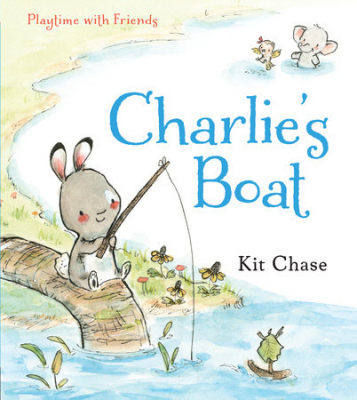
You could introduce the activity by reading Charlie’s Boat by Kit Chase or watching the episode of Cbeebies’ Messy goes to OKIDO.
Show the children the marine engineer poster and tell them that they are going to be marine engineers for this activity.
Ask the children if they know what a marine engineer does. Marine engineers make and fix boats, ships, submarines, oil rigs and drilling equipment.
Tell the children about the attributes. Marine engineers are:
Curious and want to know which materials sink and float.
Creative when they design and build things like boats, ships, submarines and oil rigs.
Resilient when their ideas or designs don’t work the first time – they try again to get it right.
Today they are going to be marine engineers and use their creative skills to build rafts. They are going to be curious and investigate how to make the best raft for the animals so they can float across the water tray/bucket to the other side without getting wet or falling in.
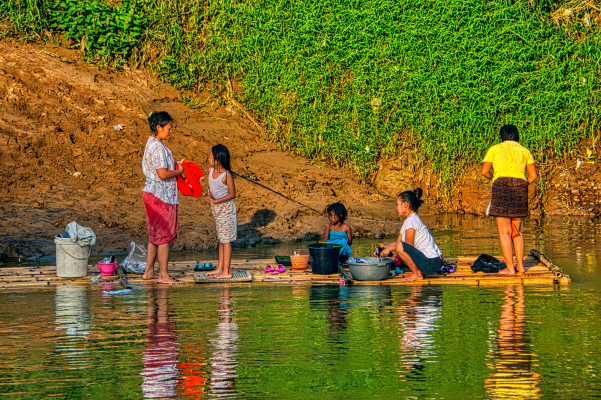
Show the children the pictures of different rafts. You could use our raft photographs.
You could ask:
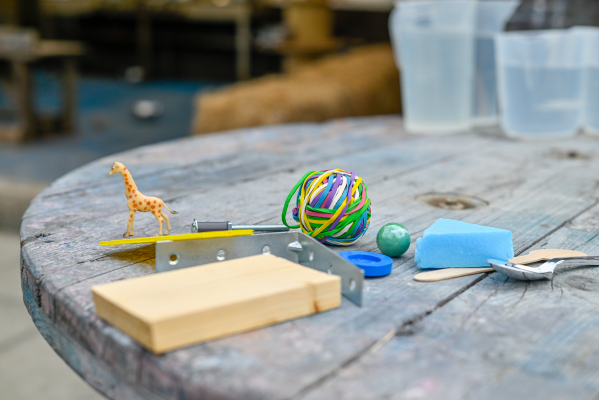
Show the children the selection of materials they can choose to build their rafts. Remind them they need make the best raft for the animals so they can float across the water tray/bucket to the other side without getting wet or falling in.
You could ask:
Tell the children that they are going to test their materials. Demonstrate how to place the material carefully onto the water. Show what happens if you throw it in or push it under. Invite the children to carefully place their material onto the water.
You could ask:
If the material sinks, remind the children that marine engineers are curious and want to know what happens. It doesn’t matter if the material sinks, as long as we have found this out. Remind the children that marine engineers are resilient. If the first material they pick doesn’t float, they can choose another one.
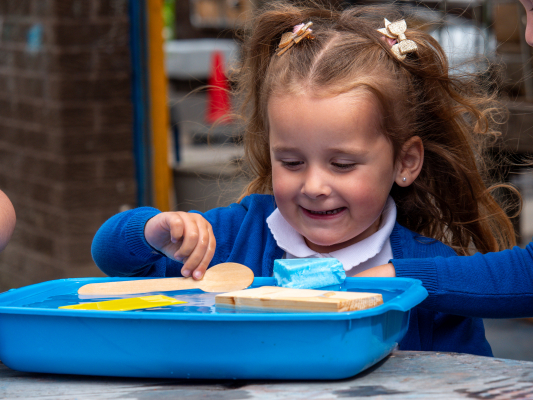
Demonstrate how to carefully place the animal/figure onto the raft. Show what happens if you throw it on or push down. Invite the children to carefully place the animal/figure on top of their material.
You could ask:
As earlier, if the raft sinks, remind the children that marine engineers are curious and want to know what happens. It doesn’t matter if the raft sinks, as long as we have found this out. Remind the children that marine engineers are resilient. If the first material they pick doesn’t float, they can choose another one.
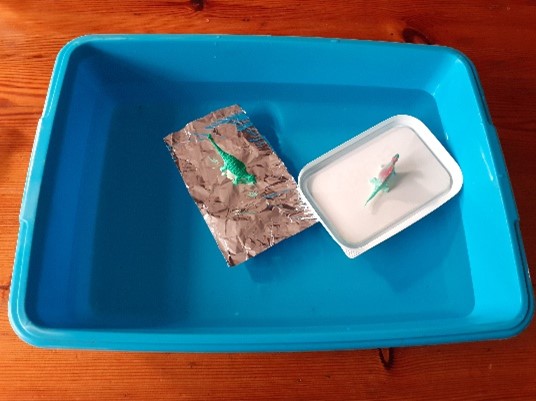
Show the children how to gently push the raft to the opposite side of the water. Invite the children to do this one at a time to avoid collisions.
You could ask:
As earlier, if the raft sinks, remind the children that marine engineers are curious and want to know what happens. It doesn’t matter if the raft sinks, as long as we have found this out. Remind the children that marine engineers are resilient If the first material they pick doesn’t float, they can choose another one.
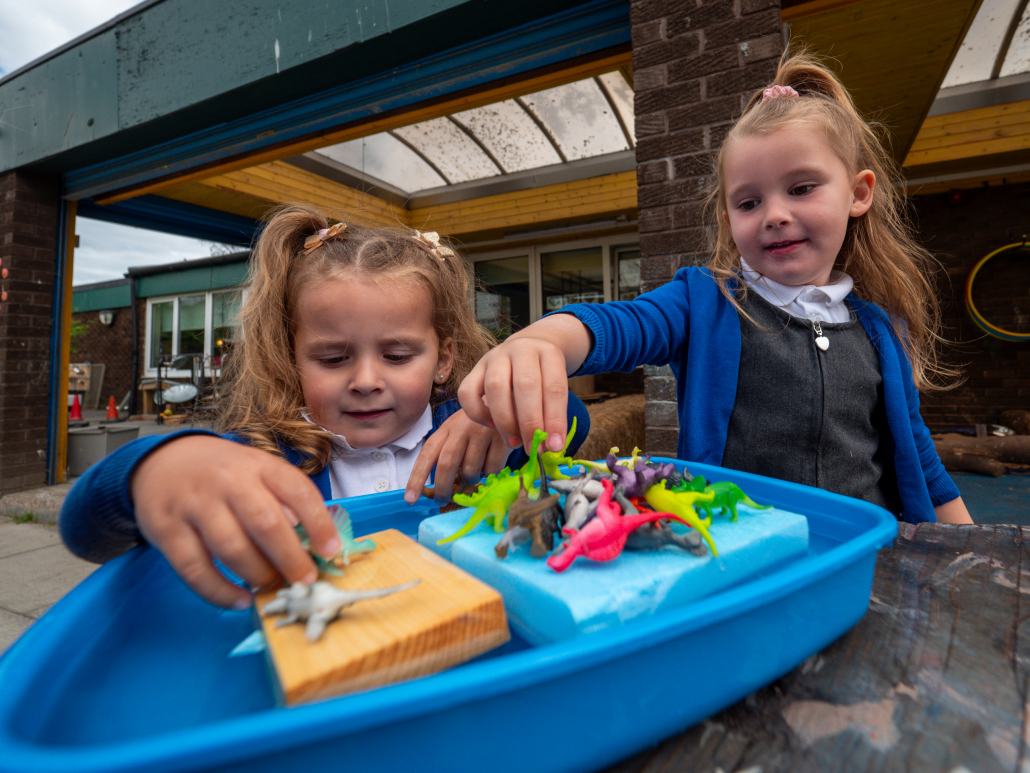
Remember to refer to the children as marine engineers and praise them for using the attributes. You could say things like:
“Well done! You have been resilient like a marine engineer and chose another material for your raft when your first raft sank.”
You could repeat investigation with different materials and see how many animals you can balance on each raft.
You could try to attach lolly sticks or sticks from the outdoor area together to build rafts. You could try to use small elastic bands, string or glue.
The Scout Association has a teeny tiny raft building activity that could help you.
We have put together some useful information about the science of marine engineering to accompany this activity. Don’t worry, this is for your information only and to help you answer any questions children may have. We don’t expect you to explain this to the children in your setting!
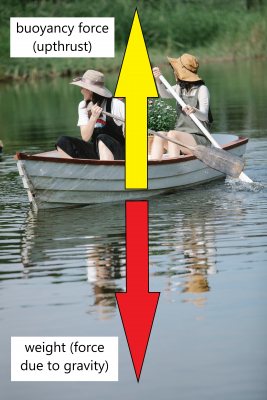
There are two forces acting on objects in the water. The weight of the object pulls it down, while the upthrust of the water pushes it up. If you’ve tried to hold a beach ball, empty plastic bottle or inflatable under water, you will have felt this upthrust force pushing the object towards the surface. The upthrust force is equal to the weight of water displaced (pushed out of the way) by the object.
If the weight of the object is equal to, or less than, the upthrust, it floats. Things that float are buoyant. If the weight of the object is greater than the upthrust, the object will sink.
An object floating on the water takes up space. To make this space, some of the water is displaced – pushed out of the way. The amount of water displaced is the same as the volume of the object that is below the surface of the water. The more weight you add to the object, the more water it displaces. As the volume of water displaced increases, the upthrust force increases to balance this, and the object floats. There will eventually be a point where the weight of the object becomes greater than the upthrust and the object sinks. To see displacement, you can fill a container almost to the top, then add stones to it, you can see the water level rise as the stones take up space in the water.
The shape of an object will determine if it will sink or float. A lump of iron, such as an anchor, will sink as it is dense and all of its weight is concentrated in one place. This makes its weight greater than the upthrust pushing against it, and so an anchor will sink. If the same amount of iron is made into the hull of a boat, it is spread over a greater area.
The larger boat displaces more water than the anchor and so the upthrust is greater. This means that the same amount of material will float in the shape of a boat, but will sink if it’s in a more compact shape.
Some materials are light because they are full of holes! Sometimes these are holes you can see, like in a sponge, but some are tiny holes that you can’t see, like in paper. The holes are full of air. Air is not heavy enough to push down into the water, and so materials that are full of air, float. When the materials full of air holes are floating, the water starts to fill up the air holes. The water soaks into the material and makes the weight to pulling down bigger than the force of the water pushing upwards.


 Investigating water displacement adult led activity