
NUSTEM Pop-Up Shops

Thanks for coming to one of our pop-up shops, we hope you had a lovely time. Follow the links here for more activities you can do at home.

You might be interested in our other events:

Upcoming events

Activities

Recent Pop-Up Shops

Mechanical engineer at Scotswood Garden Apple Day

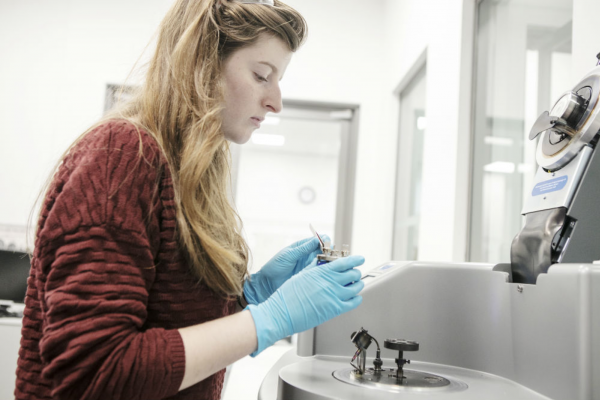
Today at Scotswood Garden Apple Day, we became mechanical engineers by making catapults to help us see how some plants disperse their seeds.

Mechanical engineering jobs are all about solving problems and creating products to meet human needs. Work includes solving problems using machines or machinery by designing, testing and improving mechanical devices. Mechanical engineers use a wide range of tools, techniques and machinery in their jobs, which depends on the area of mechanical engineering they trained in and the industry they work in.

To be a mechanical engineer, the attributes you require are to be curious, self-motivated and hardworking. Maybe you could be a mechanical engineer!

If you enjoyed making catapults, you may want to try our lolly stick catapults here.

To may want to make this super seed spinner (RHS) which is similar to a sycamore seed.

To investigate more flying things, you could try our fish tumblers activity or our paper aeroplane investigation.

If you want more activities involving seeds, why not try our seed bomb activity or investigate what happens when you grow seeds in plastic bags here.

This slideshow requires JavaScript.

Scotswood Garden Summer Fun Day 6th July 2024

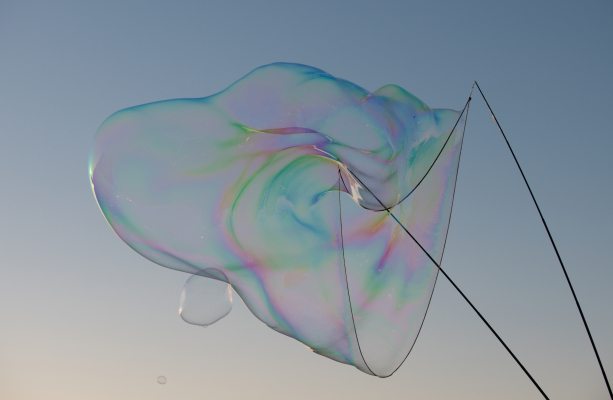
Today at Scotswood Garden you became fluid scientists when you experimented with our bubbles!

Fluid scientists are interested in what liquids, and gases are like and how they move and behave.  Liquids and gases are examples of fluids. Fluid scientists are:
Curious about what different fluids can do and how they might help us.

Observant as they watch fluids carefully to see how they behave.

Resilient when they try lots of tests before they find the best uses for different fluids.

What else can I do?

Visit our Giant Bubbles page to get the recipe and instructions for making bubble wands and giant bubbles at home.

Visit our Indoor Bubbles page for a (nearly) mess free bubble activity you can try inside.

A bit more about this career:

Fluid mechanics is the study of fluids (liquids, gases, blood, and plasmas) at rest and in motion. Fluid dynamics is the study of fluids and how forces affect them. Fluid statics studies fluids at rest.

Scientists across several fields study fluid dynamics, such as scientists studying the evolution of stars, ocean currents, weather patterns, plate tectonics and blood circulation. Technological applications of fluid dynamics include rocket engines, wind turbines, oil pipelines and air conditioning systems.

Kites at Scotswood Garden

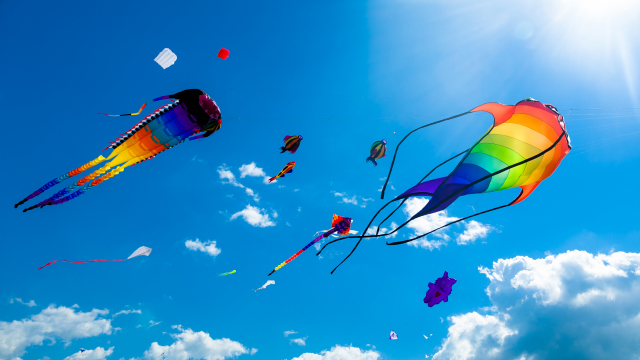
We have been making kites at the Blossom Day to celebrate Basant- a spring time kite flying festival in Pakistan.

Various kites flying on the blue sky in the kite festival

To make our kites we used this kite template and followed these instructions.

We thought you might be interested in the science behind flying your kites.

How do kites fly?

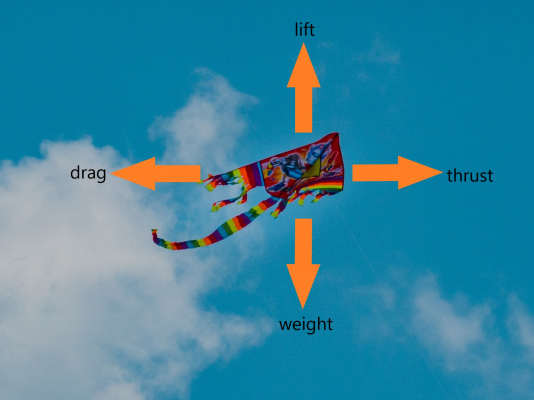
There are four forces of flight: lift, drag, weight and thrust.

What is lift?

Lift is the force that pushes the kite upwards. It is generated by differences in air pressure (the force of air pushing down on a surface). Kites are shaped so air moving over the top moves faster than air moving over the bottom. If the air pressure above the kite is less than the air pressure below it, then the kite is pushed up into the air.

What is weight?

Weight is the force that acts in the opposite direction to lift and is generated by gravity. This pulls the kite downwards towards the earth.

What is thrust?

Thrust propels the kite forwards. A kite creates thrust with the tension of the string and moving air created by the wind or the forward motion of the kite.

What is drag?

Drag is the force that acts in the opposite direction to thrust and is caused by the difference in air pressure between the front and back of the kite and the friction of air moving over the kite.

Balancing the forces

For a kite to fly, the force of lift must be greater than the force of weight.

To keep a kite flying, the forces must be in balance. Lift must be equal to weight and thrust must be equal to drag.

© Northumbria University 2014-26